When working at height, a secure anchor point is crucial for fall protection. Beam straps, also known as cross arm straps or beam chokers, provide versatile, reusable anchorage for harnesses, lanyards, and retractables. This guide compares five highly-rated, ANSI/OSHA-compliant options to help American crews choose the right cross-arm strap for beams, trusses, and concrete structures. Each selection prioritizes durability, load capacity, and ease of installation to support safe, compliant operations in construction, industrial maintenance, and roofing projects.
| Product | Brand | Length | Key Safety Points |
|---|---|---|---|
| TRSMIMA Safety Strap Fall Protection – 3ft | TT TRSMIMA | 3 ft | High tensile strength, dual D-rings, ANSI compliant, reinforced back webbing |
| Malta Dynamics 4′ Cross Arm Strap | Malta Dynamics | 4 ft | OSHA/ANSI compliant, field tested, reusable and easy to install |
| KwikSafety GIBBON GRIP 3 ft Cross Arm Strap | KwikSafety | 3 ft | Versatile for residential/commercial work, OSHA compliant, broad applicability |
| FHFallArrest Cross Arm Strap 3 ft | FHFallArrest | 3 ft | High-visibility, double steel D-rings, 5,000 lb minimum breaking strength |
| Palmer Safety 3 ft Cross Arm Strap | Palmer Safety | 3 ft | Wide compatibility with PPE, OSHA compliant, versatile usage |
Introduction concluded. Beam straps offer a practical solution for anchoring to beams of varied shapes and sizes, but selecting the right strap depends on material quality, compatibility with fall-arrest systems, and compliance with safety standards. The following sections detail five strong options, highlighting design features, installation considerations, and typical use cases to help teams compare precisely what is needed for their job sites.
TRSMIMA Safety Strap Fall Protection – 3ft Cross Arm Strap

The TRSMIMA 3-foot Cross Arm Strap is built for strong, reliable anchor points on beams, web trusses, and concrete structures. It uses a non-recycled synthetic material with high tensile strength and reinforced back webbing to resist aging, abrasion, and heat. The strap features two D-rings—one large for pass-thru and one standard—that enhance length adjustment versatility and compatibility with other fall protection components. With a breaking strength around 5000 lbs and a robust alloy-steel construction, it aligns with ANSI standards while remaining adaptable to lanyards, self-retracting lifelines, or vertical rope setups. This option is well-suited for general construction tasks and light-to-medium industrial projects where dependable anchorage is essential.
Installation notes: Secure the strap around a structural beam or similar anchor point, then attach the appropriate fall-arrest component to the D-rings. While not shock-absorbing on its own, it works seamlessly with compatible shock-absorbing lanyards for enhanced impact protection. Regular inspection for wear, fraying, and corrosion is recommended to maintain optimal safety performance.
Key considerations:
– Suitable for beams, trusses, and concrete beams
– ANSI standard alignment supported by field-tested design
– Compatible with a wide range of fall-protection tools
Malta Dynamics 4′ Cross Arm Strap

Malta Dynamics’ 4-foot cross-arm strap emphasizes safety and versatility. It is engineered to meet and exceed OSHA and ANSI safety standards while accommodating a variety of beam sizes and shapes. The strap has undergone field testing to verify durability in real-world conditions, offering a reliable anchor point for harnesses and lanyards. Installation is designed for quick setup without permanently damaging anchoring surfaces, and the strap is reusable to support long-term cost efficiency on ongoing projects. This option is particularly strong for larger-scale installations or where longer reach is beneficial for complex beam configurations.
Usage guidance: Attach the small D-ring to compatible fall protection components after securing the strap around the anchor. Use with compatible shock-absorbing gear as part of a comprehensive fall-arrest system. Routine checks should include buckle integrity, stitching wear, and D-ring condition to ensure ongoing performance.
Key considerations:
– Meets OSHA/ANSI compliance
– Reusable with quick installation
– Adaptable to various beam sizes and shapes
KwikSafety GIBBON GRIP 3 ft Safety Anchor
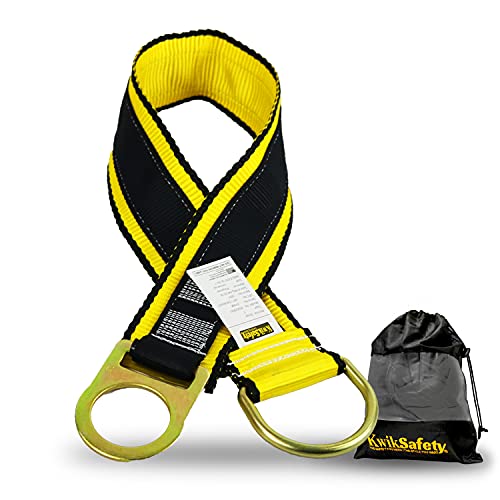
KwikSafety’s GIBBON GRIP 3-foot cross-arm strap is designed for broad applicability across residential, commercial, and industrial projects. It functions as a reliable beam anchor, ideal for tasks like roof work, scaffolding, or guardrail installation, and is compatible with various PPE configurations, including hooks, lifelines, and rope extensions. The product emphasizes OSHA compliance, providing confidence on work sites where regulatory requirements must be met. While it is not shock-absorbing by itself, it is compatible with shock-absorbing lanyards to complete a fall-arrest system. Its versatility makes it a strong choice for mixed-job environments that demand quick, compliant anchorage solutions.
Operational tips: Ensure the strap is wrapped securely around a structural member, then connect the appropriate D-ring to the chosen fall-protection device. Regular inspections for fabric integrity and D-ring condition are essential, given the variety of potential anchor configurations on job sites.
Key considerations:
– Wide applicability across job types
– OSHA-compliant anchor option
– Works with multiple PPE configurations
FHFallArrest Cross Arm Strap 3 ft

The FHFallArrest 3-foot cross-arm strap focuses on high visibility, robust hardware, and strong construction. It uses 100% heavy-duty, high-visibility orange polyester with corrosion-resistant connectors and a double-reinforced 3-inch-wide webbing. The strap features large and standard D-rings to support pass-through and length adjustments, helping crews tailor anchorage to the task at hand. With a minimum breaking strength near 5,000 lbs and stated worker-weight capacity up to 420 lbs, this strap meets stringent safety criteria and is intended for use with other components of a Personal Fall Arrest System. It suits tasks requiring dependable, repeatable anchorage in tight or awkward beam configurations.
Practical considerations: Inspect webbing wear, stitching, and ring integrity before each use. Pair with compatible lanyards or retractables, ensuring the full system remains within OSHA/ANSI design limits for safe operation on site.
Key considerations:
– High-visibility material for site safety
– Strong D-ring configuration for versatile attachment
– Compatibility with full fall-arrest systems
Palmer Safety 3 Ft Cross Arm Strap

Palmer Safety’s 3-foot cross-arm strap emphasizes versatility and broad PPE compatibility. The design supports tight anchorage around beams, web trusses, and concrete beams, enabling secure connection to tools like harnesses, lanyards, and lifelines. The strap is described as OSHA compliant and suitable for a range of applications across residential, commercial, and industrial markets, including roofer work, scaffolding, guardrails, and tree trimming. While not shock-absorbing by itself, it is compatible with shock-absorbing lanyards and other components of a complete fall-arrest system. The Palmer strap aims to be a practical, durable anchor for daily use on diverse job sites.
Use guidance: Secure the strap around the anchor point, attach the small D-ring to the protective device, and maintain proper load routing through the system. Regular inspections are recommended to ensure stitching and hardware remain in safe condition over repeated use.
Key considerations:
– Broad compatibility with PPE
– OSHA compliant for compliant worksites
– Suitable for multiple job-site tasks
Buying Guide: Key Purchase Considerations For Beam Straps
When choosing beam straps for fall protection, consider the following perspectives to ensure a well-suited option for your operations:
- Length and reach: Shorter straps offer compact usage on tighter beams, while longer straps provide flexibility for larger structures. Align length with typical job-site beam dimensions to avoid overhang or slack that could compromise safety.
- Material and durability: Look for heavy-duty polyester or alloy-steel components, reinforced stitching, and corrosion-resistant hardware. Durability affects life-cycle costs and performance in rough environments.
- Load rating and compliance: Verify breaking strength (typically 5,000 lbs or more) and confirm ANSI/OSHA compliance. Compatibility with other fall-protection elements, like shock-absorbing lanyards, should be considered for full-system safety.
- Ease of installation: Quick-release features, clear labeling, and ergonomic D-rings improve efficiency on busy job sites. Reusability reduces waste and long-term costs.
- Compatibility with other PPE: Ensure the strap works with your harnesses, lifelines, and self-retracting devices. Some straps are designed to be part of a complete Personal Fall Arrest System, while others function as standalone anchors.
- Inspection and maintenance: Regular checks for frayed fabric, weakened stitching, and ring integrity are essential. Establish a routine that supports ongoing compliance and worker safety.
- Application-specific considerations: For roofing, scaffolding, or beam work in confined spaces, evaluate how the strap’s shape, D-ring configuration, and attachment points affect maneuverability and anchor stability.
In summary, the best beam strap for your team depends on project scale, beam geometry, and how it integrates with your fall-arrest system. The options reviewed here emphasize strong construction, ANSI/OSHA alignment, and practical installation, making them suitable for varied American job sites—from small residential projects to larger commercial and industrial operations. Always follow the manufacturer’s instructions and your site’s safety protocols when deploying any cross-arm strap.
Add a Comment