If you need reliable torque control in robotic joints, fixtures, or automated systems, a ball-type torque limiter can protect components while providing precise, repeatable performance. This guide highlights five solid options that balance accuracy, responsiveness, and durability. It explains who each product is best for and why it stands out, helping you choose the right limiter for your application. The buyers most likely to benefit are machine builders, tooling developers, and maintenance engineers seeking dependable torque protection with straightforward setup.
| Product | Torque Range | Bore | Key Feature |
|---|---|---|---|
| AQ0.8-X Ball-Type Torque Limiter | 4-10 Nm | 9-20 | High accuracy, quick response |
| AQ01-X Ball-Type Torque Limiter | 5-12.5 Nm | 12-20 | Strong durability, precise detent |
| AQ0.6-L Ball-Type Torque Limiter | 5-10 Nm | 8-15 | Compact, reliable |
| AQ0.8-L Ball-Type Torque Limiter | 8-20 Nm | 9-20 | Broad range, robust |
| AQ01-L Ball-Type Torque Limiter | 10-25 Nm | 12-20 | Wide range, dependable |
AQ0.8-X Boroe Ball-Type Torque Limiter

The AQ0.8-X offers a torque range of 4-10 Nm with a 9-20 mm bore, optimized for compact setups. It emphasizes accurate torque delivery and a quick response, making it suitable for small actuators or precision assemblies. Best for compact machines that require reliable protection without added bulk.
Who it’s best for: engineers designing tight, small-form-factor systems where precision and fast reaction times are essential. Why selected: its precision torque and responsive detent support accurate load sharing in constrained spaces.
Caution: ensure the bore size matches your shaft and review installation clearances to prevent misalignment in tight enclosures.
AQ01-X Ball-Type Torque Limiter

This model covers 5-12.5 Nm with a 12-20 bore and is built for higher torque demands than entry-level options. It balances robust construction with precise torque detent, ideal for mid-range automation tasks that require dependable torque protection across a broader band.
Who it’s best for: mid-sized machines, pick-and-place modules, or conveyors needing consistent torque protection. Why selected: a good compromise between size, torque range, and reliability.
Limitation: slightly larger footprint than ultra-compact units, which may influence retrofit feasibility in small housings.
AQ0.6-L Ball-Type Torque Limiter

The AQ0.6-L provides a 5-10 Nm torque range with an 8-15 bore. This option is particularly well-suited for smaller to mid-sized gearboxes or tooling fixtures where space is at a premium but torque protection remains critical. It emphasizes long service life and consistent detent action.
Who it’s best for: compact machines and fixtures that need dependable torque limits without sacrificing space or simplicity. Why selected: best for tight installations with steady, predictable performance.
Caution: verify mounting orientation to avoid misalignment that could affect detent accuracy over time.
AQ0.8-L Ball-Type Torque Limiter
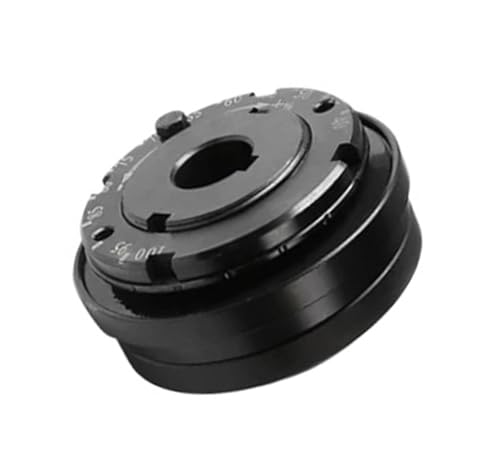
The AQ0.8-L expands the range with 8-20 Nm torque and a 9-20 bore, offering a robust choice for moderate-to-large scale applications. Its ball detent mechanism supports reliable torque limits in dynamic systems, reducing risk of over-torque events during startup or rapid load changes.
Who it’s best for: systems that demand a higher torque ceiling without increasing overall unit size. Why selected: broad torque range and strong durability suit industrial feeders and machining lines.
Limitation: larger frames may require more mounting space and careful alignment in retrofits.
AQ01-L Ball-Type Torque Limiter

The AQ01-L covers 10-25 Nm with a 12-20 bore, delivering a wide range for higher-demand applications. It is designed for steady, repeatable torque control in larger fixtures, automation cells, or robotic tooling. Best for machines that face variable loads yet require consistent protection.
Who it’s best for: larger automation setups, load-bearing fixtures, and robotics where a broader torque band is beneficial. Why selected: the wider range supports versatile use across evolving process requirements.
Caution: ensure your drive train tolerances accommodate the higher torque band to avoid unnecessary wear elsewhere in the system.
Buying Guide
What torque range do you need?
Choose a limiter that matches your typical operating load, with a safety margin for startup and peak loads. Narrow ranges are ideal for precise control, while broader ranges cover evolving needs without swapping hardware.
Which bore size fits your shaft?
Match the bore to your shaft diameter and mounting style. A misfit can increase wear, reduce accuracy, or cause misalignment in the detent mechanism.
How important is compact size?
For tight enclosures or compact machinery, select the smallest unit that delivers your required torque range. If space is less critical, you can prioritize higher torque capacity or longer service life.
Material and durability considerations
Look for units designed for long service life and repeated engagements. Durable housings and robust detents reduce maintenance intervals and improve uptime in production environments.
Installation and alignment
Plan for precise alignment with your drive shaft and mounting surface. Misalignment can degrade torque accuracy and cause premature wear on the detent, bearings, or shaft.
Best practices for integration
Implement proper shaft collars or supports to minimize endplay. Use correct fasteners and torque them to spec to avoid loosening under operation. Consider a protective cover if debris is a concern in your environment.
Summary of recommended picks
The five highlighted models balance range, size, and reliability for common automation needs. For compact, high-precision tasks, consider AQ0.8-X or AQ0.6-L. For mid-range systems, AQ01-X or AQ0.8-L provide versatility. For broader torque requirements in larger fixtures, AQ01-L offers a wide band with dependable performance.
FAQ
- What is a ball-type torque limiter? It is a device that limits the torque applied in a system by engaging a ball-detent mechanism to prevent over-torque, protecting components and maintaining control.
- How do I pick the right bore size? Measure your shaft diameter and select a bore that matches or fits with a compatible hub or coupler to ensure proper engagement.
- Can I retrofit a torque limiter into an existing machine? Yes, if the bore, mounting pattern, and torque range align with your current components. Confirm space and alignment requirements before swapping parts.
- Is a broader torque range always better? Not necessarily. A broader range can add versatility but may add size or complexity. Choose based on your typical load profile and future needs.
- What maintenance is needed? Regular inspection of mounting, detent action, and shaft wear helps maintain accuracy and longevity; replace worn parts as needed.
- Are these torque limiters suitable for high-speed applications? They are designed for precise limit protection. For high-speed or high-cycle environments, ensure the design specs align with your operating speed and duty cycle.
Add a Comment