Answering the common buyer question: which ball bearing lead screw options deliver reliable linear motion for CNC machines and 3D printers? This guide highlights five strong choices, each suited to different needs such as speed, load, and installation ease. Best for compact DIY builds are compact 8mm and 12mm options; best for high-load or precision tasks are SFU-series with multiple ball tracks; choose this guide to compare installation requirements, motion quality, and potential trade-offs.
| Product | Lead Screw Type | Best For |
|---|---|---|
| RM/SFU1605 150mm Ball Screw | SFU1605 bearing-assisted | Compact CNCs and printers needing solid rigidity |
| LC LICTOP 8mm T8 200mm Lead Screw Set | 8mm, 200mm | High-speed, lighter-duty 3D printers |
| Mssoomm SFU1610 Right-Hand Ball Screw Nut | SFU1610, 10mm lead | Mid-range precision CNC and automation |
| uxcell Ball Screw Nut SFU1204 | 12mm dia, 4mm pitch | General-purpose CNC/robotics projects |
| Mssoomm DFU1605 Dual-Nut Ball Screw Assembly | SFU1605, 5mm lead | Zero-backlash systems and high-load applications |
RM/SFU1605 150mm Ball Screw Set
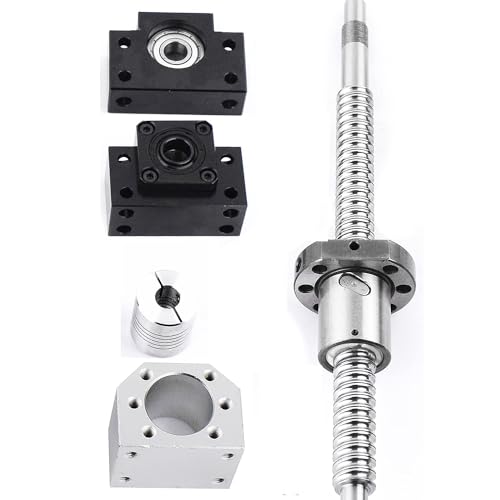
Features: Carbon steel, bearing steel, and aluminum alloy construction; diameter 16mm, length 150mm. This ball screw set combines a compact form with robust materials for CNC and DIY machines. Best for users building mid-size mills or 3D printers where a balance of stiffness and space matters. Caution: ensure precise alignment during mounting to prevent binding and reduce backlash.
Best for: small to medium CNC routers or printer Z-axis upgrades that need dependable, rigid motion without excessive bulk. Choose this if you want a ready-to-install 16mm ball screw option with forged end supports and housings.
LC LICTOP 8mm T8 200mm Lead Screw Set

Features: 8mm diameter, 200mm length; includes pillow block bearing, copper nut, and flexible shaft coupler; suitable for high-speed 3D printing and milling. A double-start screw increases linear travel per revolution, trading some thrust for speed. Best for speed-focused builds with vibration damping provided by zinc alloy pillow blocks. Caution: higher speed can introduce chatter if mounting is not rigid enough.
Best for: fast, lightweight setups where rapid Z-axis motion is desired and where noise reduction from the bearing block is beneficial. Choose this when you want a complete 200mm kit that reduces the number of additional parts.
Mssoomm SFU1610 Right-Hand Ball Screw Nut
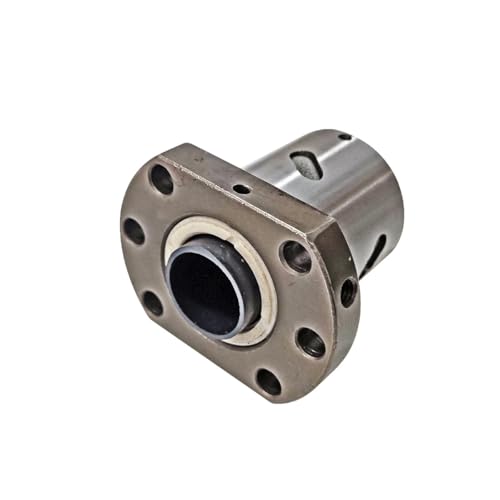
Features: 10mm lead, bearing steel construction, four-ball-tracks for smooth motion and reduced vibration; includes mounting sleeve for secure installation. Best for balanced performance in CNC and automation projects. Limitation: installation requires careful handling to avoid ball loss since balls are not permanently captured during assembly.
Best for: mid-to-high-load applications where consistent, low-backlash motion is essential, and a mounting sleeve is desired for rigidity. Choose this if you want a robust SFU1610 option with straightforward mounting.
uxcell SFU1204 12mm Lead Screw Nut

Features: 12mm diameter, 4mm pitch; bearing steel slider with high rigidity and load capacity; excellent for converting rotational to linear motion with low friction and quiet operation. Best for projects requiring straightforward, durable linear actuation. Caution: ensure correct threading and alignment to prevent early wear or binding.
Best for: general-purpose CNC routers or 3D printer axes that need a reliable, mid-sized nut with solid rigidity. Choose this when you want a widely compatible SFU1204 nut with predictable performance.
Mssoomm DFU1605 Dual-Nut Ball Screw Assembly

Features: 5mm lead with a precision left-hand (counter-clockwise) thread design; chromium alloy steel construction; dual-nut design to provide zero backlash and higher load capacity. Includes mounting sleeve for stable installation. Best for high-precision machinery and long-life automation tasks. Caution: proper handling is essential since balls are not permanently captured; misinstallation can cause ball loss and unit failure.
Best for: systems requiring zero-backlash performance and elevated load-handling capabilities, such as precise CNC tools or automated manufacturing rigs. Choose this if you need a dual-nut setup to maximize rigidity and durability.
Buying Guide
What size should I pick?
Lead screw diameter and pitch determine load capacity and speed. Larger diameters (12–16mm) handle heavier loads but require bigger supports. Smaller diameters (8–12mm) fit compact builds and still offer solid performance for lighter tasks.
Single nut vs. dual-nut?
Single-nut units are common and easier to install, offering good precision. Dual-nut designs provide zero-backlash and higher rigidity, at the cost of potential installation complexity and higher system inertia.
Material and finish considerations
Bearing steel and chromium alloy steel deliver durability and wear resistance. Carbon steel components add strength but may require protective coatings in humid environments. Look for well-sealed housings to protect ball tracks.
Installation and compatibility
Ensure matching end supports, pillow blocks, and couplers to avoid misalignment. Check the mounting sleeve inclusion for secure attachment, and verify connector sizes align with your stepper or servo motors.
Performance expectations
Higher lead values enable faster travel but can reduce thrust capacity. Multi-ball-track SFU designs often deliver smoother motion under load, lower backlash, and longer service life, especially in automation scenarios.
What about maintenance?
Ball screws require clean, precise assembly and occasional lubrication. Avoid contamination with dust or grit, which can accelerate wear. Proper handling during assembly minimizes ball loss and ensures reliable operation.
Practical quick comparison
- Best compact option: RM/SFU1605 150mm for space-constrained builds with solid rigidity.
- Best for high-speed 3D printers: LC LICTOP 8mm 200mm set with a double-start screw.
- Best balanced precision: Mssoomm SFU1610 for mid-range CNC and automation.
- Best general-purpose: uxcell SFU1204 for reliable, mid-sized projects.
- Best zero-backlash: Mssoomm DFU1605 dual-nut for heavy loads and high precision.
FAQ
Q: Which ball screw is easiest to install for a beginner DIY CNC?
A: The uxcell SFU1204 or RM/SFU1605 sets are generally straightforward due to standard end supports and compatible nuts.
Q: What leads to backlash in ball screws?
A: Improper mounting alignment, worn bearings, or loose mounting hardware can introduce backlash. Dual-nut designs mitigate this but require careful installation.
Q: Are larger lead screws always better for load?
A: Not necessarily. Larger diameter and multiple ball tracks improve load capacity and stiffness, but they increase weight and mounting requirements.
Q: Can I mix different brands in one machine?
A: It is not recommended to mix incompatible screw diameters or pitches within the same axis due to motion mismatch and binding risks.
Q: Do these come with lubrication?
A: Some kits include mounting sleeves and blocks, but lubrication is typically required during installation and maintenance to ensure smooth operation.
Add a Comment