Looking for an automatic sewing machine that can handle heavy fabrics, fast speeds, and long hours of use? This guide highlights five top picks designed for industrial or semi-industrial work, each chosen for reliability, speed, and feature sets that improve efficiency. Ideal buyers include garment makers, upholstery shops, leather canners, and professional tailors who need consistent performance. The table below offers a quick snapshot of the five machines chosen for comparison, followed by detailed sections on each model.
| Product | Best For | Key Benefit |
|---|---|---|
| VEVOR Industrial Sewing Machine, 550W Servo | Heavy-duty upholstery and denim | High speed with precise control |
| VEVOR Industrial Lockstitch with Table | Denim and layered fabrics | Auto thread trim and LCD control |
| SINGER Heavy Duty 4452 | Thick fabrics, versatile stitching | More power and 110 stitch applications |
| Brother PQ1600S High-Speed | Quilting and straight stitch work | Very fast straight stitching with feed options |
| Juki TL-2010Q | Quilting and precision sewing | Automatic thread trimmer and knee lift |
VEVOR Industrial Sewing Machine, 550W Servo Motor

This machine uses a 550W servo motor to deliver strong feed and piercing power, handling materials up to about 0.4 inches thick. It can sew up to 5000 stitches per minute with minimal vibration. A sturdy metal body supports heavy use. Best for: upholstery, thick fabrics, and high-volume sewing tasks where speed and durability matter. Caution: the control panel requires familiarization to optimize speed and needle actions for tricky corners.
Key features include an LCD touchscreen for easy speed, direction, and needle position adjustments, plus slow-start options. The smart start/stop saves energy and keeps the needle down when stopping, aiding fabric control. This model supports manual darning, reverse stitching, tension, and stitch-length control (max 0.2″ / 5 mm). Best for operators who value precise control during challenging seams.
VEVOR Industrial Lockstitch Sewing Machine with Table
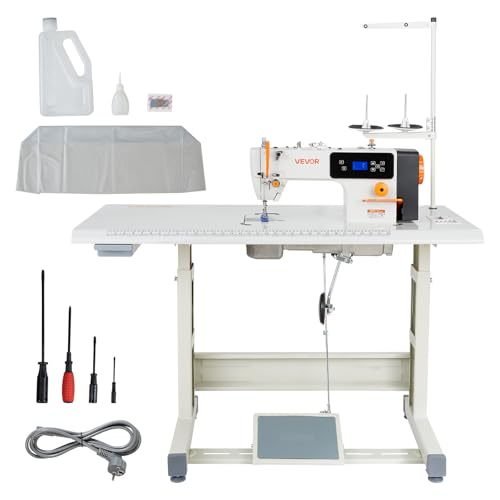
This 550W servo-powered lockstitch machine reaches 5000 SPM and can sew up to 10 layers of denim. A metal frame and auto lubrication promote longevity, while the LCD display provides precise speed and needle-position control. Best for: heavy denim, leather, and multi-layer projects where stable speed and consistent stitch formation are essential. Limitation: louder operation compared to lighter-duty units, though the design aims to minimize vibration.
Additional advantages include a 0.5″ knee lifter, 0.3″ manual presser foot lift, and convenient threading guidance. One-touch reverse stitching and auto thread trimming help maintain workflow momentum. Choose this if you need robust performance with practical, operator-friendly features for dense fabrics.
SINGER Heavy Duty 4452 Sewing Machine

Powered for thick fabrics, the SINGER 4452 features 32 built-in stitches and 110 stitch applications, offering versatility for a range of projects. It comes with an all-in-one accessory kit, including walking foot, non-stick foot, and heavy-duty needles. Best for: shops needing a durable home-to-small-business machine capable of handling diverse fabrics from denim to upholstery. Caution: not an industrial air-conditioned unit; performance can vary with extremely thick layers or leather.
The machine supports broad stitch options and straightforward operation, enabling reliable results across basic to heavy fabrics. It serves as a balanced choice for users who want substantial power without the top-end industrial price tag.
Brother PQ1600S High-Speed Straight Stitch

This is a high-speed straight-stitch and quilting machine with pressor-foot and feed-dog adjustments for fabric control. It can stitch up to 1,500 SPM and offers visible, color-coded feed-dog levels for easy setup. Best for: quilting, sash windows of fabric, and projects requiring precise straight stitching at high speed. Caution: lacks multiple zigzag stitches; not ideal for decorative sewing unless paired with other machines.
Push-button thread cutter adds convenience, while adjustable presser-foot pressure helps tailor performance to fabric type. The PQ1600S shines in applications where straight stitching and speed are the priority.
Juki TL-2010Q High-Speed Quilting Machine
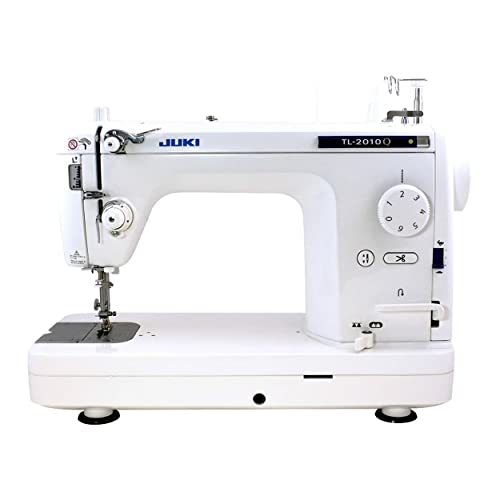
The Juki TL-2010Q is a high-performance model designed for quilting and general sewing. It offers automatic thread trimming, a knee lifter lever, and a rugged build for industrial-like results. Best for: quilters and tailors who require fast, reliable straight stitching with easy fabric handling. Limitation: primarily focused on straight stitching and quilting; decorative stitches may be limited without accessories.
Its robust construction supports heavy piles and bulky materials, while the knee lift enables hands-free fabric maneuvering. This model is favored by professionals who value precision and speed in quilting projects.
Buying Guide
What should you evaluate when choosing an automatic sewing machine for industrial use?
- Material compatibility: Consider the range of fabrics you work with, from denim to leather, to ensure the machine can handle the layers you encounter most often.
- Speed and control: Look for high maximum stitches per minute (SPM) paired with an LCD or clear control panel for precise speed and needle positioning.
- Needle and presser-foot options: A knee lifter and adjustable presser foot lift improve fabric handling, especially for bulky layers.
- Durability: A metal frame and robust motor contribute to longevity under heavy use and reduced vibration.
- Ease of maintenance: Features like auto thread trim and lubrication help keep workflow steady in busy environments.
Frequently Asked Questions
- What is the best machine for thick fabrics?
– Machines with strong servo motors, metal frames, and high torque, such as the VEVOR industrial variants, are well-suited for thick fabrics like denim and leather. - Do I need an LCD display on an industrial machine?
– An LCD display helps with precise adjustments to speed, needle position, and direction, improving consistency in challenging seams. - Is a high-stitch-per-minute rate always better?
– Higher SPM speeds improve throughput, but require good fabric control and operator experience to avoid skipped stitches or thread breakage. - Are these machines suitable for quilting?
– Some models (like Juki TL-2010Q and Brother PQ1600S) excel at straight stitching and quilting, while others are more versatile for general or heavy-duty sewing. - Do these machines require professional installation?
– Most industrial models include a table or stand and are designed for straightforward setup, but professional calibration may help for best results in a commercial environment. - What safety considerations exist for high-speed sewing?
– Always follow manufacturer guidance, keep fingers away from the needle area, and ensure proper thread tension and fabric handling to minimize accidents.
Add a Comment