Businesses bottling liquids or small-scale manufacturers can benefit from reliable automatic capping machines. This guide highlights five top options that balance power, adjustability, and user comfort. Each model supports common cap sizes and fast operations, while offering safety features and ergonomic designs for repetitive use. Read on to compare capabilities and find the right fit for your production line.
| Product | Cap Range | Speed (Caps/Min) | Key Benefit |
|---|---|---|---|
| Electric Capping Machine 80W (Longxuanyin) | 10–50 mm | 30–90 | Adjustable clutch and ergonomic grip |
| Saladulce Electric Bottle Capping Machine | 0.39–1.97 in | 50–70 | Stepless speed adapter and torque control |
| Portable Electric Capping Machine (Aitoserlea) | 10–50 mm | 20–50 | Replaceable capping heads |
| FAIRYPAGODA OS-600 Handheld Capping | 10–30 mm | 20–50 | Auto-stop and reverse function |
| XEJMEOO Bottle Capper | 10–30 mm | 20–50 | Durable build and safety stop |
Electric Capping Machine 80W By Longxuanyin

This handheld electric capping machine operates at 110V AC with 80W power and supports bottle caps from 10 to 50 mm. It can seal 30–90 bottles per minute depending on user proficiency and features an adjustable clutch to prevent damage to caps and stoppers. The ergonomic grip reduces fatigue during extended use, and a copper motor delivers efficient performance with low current draw.
Saladulce Electric Bottle Capping Machine

Saladulce’s model uses a copper motor for robust power, delivering up to 70 kgf of torque. It features an adjustable torque sleeve and a stepless speed adapter to set 500–1000 rpm, along with a direction switch for forward or reverse operation. The ergonomic design emphasizes a comfortable grip, compact size, and a tension gauge for hanging the device when not in use, reducing wrist fatigue during long sessions.
Portable Electric Capping Machine (Aitoserlea)

This portable model offers 6 interchangeable capping heads, with adjustable torque to fit a range of cap sizes. It provides 10–50 caps per minute throughput, enabling quick adjustments across bottle lines. The design emphasizes ease of use and flexibility for varied cap dimensions, making it suitable for small- to mid-scale bottling operations.
FAIRYPAGODA OS-600 Handheld Capping

This 110V handheld capper delivers 20–50 bottles per minute with 80W power. It features automatic stop when caps reach proper tightness and a reverse function to correct misthreading. The adjustable torque range (4–66 lbs) accommodates different cap types, while dual silicone rubber rings and a wide 47mm aluminum head support various bottle heights and materials, including plastic, glass, and metal.
XEJMEOO Bottle Capper
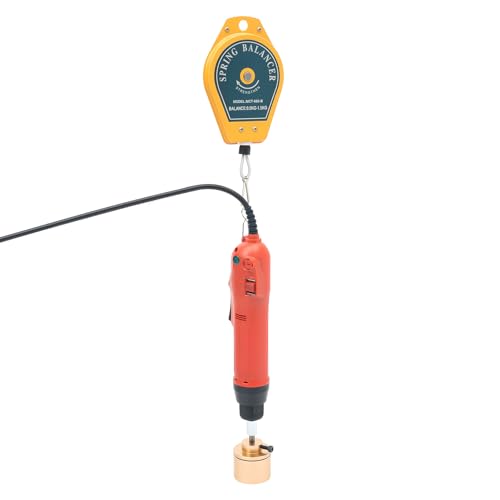
XEJMEOO’s model emphasizes durability with a sturdy frame of plastic, stainless steel, and alloy components. It provides 20–50 caps per minute, a 2–30 kgf torque range, and automatic stop when tightening completes. Forward and reverse controls, along with a well-designed motor, ensure smooth, quiet operation and safer use in busy bottling environments.
DEIGEHJRE Handheld Electric Bottle Capping Machine

DEIGEHJRE’s unit is built from high-quality plastics, stainless steel, and alloy components for durability. It features a torque range of 2–30 kgf (4–66 lbs) and a labor-saving switch for easy operation. The device aims to reduce manual cap tightening while delivering a comfortable grip and a modern, streamlined appearance. It also emphasizes safe, controlled torque to minimize cap or stopper damage.
Buying Guide: Key Purchase Considerations
- Cap compatibility and range: Verify the machine supports your cap diameter and shape, as most units cover 10–50 mm or 10–30 mm ranges.
- Torque range and control: Look for adjustable torque to prevent overtightening and to suit various cap materials and bottle types.
- Speed and throughput: Consider bottles per minute in relation to your production schedule; higher speeds boost output but may require sturdier setups.
- Power source and mobility: Decide between plug-in models (AC 110V) and any battery-assisted options, based on workstation layout and portability needs.
- Safety features: Auto-stop, reverse function, and protective guards reduce the risk of damage to caps and bottles and improve operator safety.
- Ergonomics and weight: Lightweight, well-balanced tools reduce operator fatigue during long shifts and repetitive use.
- Headularity and adjustability: Interchangeable heads or adjustable guidance help handle different bottle heights and cap types.
- Durability and materials: Look for devices built with copper motors, stainless steel, and reinforced housings for long-term reliability.
- Maintenance and service: Check for ease of disassembly, availability of replacement parts, and customer support from the seller.
- Cost of ownership: Consider initial price, warranty length, and potential consumables when evaluating total cost of ownership.
Add a Comment