Gas detection is critical for worker safety and regulatory compliance in many industries. Automated test systems streamline calibration, verification, and data logging, reducing downtime and human error. Below are five top picks that balance advanced testing capabilities with practical field use. Each entry includes a quick look at what makes it suitable for a typical maintenance or safety program, plus a brief buying guide tailored to different work settings.
| Product | Brand | Key Capabilities |
|---|---|---|
| ALTAIR 4/4X Multi-Gas Detector Calibration Station / GX2 Automated System Test Stand | MSA | Intelligent testing, touchscreen start, supports up to ten instruments |
| ALTAIR 5/5X Multi-Gas Detector Charger / Galaxy GX2 Automated Test System | MSA | Multi-device charging, compatibility with GX2 system, status LEDs |
| 4 Gas Monitor with Built-in Pump (O2, CO, H2S, LEL) | FORENSICS DETECTORS | Built-in pump, data logging, NIST calibration |
| ALTAIR 4/4X Multi-Gas Detector Charger | MSA | Quad-device charging, GX2 compatibility, clear status indicators |
| Guard-863Pro 4 Gas Monitor | TOPTES | Fast response, upgraded O2 sensor, TFT display, USB data export |
MSA ALTAIR 4/4X Calibration Station / GX2 Automated System Test Stand

The MSA ALTAIR 4/4X Calibration Station with the GX2 Automated System Test Stand is designed for automated, touch-driven testing of ALTAIR 2X and 4XR/5X gas detectors. Its intelligent testing capability helps ensure detector accuracy across a fleet by performing routine checks, gas exposure verification, and alarm validation. The system supports connecting up to ten instruments at once, which can dramatically reduce calibration time in larger facilities. The portable design lets technicians move between sites without sacrificing test consistency, making it suitable for mid-to-large industrial operations that require reliable, repeatable tests.
The test stand’s touchscreen interface is built for ease of use during frequent calibration cycles, and its broad compatibility means organizations can standardize testing across multiple detector models. While the unit focuses on testing capabilities, it also helps simplify compliance reporting through repeatable procedures and traceable results. For teams that depend on accurate gas readings for safety, the ALTAIR 4/4X calibration station provides a scalable testing solution that integrates with existing ALTAIR detector fleets.
MSA ALTAIR 5/5X Charger with Galaxy GX2 Automated Test System

The ALTAIR 5/5X Charger, paired with the Galaxy GX2 automated test system, provides a centralized charging and testing workflow for ALTAIR detectors. This setup enables charging up to four detectors simultaneously while also serving as a test station to verify calibration readiness. Red and green LED indicators offer quick status feedback to technicians, helping maintain a ready-to-use fleet for urgent jobs or emergencies. The dual-purpose design reduces clutter and ensures detectors are consistently charged and tested in one integrated workflow.
For maintenance teams operating across multiple shifts, the ability to simultaneously charge several units minimizes downtime and ensures detectors stay within calibration schedules. The charger’s compatibility with the GX2 test system supports a unified approach to testing and charging, which can simplify inventory management and training requirements for safety staff.
4 Gas Monitor With Built-In Pump (O2, CO, H2S, LEL)
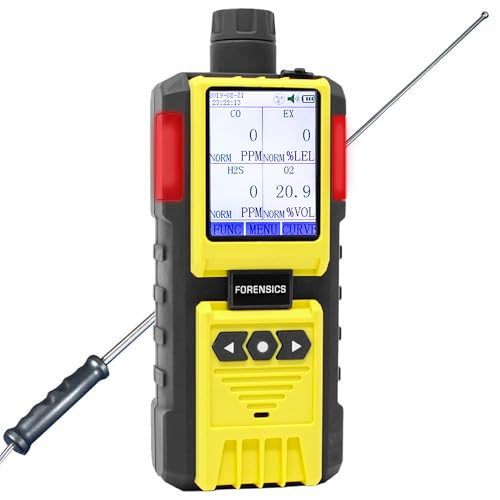
This multi-gas monitor from Forensics Detectors FD combines a built-in pump with a 4-gas sensing array, including O2, CO, H2S, and LEL. Calibrated to NIST standards in the USA, it provides reliable data logging and alarm recording, making it a solid option for environments where continuous monitoring and documentation of gas events are essential. A color display and graphing functions support intuitive operation, while data logging capabilities enable traceable test histories for compliance auditing. This unit is suitable for field and laboratory applications where portability and robust performance are required.
Users benefit from the device’s calibration traceability and built-in pump, which eliminates the need for separate sampling pumps in many workflows. The combination of real-time monitoring, alarms, and data recording supports a comprehensive safety program, particularly where gas events must be investigated after they occur or reviewed during safety audits.
MSA ALTAIR 4/4X Multi-Gas Detector Charger

The ALTAIR 4/4X Charger is designed to support multi-device charging for up to four ALTAIR detectors, ensuring that a fleet remains fully operational and ready for field deployment. In addition to charging, the unit’s compatibility with the Galaxy GX2 Test System lets teams consolidate testing and calibration into a single workflow. Clear LED indicators provide at-a-glance status for each device, helping technicians quickly identify which detectors are ready for use and which require attention. This charger is ideal for facilities with a need to manage multiple detectors across several teams or shifts.
Publishing and safety teams may rely on this setup to reduce maintenance downtime and maintain calibration discipline. By streamlining charging and enabling easier integration with automated test routines, organizations can uphold device reliability while controlling labor costs.
Guard-101 TopTes 4 Gas Detector
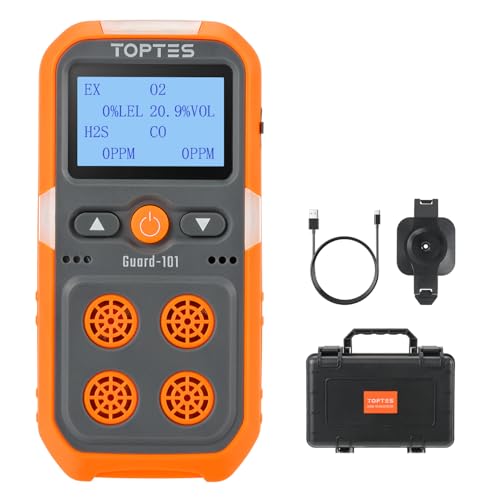
The Guard-101 from TOPTES is a compact, explosion-proof 4-gas monitor designed for rapid detection of H2S, CO, LEL, and O2 with a 14-hour battery life. Its triple alarm system—visual, audible, and vibration—provides multi-modal alerts, and the device stores alarm records for later review. With IP-rated housing and a back clip, it offers portability and resilience for fieldwork in potentially harsh environments. The unit’s password protection helps prevent accidental operation, making it a practical choice for work sites that require controlled access to gas-monitoring equipment.
While not a full stationary test system, Guard-101’s rugged build and long battery life make it well-suited for handheld detection during pre-shift checks and on-the-fly safety verifications. The combination of fast response, secure operation, and data storage supports safer work practices in construction, manufacturing, and industrial settings where quick, reliable gas detection is critical.
Guard-863Pro TopTes 4 Gas Monitor

The Guard-863Pro is a professional-grade 4-gas monitor designed for demanding environments. It detects H₂S, CO, LEL, and O₂ with a fast 0.5-second response time and features an upgraded O₂ sensor with a potential five-year lifespan. The TFT color display presents real-time gas concentration data and trend matrices, while USB data export supports efficient logging of alarm histories, faults, calibration notes, and operation history. Its continuous triple alarm system ensures immediate alerts until readings return to safe levels, and the device is designed to withstand tough work environments, aiding compliance and safety programs.
This model suits industrial sites that require high-precision gas monitoring, robust data management, and long-term sensor reliability. For teams conducting regular inspections, incident investigations, or equipment calibrations, the Guard-863Pro provides a versatile platform for ongoing safety assurance and performance documentation.
PT-830S TopTes 14.5-Inch Probe Gas Leak Detector

The PT-830S is a specialized gas leak detector featuring a 14.5-inch flexible probe. It supports a broad detection range up to 10,000 ppm, and a TFT color display provides real-time readings, alongside configurable alarm thresholds. The gooseneck probe facilitates access to hard-to-reach spots, enabling precise leak localization in industrial facilities or home environments. Multiple alert modes—including audible, visual, and vibration—can be tailored to specific site requirements, while the device’s portability makes it suitable for quick leak checks across large sites or during maintenance tasks.
The PT-830S is a strong choice for professionals who need a high-precision leak detector with extended reach, straightforward visual data presentation, and customizable alerts. Its combination of flexible probing, clear readouts, and robust sensing makes it useful for service technicians, plumbers, and safety teams working on gas infrastructure, installations, or emergency response drills.
Buying Guide: Key Purchase Considerations
- Automation scope: Determine whether you need a full calibration station with automated testing and fleet-wide verification, or a handheld/portable monitor for spot checks and incident response. For multi-detector fleets, automated test stands can dramatically reduce downtime.
- Detector compatibility: Ensure the system supports your detector models and brands, and whether it can integrate with existing GX2 or similar test ecosystems for standardized workflows and reporting.
- Sensor types and life span: Prioritize units with reliable electrochemical sensors and durable oxygen sensors for long-term use. Consider devices with longer sensor lifespans and easy field calibration capabilities to minimize maintenance.
- Data logging and export: Look for built-in data logging, alarm history, calibration records, and USB or network export options to streamline audits, training, and regulatory compliance.
- Battery and portability: For handheld devices, battery life is critical for extended field work. For stationary stands, verify power requirements and ease of transport between sites if used on multiple locations.
- Alerts and alarms: Multi-modal alerts (visual, audible, vibration) improve safety in noisy or large facilities. Confirm configurable alarm thresholds to match site-specific exposure limits.
- Calibration standards and traceability: Devices calibrated to NIST or equivalent standards offer stronger traceability for safety documentation and regulatory reviews.
- Maintenance and service: Consider the availability of replacement parts, service coverage, and warranty terms to ensure minimal downtime during calibration schedules or repairs.
- Cost of ownership: Evaluate initial purchase price, ongoing maintenance, charger or test-system fees, and the number of detectors you plan to support to determine total cost of ownership.
- Compliance fit: If your program requires formalized reporting, prioritize systems with easy data export and compatibility with compliance frameworks common in your industry (oil and gas, manufacturing, utilities, etc.).
Selecting the right automated gas detector test system involves balancing test throughput, fleet size, and reporting needs with the working environment. The options above present a range of capabilities—from automated calibration stands to robust handheld monitors—allowing organizations to tailor a solution that supports safety, reliability, and regulatory assurance across operations.
Add a Comment