When selecting an ASTM A312 stainless steel pipe, focus on diameter, wall thickness, length, and whether the pipe is welded or seamless. This guide covers five representative products that balance durability, corrosion resistance, and fabrication ease for typical American applications—from plumbing and HVAC to food processing and industrial piping. Each option is suited for different buyers: contractors needing longer lengths, fabricators requiring precise tolerances, and hobbyists seeking ease of welds and assembly.
| Product | Material/Grade | Length | Diameter | Best For |
|---|---|---|---|---|
| 1-1/2 NPS SCH 40 x 72″ | 304 stainless | 72″ | OD 1.900″ / ID 1.610″ | General piping in facilities |
| 304 Stainless Pipe, Schedule 40, 1.5″ | 304 stainless | 24″ | OD 1.9″ / ID 1.61″ | Short runs, assemblies |
| 304 Stainless Pipe, Schedule 40, 1.5″ | 304 stainless | 72″ | OD 1.9″ / ID 1.61″ | Longer runs, fabrication |
| 2″ 304L Stainless Pipe, Schedule 10S | 304/304L welded | 1′ | Mill ID/OD | Compact, precise welds |
| 304 Stainless Pipe, Schedule 40, 3/4″ | 304 stainless | 72″ | OD 1.05″ / ID 0.824″ | Small-diameter runs |
1-1/2 NPS SCH 40 x 72″ Long 304 Stainless Welded Pipe

Outside Diameter: 1.900 inch; Wall Thickness: 0.145 inch; Inside Diameter: 1.610 inch. This welded 304 stainless steel pipe offers solid corrosion resistance and is well-suited for general piping tasks in water systems, chemical handling, and food processing environments. Best for projects requiring longer lengths with a straightforward weld finish. Caution: welded joints may need professional welding for critical pressure applications.
304 Stainless Pipe, Schedule 40, 1.5″ Nominal, 24″ Length

Features: 304 stainless steel, high corrosion resistance; 1.5″ nominal with 1.61″ ID and 1.9″ OD; 24″ length. Best for short to medium runs in lab setups, food processing equipment, and light industrial piping where ease of fabrication matters. Better for projects needing a compact length without sacrificing corrosion resistance. Limitation: shorter length may require more joints or couplings than longer pipes.
304 Stainless Pipe, Schedule 40, 1.5″ Nominal, 72″ Length
This 304 stainless pipe offers the same material advantages with a long 72″ length, ideal for longer runs in curtain-wall systems, architectural trim, and process lines. Best for projects needing fewer joints and improved flow with a seamless appearance. Choose this if you want fewer weld points and more continuous piping. Limitation: longer stock may be heavier to handle and ship.
2″ 304L Stainless Steel Pipe, Schedule 10S
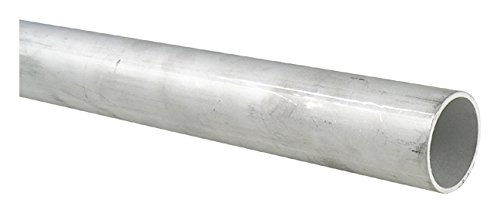
Best for compact installations where precise welds and housing clearances matter. This 2″ pipe is dual-certified A312 and features mill ID/OD for smooth fabrication. The thicker walls help resist cracking under high exhaust pressure and thermal stress. Better for exhaust systems, industrial transfer lines, and applications requiring reliable weld integrity. Limitation: 2″ size may be overkill for small-diameter tasks.
304 Stainless Pipe, Schedule 40, 3/4″ Nominal, 72″ Length
With 0.824″ inner diameter and 0.11″ wall, this 3/4″ nominal pipe provides a balance of stiffness and flexibility for light to medium-duty piping tasks. Best for small-bore piping in beverage lines and small instrument runs. Better for systems requiring tight bends or compact layouts. Limitation: smaller diameter reduces flow capacity compared to larger pipes.
Stainless 304 Pipe Schedule 80 1/2″ Nominal

Features: 304 stainless steel with Schedule 80 wall thickness of 0.15″, 0.546″ ID, 0.84″ OD, 48″ length. Best for high-pressure or high-stress environments where extra wall thickness is essential. Choose this if you anticipate higher pressure loads or thermal cycling. Limitation: heavier and more expensive than Schedule 40 equivalents.
1-1/2″ 304L Stainless Steel Pipe, Schedule 40S
Best for precise fabrication with dual-certified A312 and a mill ID/OD finish. The 1-1/2″ size resonates with mid-sized piping layouts where reliable welds and consistent tolerances are critical. Better for projects requiring compatibility with other A312/304L components. Caution: ensure alignment with other 1-1/2″ connectors to minimize misfits.
Buying Guide: Key Considerations For ASTM A312 Stainless Pipe
- Material grade: 304 vs 304L. Choose 304 for general corrosion resistance; 304L is preferred where welding is frequent or where lower carbon content reduces sensitization risk.
- Wall thickness and schedule: Schedule 40 is common for pressure tasks, while Schedule 80 offers thicker walls for higher pressure and temperature resistance. Match to application loads and safety requirements.
- Welded vs seamless: Seamless (where listed) provides uniform interior flow and fewer welds; welded pipes are common, cost-effective, and suitable for many installations when properly fabricated.
- Diameter and length: Ensure interior clearance for flow and fit with existing fittings. For longer runs, consider longer pipes to reduce joints and potential leak points.
- Mill ID/OD tolerances: Tighter tolerances improve fit and reduce machining time on fabrication projects.
- Temper and finishing: Mill-finish vs seamless cold drawn finishes influence ease of welding, machining, and cosmetic appearance in architectural projects.
- Application environment: Food processing, chemical processing, or high-corrosion environments may dictate higher corrosion resistance, sanitizability, or compliance with industry standards.
Frequently Asked Questions
- What is ASTM A312: It is a standard specification for seamless and welded austenitic stainless steel pipe used in high-temperature and pressure piping systems.
- When to choose Schedule 40 vs Schedule 80: Schedule 40 suits most general piping tasks; Schedule 80 is chosen for higher pressure and temperature or when extra wall thickness is required for safety margins.
- Is 304L better for welding: Yes, 304L has a lower carbon content which reduces sensitization risk during welding, making it better for welded assemblies.
- What is the difference between welded and seamless pipes: Welded pipes are manufactured by welding a seam; seamless pipes have no weld seam and can offer smoother interior flow and uniform strength.
- Which diameter should I select: Choose a diameter based on required flow rate, fitting availability, and installation space. Larger diameters increase flow but require more material and space.
- Are these pipes suitable for food processing: 304 stainless steel is commonly used in food and beverage industries due to corrosion resistance and cleanliness; verify hygiene and compliance requirements for your project.
Add a Comment