Air pressure relief valves protect compressors, tanks, and lines by releasing excess pressure or venting vacuum when needed. This guide highlights five reliable options and explains which buyers each product suits best. It’s written to help enthusiasts, hobbyists, and professionals select the right relief valve for stand-alone air compressors, portable tanks, or integrated pneumatic systems.
Summary table of selected products:
| Product | Preset Relief Pressure | Port Size | Best For |
|---|---|---|---|
| HONSNKS 2 Pcs 175 PSI | 175 PSI | 1/4″ NPT | Standard pressure protection for most hobby and light-duty shops |
| LSTOPGO 150 PSI (2-Pack) | 150 PSI | 1/4″ NPT | Cost-effective replacement for daily use |
| Sellerocity 0–100 PSI Adjustable | 0–100 PSI | 1/4″ NPT | Versatile, precise setting for varied applications |
| DALQUIS 150 PSI | 150 PSI | 1/4″ NPT | Durable brass with reliable regulation |
| HONSNKS 200 PSI | 200 PSI | 1/4″ NPT | Higher-setpoint systems or tanks with elevated maximums |
HONSNKS 2 Pcs 175 PSI Brass Relief Valves

Overview: A pair of brass pressure relief valves preset at 175 PSI. They use 1/4″ NPT male threads and measure about 1.38 inches long, with a maximum width near 0.55 inches. Material: brass for corrosion resistance, high-temperature ductility, and minimal magnetic permeability. Flow rate is 67 scfm. Best for hobbyist air compressors and basic shop setups that require dependable overpressure protection.
Who this is best for: DIYers and small shops needing a ready-to-install safety valve with solid brass construction. Why selected: The 175 PSI preset aligns with common compressor settings, and the 1/4″ NPT thread fits standard equipment. Caution: Confirm the system’s maximum operating pressure to avoid selecting a valve with a too-low threshold for your setup.
LSTOPGO 2-Pack 150 PSI Brass Relief Valves

Overview: Two 1/4″ NPT brass relief valves preset to 150 PSI with a flow of 58 scfm. Built with brass housing and threaded seals treated for reliability. Temperature range supported from 32°F to 176°F. Best for replacement in existing systems or for simple, low-to-mid-range pressure protection.
Who this is best for: Budget-conscious buyers needing dual valves for redundancy or multiple circuits. Why selected: The 150 PSI preset fits many standard hobby and workshop compressors. Caution: The valves’ sealing relies on proper thread locking; ensure threads are clean and tight during installation.
Sellerocity Adjustable 0–100 PSI Brass Valve

Overview: This adjustable, universal valve is designed with a micrometer-style knob for precise relief pressure settings up to 100 psi. It combines a rugged brass body with a stainless steel poppet and spring for corrosion resistance and durability. Standard 1/4″ NPT installation supports broad compatibility with tanks and pneumatic lines.
Who this is best for: Professionals and advanced hobbyists who need exact control over relief thresholds. Why selected: The adjustable range allows tailorable protection across different machines. Caution: If used above 100 psi, it requires a different model or a higher-range valve to prevent overpressurization.
DALQUIS 150 PSI Brass Safety Valve
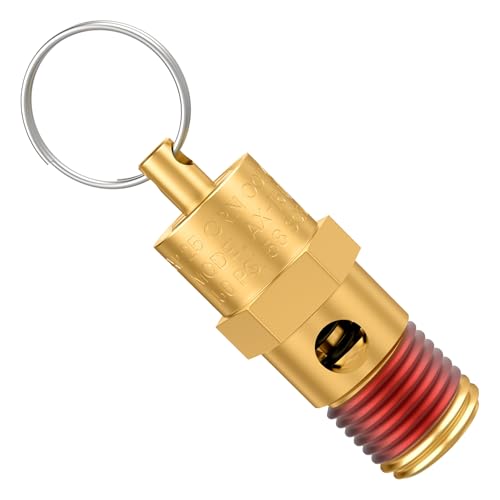
Overview: A 1/4″ NPT brass safety valve preset at 150 PSI with a flow of 70 scfm. It supports temperatures from 32°F to 176°F and focuses on reliable discharge of air, water, and oil from air compressors. Durable, corrosion-resistant brass construction suits frequent use in varied environments.
Who this is best for: Builders replacing worn valves or outfitting a new compressor line with dependable regulation. Why selected: The 150 PSI rating and high flow rate suit many standard shop compressors, and brass construction adds longevity. Caution: Verify compatibility with any non-standard fittings or adapters before installation.
HONSNKS 2 Pcs 200 PSI Brass Relief Valves

Overview: A second HONSNKS option with a higher 200 PSI preset. Features 1/4″ NPT male threads, brass construction, and a 1.38 inch length. The valve releases excess pressure when needed and then closes automatically as pressure returns to the set point. Flow is 76 scfm.
Who this is best for: Systems that operate near 200 PSI or higher, where higher relief thresholds are required. Why selected: Higher preset expands compatibility with robust air systems. Caution: Higher pressure relief may not suit smaller tanks or delicate components; match to system ratings to avoid over-relief risk.
Buying Guide: How To Choose The Right Air Pressure Relief Valve
- What pressure range does your system require? Choose a valve with a preset within or just above your normal operating pressure plus a safe margin. Adjustable models are ideal when the exact target is uncertain.
- What is the connection size? Most portable and stationary compressors use 1/4″ NPT. Verify thread type and diameter before purchasing adapters or replacing existing units.
- Material and durability: Brass valves offer good corrosion resistance and temperature tolerance. Stainless components increase longevity in harsh environments but may cost more.
- Flow capacity: Higher scfm values indicate faster relief capacity. Match the flow rate to your system’s venting needs and line sizes.
- Installation considerations: Ensure proper seating of O-rings and seals. Use thread sealant appropriate for gas and air to avoid leaks.
- Redundancy and placement: In critical setups, consider having multiple relief valves on separate lines to reduce risk of single-point failure.
FAQ
- What is an air pressure relief valve?
It is a safety device that releases excess pressure or venting in a pneumatic system to prevent over-pressurization and potential equipment damage.
- Do I need an adjustable relief valve?
If your system operates across varying pressures, an adjustable valve helps dial in an exact relief threshold. Fixed presets are simpler and typically cheaper.
- What does scfm mean in valve specs?
SCFM stands for standard cubic feet per minute and measures the volumetric flow capacity of the valve at standard conditions.
- Can I reuse old valves?
Only if the threads, seals, and body show no signs of damage. For reliability, replacing worn valves with brass units is common in pneumatic systems.
- Is brass the best material for relief valves?
Brass offers good corrosion resistance and temperature tolerance, making it a common choice for many compressors. Stainless components are an option for more demanding environments.
- What safety considerations should I follow during installation?
Depressurize the system before installation, ensure correct torque on fittings, and verify leak-free operation after installation.
Add a Comment