When selecting an air dryer compressor system, choose based on your compressor horsepower, required CFM, and the needed moisture and oil removal level. This guide highlights five top options suitable for workshops, garages, and industrial setups, with clarity on who each model is best for and why. Each product is evaluated for ease of use, drainage, and filtration quality to help you pick the right fit.
| Product | Brand | CFM | HP Compatibility |
|---|---|---|---|
| VEVOR Compressed Air Dryer, 85CFM | VEVOR | 85 | 15 HP & 20 HP |
| HPDAVV Industrial Refrigerated Air Dryer, 35 CFM | HPDAVV | 35 | 7.5 – 10 HP |
| VEVOR Compressed Air Dryer, 125CFM | VEVOR | 125 | 20 HP, 25 HP & 30 HP |
| Schulz Refrigerated Air Dryer, 35 CFM | EDGE_INDUSTRIAL | 35 | 7.5 – 10 HP |
| 3/4″ NPT Industrial Grade 3 Stage Air Drying System | Gokluuk | — | Industrial up to 240 PSI |
VEVOR Compressed Air Dryer, 85CFM

The VEVOR 85CFM refrigerated air dryer is designed for 15 HP and 20 HP compressors. It uses R134a refrigerant and includes a color screen control panel with automatic drainage, enabling efficient moisture removal at up to 232 PSI. Dew point ranges from 35.6°F to 50°F, suitable for demanding shop environments where clean, dry air is essential for pneumatic tools, spray painting, and CNC work. Best for mid-sized industrial setups or garages upgrading from basic filtration.
Best for: Shops running 15–20 HP systems needing reliable, automated drying with clear control feedback. Caution: Ensure proper clearances around the unit for airflow and heat dissipation.
HPDAVV Industrial Refrigerated Air Dryer, 35 CFM
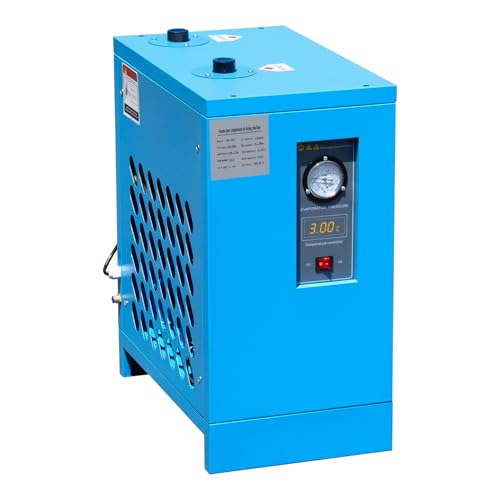
This 35 CFM refrigerated dryer targets 7.5–10 HP compressors, delivering moisture and oil removal with an energy-efficient R134a cooling system. With a 0.58 kW drive, it maintains stable temperatures to prevent moisture buildup in workshops, garages, or CNC environments. Best for smaller shops or hobbyists upgrading from basic filters who need consistent dry air for pneumatic tools and spray work.
Best for: Small-to-mid sized shops needing dependable moisture control without high power demand. Caution: Lower CFM means it may not cover very high-demand production lines.
VEVOR Compressed Air Dryer, 125CFM
The 125 CFM VEVOR dryer is compatible with 20 HP, 25 HP, and 30 HP compressors. It features a color screen control panel and automatic drainage, delivering rapid moisture removal through a large evaporator area. Ideal for larger manufacturing airflow demands, spray booths, and heavy pneumatic tooling where continuous dry air is critical.
Best for: Facilities running higher HP ranges needing robust, automated drying with fast moisture condensation. Caution: Verify ducting and space for the larger footprint and condensate management needs.
Schulz Refrigerated Air Dryer, 35 CFM

Schulz offers a 35 CFM refrigerated dryer with a built-in water separator and oil-removing coalescing filter. It provides a dew point around 41°F and supports up to 200 PSI, making it suitable for industrial air systems with moderate flow and higher moisture risks. Best for: Environments requiring integrated filtration with a reliable, ready-to-use kit. Limitation: Check if additional pre-filters or regulators are needed for your setup.
3/4″ NPT Industrial Grade 3 Stage Air Drying System

This 3-stage system uses a 5-micron first stage, a 0.01-micron coalescing second stage, and an auto drain, delivering up to 240 PSI. It targets robust moisture and solid particle removal for plasma cutters and paint spray workflows. Best for: High-demand shops needing strong stage filtration in one compact package. Limitation: Horizontal installation is discouraged; verify mounting orientation for optimal performance.
Buying Guide
Key considerations when choosing an air dryer compressor system:
- Air flow and horsepower: Match CFM and compressor HP to prevent under- or over-drying and ensure efficiency.
- Moisture and oil removal level: Higher stage filtration and coalescing filters improve air quality for sensitive tools.
- Dew point and operating environment: Warmer spaces require more robust cooling; confirm dew point targets suit your tools.
- Drainage and maintenance: Automatic drains reduce manual work; check filter replacement indicators and ease of element replacement.
- Installation footprint: Larger units may need additional space for airflow and heat dissipation.
- Power and refrigerant types: Ensure compatibility with your electrical system and refrigerant preferences (R134a or R410a).
FAQ
- What is the difference between a refrigerated and desiccant air dryer?
Answer: Refrigerated dryers use cooling to condense moisture and are suitable for most general-purpose applications, while desiccant dryers dry air to very low dew points and are used for highly sensitive tools and processes. - How do I know which CFM I need?
Answer: Choose a dryer that supports at least the peak CFM of your compressors, plus a buffer for expected growth and tool bursts. - What is a dew point, and why does it matter?
Answer: The dew point is the temperature at which moisture condenses. Lower dew points prevent moisture-related damage in pneumatic tools and finishes. - Is automatic drainage essential?
Answer: Automatic drainage reduces maintenance and helps maintain consistent dryness, especially in high-use environments. - Can I mix different brands of dryers in one system?
Answer: It is possible but not always recommended; ensure compatibility of pressure ratings and fittings to avoid performance issues.
Add a Comment