Looking for a gas-powered air compressor that balances power, portability, and endurance? This guide highlights five top options, each suited to different needs—from mobile service fleets to workshop use. Best for: contractors needing mobile capability; homeowners or DIYers seeking steady performance; pros needing higher CFM for heavy tools. The table below compares core specs to help you choose quickly.
| Product | Tank | HP/Engine | Max PSI | CFM | Best For |
|---|---|---|---|---|---|
| Albott 13HP Gas Air Compressor 30 Gallon | 30 gal | 13 HP | 180 | 18 @ 90 PSI | Large jobs, long runtimes |
| Albott 6.5HP Gas Air Compressor 20 Gallon | 20 gal | 6.5 HP | NA | Dual outlets | Two-tools operation |
| Metabo HPT 8 Gallon Gas Wheelbarrow | 8 gal | Honda GX | 145 | Variable to high | Framing, roofing, siding |
| DEWALT 4 Gallon Portable Gas | 4 gal | Honda GX160 | 90 | 6.9 SCFM @40 psi; 5.0 @90 psi | Light-duty, portable |
| JCAIR 30 Gallon Truck Mount | 30 gal | Honda GX390 | 175 | up to 24 CFM | Mobile service trucks |
Albott 13HP Gas Air Compressor 30 Gallon
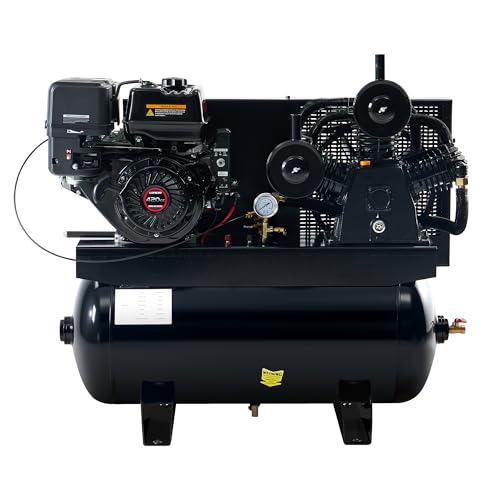
Albott’s 13 HP gas-powered unit uses a 30-gallon ASME-certified tank for safer, long-running air storage. It delivers up to 180 PSI with 18 CFM at 90 PSI, suitable for heavy-duty tools and extended use. The three-cylinder cast iron pump, reinforced frame, and large sight glass support maintenance and durability. Best for contractors or workshop users who need high-pressure output and a steady air supply. Limitation: heavier and less portable than smaller models, best used on a stable base or jobsite with mobility aids.
Albott 6.5HP Gas Air Compressor 20 Gallon
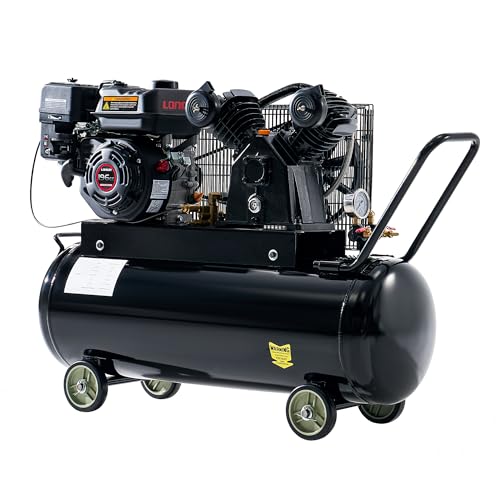
This 6.5 HP Albott unit offers a 20-gallon tank with dual 1/4″ NPT outlets, ideal for running two tools simultaneously. The heavy-duty two-cylinder cast iron pump and reinforced frame emphasize durability and consistent compression. Best for small-to-medium workshops or job sites where two tools run at once. Avoid this if you require higher CFM for multiple high-demand tools or extended continuous running at peak PSI.
Metabo HPT Gas Powered 8 Gallon Wheelbarrow

Powered by a professional-grade Honda GX engine, this 8-gallon unit delivers robust performance for framing, roofing, siding, and finishing tasks. Its cast iron cylinder supports long life and reduced wear, while the wheelbarrow design enhances site mobility. Best for professional crews needing reliable power on rough job sites. Limitation: compact tank capacity may require more frequent short-cycle runs under heavy load.
DEWALT 4 Gallon Portable Gas Powered

DEWALT’s compact unit uses a Honda GX160 engine for reliable starts and efficient fuel use, with oil-free, direct-drive pumping for low maintenance. It provides 6.9 SCFM at 40 psi and 5.0 SCFM at 90 psi, making it suitable for light-duty jobs or DIY projects. Best for portability and quick tool readiness; choose this if space and weight are primary concerns. Caution: with smaller tanks, you may see more frequent cycling during high-demand tasks.
JC AIR 30 Gallon Truck Mount

This 30-gallon, 24 CFM, 175 PSI Honda GX390-powered compressor is designed for service trucks and field repair. The truck-mount configuration supports mobility for fleets and mobile mechanics. Best for service vehicles needing sustained performance across multiple air tools. Limitation: truck-mount design may require vehicle integration planning and space considerations in the work vehicle.
Buying Guide: Key Purchase Considerations
- Tooling and CFM needs: Determine the highest CFM you’ll require at your typical operating PSI to choose a unit that won’t stall when you run multiple tools.
- Tank size and duty cycle: Larger tanks reduce motor run time but add weight and size. For mobile jobs, consider wheelbarrow or truck-mount designs for portability.
- Engine and maintenance: Gas engines like Honda GX variants are well-regarded for reliability. Look for cast iron cylinders and high-quality pumps for durability.
- Portability vs. capacity: Balance the need for mobility with the volume of air you need. Portable units are ideal for small spaces; larger tanks suit sustained tool use.
- Tank certification and safety: ASME-certified tanks offer safer, longer storage and are important for heavy-use environments.
- Outlets and configuration: Dual outlets and multiple PSI settings add flexibility for running several tools at once.
Frequently Asked Questions
- What is the advantage of a gas-powered air compressor over electric?
Gas units offer portability and consistent operation in areas without reliable electrical power, suitable for job sites and fleets. - How do I choose the right tank size?
Larger tanks reduce motor cycling and are better for continuous tool use; smaller tanks favor portability and lighter weight. - Are oil-free pumps better for maintenance?
Oil-free pumps reduce routine maintenance but may require more frequent seals checks in tough environments. - Can I run two tools at the same time?
Some models provide dual outlets; for simultaneous use, ensure the unit has adequate CFM and outlets to handle both tools. - Is a higher PSI always better?
Higher PSI is useful for tools requiring high pressure, but CFM at those pressures matters for real-world performance. - What maintenance is typical for gas-powered compressors?
Regular inspection of the air filter, oil level (for non-oil-free models), pump cooling, and belt tension are common tasks.
Add a Comment