Choosing the right 8 GPM hydraulic pump helps ensure efficient lifting, splitting, or hydraulic actuation for demanding tasks. This guide highlights five solid options that balance flow rate, pressure, and durability. Best suited for: heavy-duty log splitters, dump trailers, and trailer-mounted lifting systems. The listed selections emphasize higher flow where it matters, while noting practical limits and installation considerations to help buyers decide which pump fits their setup.
| Product | Flow Rate | Max Pressure | Use Case |
|---|---|---|---|
| Anfield 8 GPM Two-Stage Hydraulic Log Splitter Pump | 8 GPM | Unknown | Heavy log splitting, compatible with 5 HP gas engines |
| Nakkaa 11GPM 2 Stage 3000PSI Hydraulic Log Splitter Pump | 11 GPM | 3000 PSI | High-speed wood processing and splitting |
| H2136201 Hydraulic Pump (15.3 GPM @ 1000 RPM) | 15.3 GPM | 1000 RPM rating | Medium to heavy hydraulic systems |
| Weonefit Hydraulic Wood Log Splitter Pump (22 GPM, 3600 RPM) | 22 GPM | 3000 PSI | Fast cycle wood processing |
| RuggedMade 11 GPM 2 Stage Hydraulic Log Splitter Pump | 11 GPM | 3000 PSI | Durable, high-flow splitting |
Anfield 8 GPM Two-Stage Hydraulic Log Splitter Pump

The Anfield pump delivers 8 GPM in a two-stage design, making it well-suited for faster wood splitting when paired with a compatible gas engine. Best for users seeking a straightforward, mid-high flow option in log-splitting setups. The two-stage design can improve cycle times, particularly with larger logs. A potential limitation is compatibility with specific engine mounts and inlet/outlet sizing, so confirm mounting and plumbing before purchase.
Nakkaa 11GPM 2 Stage 3000PSI Hydraulic Log Splitter Pump
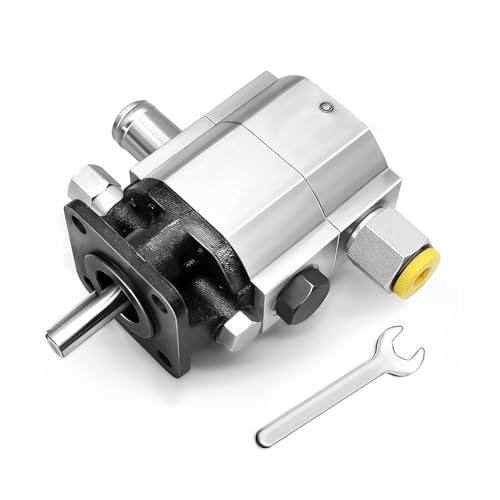
The Nakkaa pump operates at 11 GPM with a 2-stage design and a maximum of 3000 PSI, delivering high performance for rapid wood processing. It features aluminum housing for reduced weight and good heat dissipation, aiding durability in demanding environments. Best for higher-demand wood splitting tasks where speed is a priority. Limitation: port sizes and mounting must align with your splitter frame and drive system.
H2136201 Hydraulic Pump (15.3 GPM, 1000 RPM)

This high-flow pump delivers 15.3 GPM at 1000 RPM and uses a rugged cast-iron build with a spline shaft for solid drive engagement. Best for medium to heavy hydraulic systems that require consistent, high-volume flow. Choose this if your application benefits from higher flow at a steady speed. Caution: ensure the drive system and PTO or motor can handle the higher discharge without overheating or excessive vibration.
Magister Hydraulics Gear Pump (0.61 Cu In, 3500 RPM)

Although a lower displacement option at 0.61 cubic inches, this gear pump runs up to 3500 RPM and offers a compact, CW-rotation design. Best for compact hydraulic circuits or projects where space is a premium and higher RPM operation is viable. Better for smaller setups or as a secondary pump in a multi-pump system. Limitation: flow rate may not reach the upper 8 GPM target in all configurations.
Buying Guide
What to consider when choosing an 8 GPM hydraulic pump
- System compatibility: Check inlet/outlet ports, shaft size, mounting bolts, and drive compatibility with your motor or PTO.
- Flow and pressure needs: Align the pump’s GPM and PSI with your intended task—log splitting, lifting, or material handling.
- Construction and durability: Look for cast iron or aluminum housings, seals, and corrosion resistance for long-term use.
- Two-stage vs single-stage: Two-stage pumps can offer faster cycles; single-stage units may be simpler and lighter.
- Installation and maintenance: Pre-assembly, ease of oil filling, and availability of replacement parts matter for downtime.
- Safety features: Built-in relief valves and durable seals help prevent system failures under peak loads.
Frequently Asked Questions
- What does “GPM” measure in a hydraulic pump? Answer: GPM stands for gallons per minute and indicates the pump’s flow rate, which affects cycle speed and lifting power.
- Is a higher GPM always better? Answer: Not always. Higher GPM increases speed but may require more powerful motors and larger components to handle the flow safely.
- Can these pumps run on 12V DC power? Answer: Several models are designed for 12V DC operation, suitable for trailer applications and portable setups.
- Do I need a relief valve? Answer: Many pumps include a relief valve to prevent over-pressurization; verify safety features on the specific model.
- What should I check before buying for a log splitter? Answer: Confirm mounting compatibility, inlet/outlet ports, shaft type, and the engine or motor drive required.
- Are these pumps suitable for continuous operation? Answer: Look for pumps rated for continuous duty and verify cooling needs in your environment.
Add a Comment