For metal fabrication, automotive work, and DIY projects, a 60 amp plasma cutter provides clean cuts, fast setup, and versatile operation. This guide reviews five top 60A plasma cutters that offer dual voltage capability, non-touch pilot arc technologies, and user-friendly features. Each option is evaluated on cutting capacity, ease of use, and reliability to help you pick a model that fits your shop and project needs.
| Product | Brand | Key Strength | Voltage Range |
|---|---|---|---|
| Reboot RBC6000D 60A Plasma Cutter | Reboot | Lightweight; dual voltage; beginner-friendly | 120V/240V |
| YESWELDER 60A Plasma Cutter | YESWELDER | 4-in-1 versatility; non-HF start | 110V/220V |
| bestarc 60A Plasma Cutter | bestarc | Pilot Arc; LED display; air sensor | 110V/220V |
| ARCCAPTAIN 60A Non-HF Plasma Cutter | ARCCAPTAIN | Non-HF blowback; robust cutting | 110V/220V |
| ARCCAPTAIN iControl CUT60 Pro | ARCCAPTAIN | App control; expanded metal & rust removal | 120V/240V |
Reboot RBC6000D 60A Plasma Cutter

The Reboot RBC6000D delivers 1/2″ clean cuts at 120V and up to 5/8″ at 240V, with dual voltage auto-detection and PSI guidance for reliable performance. Weighing under 9 pounds, this model emphasizes portability for garage-to-jobsite use. It is designed with beginner-friendly operation, offering intuitive amperage adjustments and clear PSI readouts to simplify setup for DIY projects, automotive repairs, and light fabrication. The included torch and tips support quick-start cuts, while compact construction helps navigate tight spaces.
YESWELDER 60A Plasma Cutter

This 4-in-1 plasma cutter handles Plate Cutting, Grid Cutting, Gouging, and Marking, offering a broad set of capabilities for metalworking projects. Its non-high-frequency start provides a smooth ignition and reduces interference with nearby electronics. With 60A cutting capacity, it can achieve clean cuts up to 5/16″ at 110V and 1/2″ at 110V, and up to 1″ at 220V. Integrated MCU digital control technology ensures precise, repeatable results across materials like steel, aluminum, and copper. This unit is a strong choice for DIY enthusiasts needing flexibility in a single tool kit.
bestarc Plasma Cutter 60A
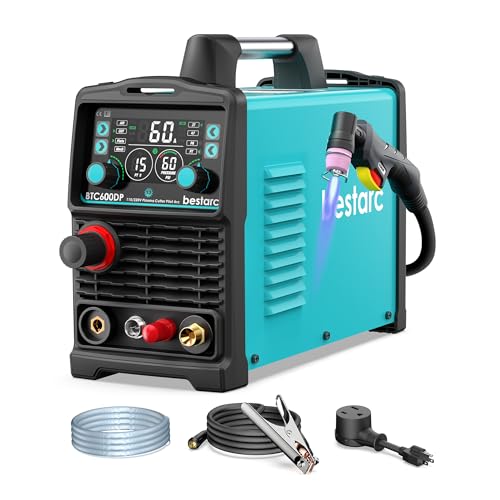
The bestarc 60A plasma cutter features a pilot arc and an LED display with air sensor technology. It supports dual voltage operation (110/220V) and is designed for DIY and heavy-duty tasks alike. The unit can achieve clean cuts up to 12 mm at 35A on 110V and to 20 mm at 60A on 220V, with the air pressure carefully regulated for optimal performance. Pilot arc helps cut rusted or painted surfaces, while the air sensor indicates when adjustments are needed, helping prevent poor cuts and electrode wear.
ARCCAPTAIN 60A Non-HF Plasma Cutter

This model uses a non-high-frequency blowback start for safer operation around home garages. It provides up to 60A on 220V, enabling clean cuts up to roughly 1-1/16″ (28 mm) and a cutting range of 12–16 mm at 110V or 20–28 mm at 220V. The upgraded IPT60 torch design supports easier cutting on painted or rusty surfaces. An external air compressor is required, but the device features a robust cutting experience suitable for a variety of metal projects and repairs.
ARCCAPTAIN iControl CUT60 Pro Plasma Cutter
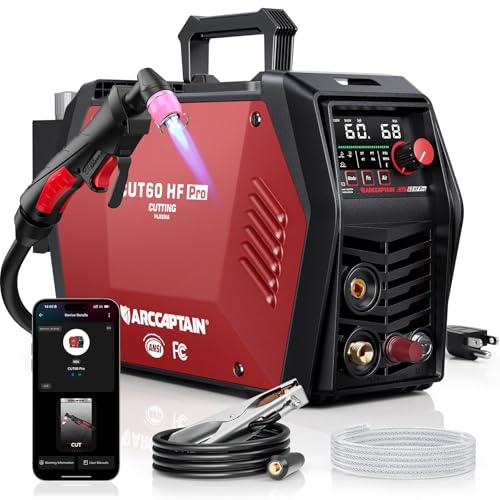
The iControl CUT60 Pro brings app control to plasma cutting with 3rd-gen MCU performance. It supports 120V and 240V operations, delivering stable cuts from 10–16 mm on 120V to 16–26 mm on 240V. Features like expanded metal cutting, rust removal, and a smart LED display help users monitor settings and adjust quickly. The unit also supports mesh cutting with pilot arc functionality, and PA/PT options provide flexibility for beginners and experienced users alike. An external air compressor is required for full operation.
Buying Guide: Key Purchase Considerations
- Voltage and amperage: Dual-voltage tools simplify setups across varying power supplies. Confirm the maximum clean cut thickness at each voltage to match your typical work.
- Pilot arc and ignition type: Pilot arc (including non-HF blowback starts) allows cutting rusty or painted surfaces with less electrode wear and reduced arcing noise. Choose based on the material and environment.
- Portability and weight: Lighter units are easier to transport, but ensure durability for on-site use. Consider a carry case or integrated handles for frequent moves.
- Cutting capacity vs. duty cycle: Higher amp capacity enables thicker cuts but may require robust ventilation and more cooling. Check the duty cycle for continuous work sessions.
- Air supply requirements: Most plasma cutters require a clean, dry air supply. Verify required psi and whether an air regulator or filter is included or sold separately.
- Control features: LED displays, digital readouts, and app control can improve precision and convenience, particularly for beginners or complex projects.
- Accessories and consumables: Nozzles, electrodes, and torches are essential for performance. Some models include starter kits; others require separate purchases.
- Maintenance considerations: Look for units with robust torch design and longer consumable life to reduce downtime and replacement costs.
Choosing the right 60A plasma cutter involves evaluating your typical materials, required cut thickness, and whether you need features like rust removal or expanded-metal cutting. The models above provide a mix of dual-voltage flexibility, user-friendly interfaces, and modern pilot-arc technology to support a wide range of metalworking tasks.
Add a Comment