The top picks below are ideal for buyers seeking reliable 5HP-class gas air compressors capable of powering multiple tools, outdoors, or on job sites. Each selection suits different use cases—from light workshop tasks to heavy-duty framing and painting. The list highlights how capacity, twin-tank design, mobility, and engine quality influence performance.
| Product | Best For | |
|---|---|---|
| Albott 6.5HP Gas Air Compressor, 20 Gallon | Home garage and light pro work | High capacity tank with dual outlets for simultaneous tools |
| VEVOR 9 Gallon Twin-Tank Gas Compressor | Outdoor projects and mobile setups | Two tanks provide stable airflow and dual-tool support |
| HPDAVV 6.5HP Gas Powered 20 Gal | Heavy-duty mobile work in trucks or sites | One-stage design with substantial airflow and portability |
| Metabo HPT THE TANK XL 9-Gallon | Framing, roofing, and siding tasks | Honda GX engine and built-in mobility for demanding jobs |
| DEWALT 4 Gallon Portable Gas | Compact, portable tasks | Oil-free, low-maintenance direct-drive pump |
Note: The table reflects common, practical use cases. Availability and exact specs can vary by model and region.
Albott 6.5HP 20-Gallon Gas Air Compressor
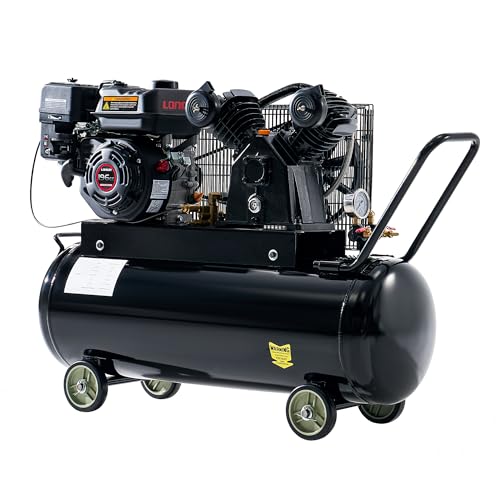
Features: EPA-certified 6.5HP engine, 20-gallon ASME-certified tank, 1/4″ NPT air outlets, dual outlets for running two tools concurrently. The heavy-duty two-cylinder cast iron pump enhances air delivery and durability, and reinforced components reduce wear. Best for: Workshop users who need reliable power for multiple tools at once. Caution: Larger footprint and heavier weight may require a stable, level setup and proper anchoring for safety.
VEVOR 9 Gallon Twin-Tank Gas Powered Air Compressor

Features: 6.5HP gas engine, 9 CFM at operating range, twin 9-gallon tanks for stable air delivery, two outlets allow simultaneous tools. Best for: Outdoor projects and situations where electricity isn’t available. Caution: Heavier than smaller portable models; plan for mobility on rough job sites.
HPDAVV 6.5HP Gas Powered 20 Gal Air Compressor

Features: 6.5HP engine, 20-gallon tank, 125 PSI max, 17 CFM, 1/2″ output pipe for higher air flow. Best for: Construction-ready setups requiring strong airflow and a larger tank for extended tool operation. Caution: One-stage design may limit refinements in pressure cycling; consider your tool requirements before purchase.
Metabo HPT THE TANK XL 9-Gallon Gas Wheelbarrow Compressor

Features: Honda GX engine, 9.5 CFM at 90 PSI, 9-gallon tank, wheelbarrow design for portability, capable of running multiple nailers or other framing tools. Best for: Professional contractors who need reliable power on variable sites with frequent movement. Caution: As a larger wheelbarrow unit, it requires space for transport and storage.
Buying Guide: Key Purchase Considerations
What size tank do I need? Tank size affects runtime between refills. Larger tanks (20 gal) provide longer continuous airflow for sustained tasks, while smaller tanks (8–9 gal) offer better portability for quick jobs. Consider your typical tool usage and whether you need dual outlets for simultaneous tools.
Gas engine power and PSI range: A 6.5HP class engine with PSI up to 125–130 is common for mid-range projects. Higher PSI is beneficial for tools requiring more pressure, such as heavy nailers or spray equipment. Check the pump design (one-stage vs two-stage) and maintenance requirements.
Portability and mobility: Wheelbarrow or cart designs speed relocation around a site. Twin-tank setups often improve airflow stability, reducing pressure drops when you switch between tools. If you work in remote areas without power, portability becomes a primary criterion.
Outlets and airflow: Dual outlets enable running two tools at once, which can improve productivity on framing, painting, or inflating tires. Look for outlets with standard 1/4″ NPT or 1/2″ connections depending on your tools. Ensure the compressor can deliver adequate CFM for your typical toolset.
Build quality and durability: Cast iron cylinders and reinforced frames extend service life under demanding use. An auto start/stop pressure switch simplifies operation and reduces wear. Also consider engine reliability (Honda GX variants are common) and the availability of replacement parts in your region.
How to Choose Between These Models
- For dual-tool workloads in a garage: Albott or HPDAVV 20-gallon models deliver steady air and broad compatibility.
- For outdoor jobs without electricity: VEVOR twin-tank or Metabo HPT THE TANK XL provide strong performance with mobility.
- For portable, smaller projects: DEWALT 4-gallon offers oil-free operation and simple maintenance.
Maintenance and Safety Tips
- Regularly check oil (where applicable), air filters, and belts. Follow engine manufacturer recommendations for oil type and change intervals.
- Bleed pressure slowly before disconnecting hoses to avoid hose or tool damage.
- Ensure the compressor is secured on a stable, level surface and protected from moisture when used outdoors.
- Store fuel in approved containers away from heat sources and perform proper venting when in enclosed spaces.
Frequently Asked Questions
- What does 5HP refer to in gas air compressors?
It indicates the engine power class, affecting air delivery and duty cycle. Higher horsepower generally supports higher CFM and PSI targets.
- Is a twin-tank design better than a single-tank model?
Generally, yes. Twin tanks provide more stable airflow and reduce pressure fluctuations during continuous use.
- Do I need dual outlets?
Dual outlets are advantageous when you plan to run two tools at the same time, improving workflow without swapping hoses.
- How important is the engine brand?
Engine reliability (such as Honda GX variants) tends to influence long-term performance and maintenance availability.
- What PSI should I look for for typical nailers and spray tools?
Many tools operate effectively between 90 and 125 PSI; ensure your compressor can sustain required CFM at your target pressure.
- Can these units be mounted in a truck or service vehicle?
Several models are designed with mounting flexibility for on-the-road use, though always verify mounting compatibility with your vehicle and local regulations.
Add a Comment