Answering the demand for dependable, portable fuel storage, these 50 gallon tanks are designed for diesel, gasoline, and mixed-fuel needs. Best for contractors, fleet operators, boat owners, and DIYers who need quick, reliable refueling on-site. This guide compares durability, transfer speed, and usability to help you choose the right unit. Read on to see five top options and a concise buying guide to simplify your decision.
Summary table of selected products:
| Product | Brand | Best For | Key Benefit |
|---|---|---|---|
| Wolive Portable 50 Gallon Tank with Pump | Wolive | Diesel transfer on job sites | High flow 11.9 GPM with 15 ft cord |
| Tradesman 50-Gallon Vertical Tank | Tradesman | Rigid, steel storage | 14-gauge steel, protective finish |
| RDS Mfg 50 Gal Rectangular Transfer Tank | RDS MFG | General liquid transfer | Compact dimensions for limited spaces |
| TITAN Titan 50 GAL Fuel System | TITAN Fuel Tanks | OEM-style fuel system | Integrated auto parts design |
| ExploreHorizon Storage Caddy with Pump | ExploreHorizon | Mobility and visibility | Four-wheeled design with visible gauge |
Wolive Portable 50 Gallon Tank With Pump
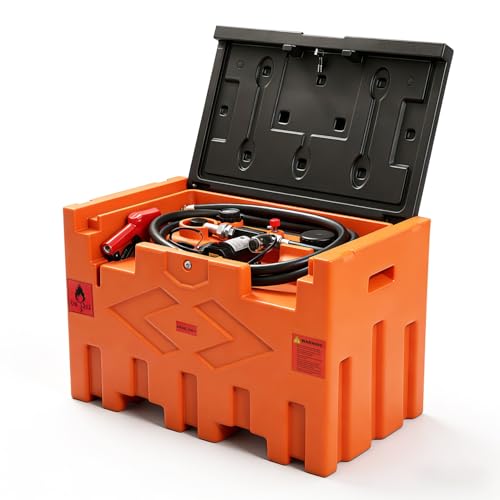
Best for diesel transport on work sites or mobile refueling routines. The tank uses high-density polyethylene to resist leaks and deformation. A solid lid helps protect contents from rain and corrosion. Includes a 12V electric pump with up to 11.9 GPM flow and a 15 ft power/wire length for flexible placement. The auto shut-off nozzle and 30-minute duty cycle support extended dispensing, while an internal bypass protects the pump during nozzle shutoffs.
Who it’s best for: contractors, fleet operators, and mobile service teams needing fast, reliable diesel transfers in outdoor settings. Caution: ensure the pump’s duty cycle fits your dispensing duration to avoid overheating during long pours.
Tradesman 50-Gallon Vertical Storage Tank

This 50-gallon steel tank provides robust, full-size storage for industrial or agricultural use. Its 14-gauge steel construction with a black finish suggests long-term durability in harsh environments. It is designed to accommodate Tradesman’s full-size cross bed boxes and is not intended for transferring gasoline or other flammables. Best for stationary storage on job sites or backyards where a sturdy, non-transportable solution is ideal.
Best for: users needing a high-strength, permanent storage solution rather than a portable transfer tank. Limitation: not suited for active fueling or transferring flammable liquids.
RDS Mfg 50 Gal Rectangular Transfer Tank

Designed for general liquid transfer, this 50-gallon rectangular tank emphasizes space efficiency with its compact dimensions. It’s suitable for transferring diesel or other fuels where a portable, economical solution is preferred. Best for users working in tight spaces or vehicles with restricted bed dimensions. Caution: verify compatibility with the intended fuel type and ensure proper venting if required by application.
TITAN Titan 50 GAL Fuel System

Presented as an auto parts-style fuel system, this 50-gallon option is geared toward integrated setups and OEM-like configurations. It’s a practical pick for users seeking a modular approach to fueling with a focus on compatibility and standard part sizing. Better for: those who want a ready-to-integrate fuel system in a vehicle or equipment setup. Caution: verify mounting compatibility and hose routing for your specific machine.
ExploreHorizon 50 Gallon Portable Storage Caddy

Best for mobility and on-site refueling with visibility. This stainless steel caddy weighs up to 50 gallons and includes a two-way manual pump. The four-wheel design offers easy transport and a visible level gauge helps prevent unexpected shortages. Ideal for garages, farms, or on-site fleets. Limitation: manual pumping may be slower for large-volume refueling tasks compared with electric pumps.
GarveeTech 50 Gallon Wheeled Storage Caddy

Another heavy-duty option with a two-way manual pump and a visible level gauge. Constructed from 201 stainless steel for UV resistance and durability, this model is designed for rugged environments and frequent transfers. Best for users who prioritize long-term corrosion resistance and simple, reliable pumping. Caution: ensure the steel treatment matches your storage climate to maximize lifespan.
Buying Guide: Key Considerations for 50-Gallon Fuel Tanks
- Portability versus stationary use: Choose a model with wheels and a pump if you need mobility; otherwise, a rigid storage tank may be better for steady on-site use.
- Fuel compatibility: Confirm whether the tank is rated for diesel, gasoline, or both. Some units specify recommended fuels and exclude certain flammables.
- Material and durability: Polyethylene tanks resist leaks and corrosion; steel tanks offer high durability but require more care around rust and storage conditions.
- Pump type and flow rate: Electric pumps offer fast transfers; manual pumps provide simplicity and reliability in remote areas. Consider flow rate (GPM) and duty cycle for your typical fueling duration.
- Ventilation and filtration: Ugraded filters and gas/diesel appropriate venting help maintain fuel quality and pump longevity.
- Level indication: A clear gauge helps prevent overfilling and stockouts. Look for integrated or easily visible gauges.
- Space and mounting: Rectangular shapes can fit tighter spaces; ensure the tank size fits your vehicle bed or storage area.
FAQ
- What is the main difference between portable and stationary 50-gallon tanks?
– Portable tanks include wheels and pumps for on-site refueling, while stationary tanks emphasize robust storage and mounting stability. - Can these tanks handle both diesel and gasoline?
– Some models are designed for multiple fuels; always verify the manufacturer’s fuel compatibility before use. - Is a built-in gauge important?
– Yes. A visible level gauge helps monitor remaining fuel and prevents unexpected refills or shortages. - Do these tanks require special maintenance?
– Regular inspection for leaks and clean fuel transfer paths are recommended; follow the manufacturer’s maintenance guidelines for each model. - Which tank is best for tight spaces?
– Rectangular or compact-transfer designs are typically better for tight spaces and storage constraints. - Are there safety concerns with transporting fuel in these tanks?
– Yes. Transport according to local regulations, secure the tank, and use approved hoses and fittings for safe transfers.
Add a Comment