When you need reliable, large-capacity power for a home or cabin, a 50 amp natural gas generator is a smart choice. These tri-fuel or natural-gas-ready models provide robust running watts, transfer-switch compatibility, and long runtimes with natural gas. This guide highlights five top options that balance power, fuel flexibility, and safety for American households. Each pick is best for serious backup needs, such as powering HVAC, refrigeration, and lighting during outages.
| Product | Fuel Type | Key Benefit |
|---|---|---|
| Westinghouse 12500 Peak Watt Tri-Fuel | Gas/Propane/Natural Gas | Solid 50A-ready outlets with transfer switch compatibility |
| Westinghouse 12000 Peak Watt Tri-Fuel Inverter | Gas/Propane/Natural Gas | Low THD, quiet operation, 50A backup power |
| Westinghouse 13500 Peak Watt Tri-Fuel | Gas/Propane/Natural Gas | High power with 50A receptacle options |
| Westinghouse 14500 Peak Watt Tri-Fuel | Gas/Propane/Natural Gas | Largest gas option with long runtime |
| WEN 14,500-Watt Tri-Fuel | Gas/Propane/Natural Gas | Transfer-switch ready with CO watchdog |
Westinghouse 12500 Peak Watt Tri-Fuel

Powerful tri-fuel option designed for whole-home backup. Peak watts of 12,500 with 9,500 running watts on natural gas ensure essential loads remain online during outages. It includes a remote start, transfer switch readiness, and multiple outlets protected by rubber covers for safety. Best for homes with higher electrical demand seeking a dependable, multi-fuel backup. Consider this if you need substantial peak capacity with a 50A-capable transfer setup. Caution: performance can vary with natural gas pressure, which affects running watts under real-world conditions.
Westinghouse 12000 Peak Watt Tri-Fuel Inverter

This inverter-style generator provides clean power with low total harmonic distortion (THD) and is suitable for electronics-sensitive loads. The 50A-rated transfer switch readiness lets you back up essential appliances in a home setup. Best for smart homes or users prioritizing quiet operation and fuel efficiency, while still offering robust natural gas capability. Limitation: inverter units generally carry higher upfront costs compared to traditional open-frame models.
Westinghouse 13500 Peak Watt Tri-Fuel

With 13,500 peak watts and multi-fuel capability, this model is engineered for higher-demand homes. It offers a 50A outlet and transfer-switch readiness, making it a solid choice for larger residences that require dependable standby power on natural gas. Best for homes with electric heating or high refrigeration loads. Caution: heavier and bulkier than smaller portable units, requiring a secure installation area.
Westinghouse 14500 Peak Watt Tri-Fuel
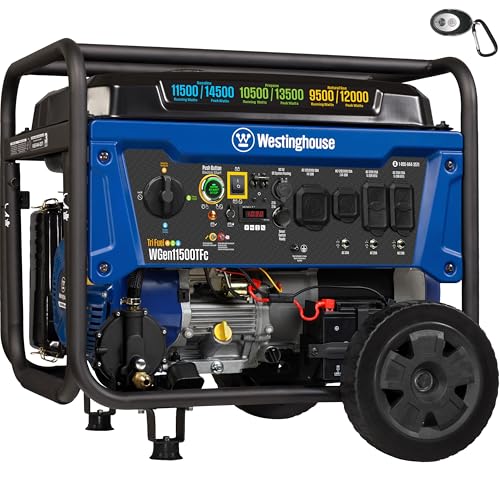
Top-tier power with 14,500 peak watts and long runtime on a large 9.5-gallon tank. Natural gas operation provides strong backing for whole-home loads during outages. It’s transfer-switch ready and designed for heavy-duty performance. Best for larger homes with substantial electrical needs where 50A transfer-capable outlets are required. Limitation: the unit’s size may require temporary relocation during maintenance or natural gas line checks.
WEN 14,500-Watt Tri-Fuel (TF-1450X)

Balanced tri-fuel power with transfer-switch readiness and a CO watchdog for safety. This model supports 50A transfer-ready configurations and is suitable for a mid-to-large home or small business backup. Best for budget-conscious buyers who still want reliable natural gas operation. Caution: some users note that fuel efficiency depends on load and fuel quality; check local gas pressure for optimal performance.
Buying Guide: Key Considerations for 50 Amp Natural Gas Generators
- Fuel flexibility: Tri-fuel capability (gasoline, propane, natural gas) offers resilience during outages, but natural gas performance depends on line pressure and appliance demand.
- Outlets and transfer readiness: Look for 50A receptacles (L14-30R or 14-50R) and explicit transfer-switch compatibility to power essential circuits in your home safely.
- Power output: Determine running watts needed for essential loads (refrigerator, sump pump, furnace, lights) and compare peak watts for startup surges. Higher peak watts help with motorized loads like air conditioners.
- Runtime and fuel storage: Larger tanks extend runtime on gasoline or propane; natural gas may require constant supply but lacks a fuel tank. Consider a generator with an hour meter and automatic low-oil shutdown for protection.
- Noise and emissions: Inverter-based models tend to run quieter and with cleaner power, which is beneficial for close-quarter setups. CO sensors enhance safety in enclosed spaces.
- Installation and maintenance: Ensure proper clearance, ventilation, and access for maintenance. Confirm compatibility with your home’s transfer switch and electrical panel capacity.
Frequently Asked Questions
- Do 50A natural gas generators exist? Yes. Several models offer 50A outlets and transfer-switch readiness while supporting natural gas operation.
- Is natural gas directly suitable for whole-home backup? It can be, if your gas line pressure and appliance loads are appropriate; some fuel sources may limit peak wattage.
- What is most important for a backup system? Prioritize running watts, peak watts, transfer-switch compatibility, and fuel flexibility to cover essential circuits reliably.
- How loud are these generators? Inverter-based models tend to be quieter, often around 60 dBA or lower at partial loads; open-frame designs are louder.
- Should I choose tri-fuel or dedicated natural gas? Tri-fuel offers flexibility during outages, but natural gas-only units can be simpler and lighter for some setups.
- What safety features are essential? Look for CO sensors, low-oil shutdown, rubber-outlet covers, and enclosure protections to safeguard family and property.
Add a Comment