Looking for a 5 kg PLA filament on a single spool for large projects? This guide highlights five 5 kg PLA filament options that balance consistency, print quality, and value for American buyers using standard 1.75 mm filament. Each product is suitable for hobbyists, educators, or small print farms. The list emphasizes reliability, dimensional accuracy, and ease of use to suit both beginners and experienced creators.
Buying quick reference: the table below shows the five selected filaments, their origin brands, and what they are best for. Use the table to compare sizing, finish, and intended use at a glance.
| Product | Brand | Best For | Notes |
|---|---|---|---|
| SUNLU 5KG PLA+2.0 Black | SUNLU | Durable prints with faster extrusion | High impact resistance; fast printing up to 300 mm/s |
| TIANSE PLA Filament 5kg Black | TIANSE | General purpose printing | Dimensional accuracy +/- 0.03 mm; USA raw material |
| YOUSU PLA 5kg Black | Yousu | Large projects with strong, stable extrusion | 11 lbs spool; accuracy +/- 0.02 mm |
| YOUSU PLA 5kg White | Yousu | Prototypes with visible surface finish | 11 lbs spool; accuracy +/- 0.02 mm |
| SUNLU PLA Matte 5kg Black | SUNLU | Matte finish projects | Matte finish; neatly wound filament |
SUNLU 5KG PLA+2.0 Black
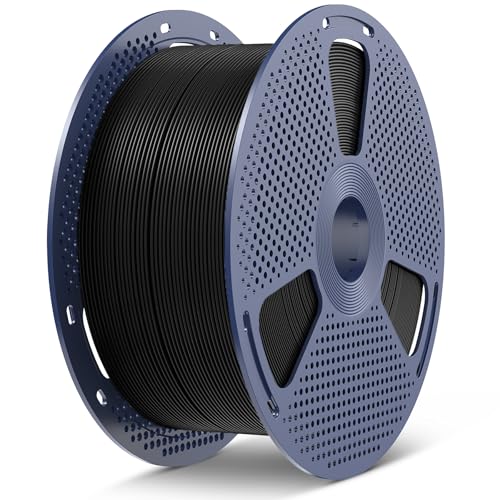
Best for: Minimized brittleness with strong finished parts. This PLA+ 2.0 formulation strengthens durability over standard PLA+, making it a solid choice for functional prototypes or parts that require extra resilience. The filament melts quickly, supporting faster print speeds up to 300 mm/s while maintaining consistent flow. Suitable for beginners through experts who want a robust material without changing hardware.
- Pros: Upgraded formulation reduces cracking, supports fast printing, easy to use.
- Limitations: As with faster melt speeds, maintain proper cooling to prevent warping on large parts.
TIANSE PLA Filament 5kg Black

Best for: General purpose printing on most 3D printers. This 1.75 mm PLA uses a 5 kg spool, with dimensional accuracy around +/- 0.03 mm. The material is described as eco-friendly with good performance and is suitable for printers and 3D pens alike. It flows smoothly and typically feeds consistently without clogging when used within the recommended extrusion range.
- Pros: Wide compatibility, smooth feeding, reliable extrusion.
- Limitations: Slightly looser dimensional tolerance than some premium PLA products.
YOUSU PLA 5kg Black

Best for: Large-scale projects requiring durable, consistent outputs. The 11 lb spool provides extended runs for prototypes, mechanical parts, or custom designs that demand durability. It emphasizes high precision with +/- 0.02 mm accuracy and strong extrusion behavior, making it a reliable choice for ongoing print jobs.
- Pros: High precision, robust mechanical parts suitability.
- Limitations: Black color may show dust/print lines more visibly on certain surfaces.
YOUSU PLA 5kg White
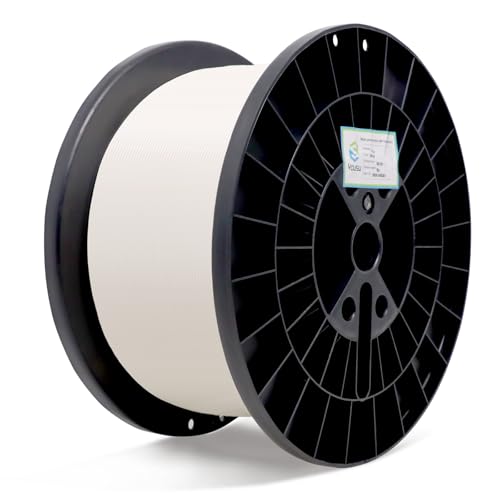
Best for: Prototyping and functional parts that require good surface finish with high precision. This 5 kg white PLA bundle offers similar large-spool benefits as the black variant, with the same accuracy rating of +/- 0.02 mm. It supports continuous projects and provides dependable extrusion for a wide range of FDM printers.
- Pros: Clean white appearance suitable for visible parts, consistent extrusion.
- Limitations: White filaments can show dust or slight color variation if not stored properly.
SUNLU 5KG PLA Matte 5kg Black

Best for: Projects needing a matte finish that hides layer lines. The matte PLA on a 5 kg spool provides a frosted texture and a low-gloss appearance, improving aesthetic for models where glossy finishes are undesired. Winding is designed to be neat to reduce feeding issues and improve print efficiency.
- Pros: Matte finish that hides layer lines, neat winding.
- Limitations: Matte finishes can sometimes affect surface shine and may require tuning for optimal adhesion in some printers.
Buying Guide
What to consider when choosing 5 kg PLA filament for 3D printing
- Filament grade and formulation: PLA vs PLA+ or PLA Pro. PLA+ variants can offer improved durability and printing speed but may require specific settings.
- Dimensional accuracy: Look for tolerances around +/- 0.02 – 0.03 mm for consistent layer alignment, especially on tight fits.
- Spool design and weight: A true 5 kg spool reduces reordering frequency; ensure the spool diameter and hub fit your printer’s spool holder.
- Finish and appearance: Matte, glossy, or natural finishes influence the final look of your prints; consider project aesthetics.
- Printer compatibility and temperature ranges: Most 1.75 mm PLA filaments print well between 180°C and 220°C, with bed temperatures around 50–60°C in many setups.
- Storage and moisture control: PLA is less sensitive than some materials but still benefits from dry storage to prevent stringing and poor extrusion.
- Cost-to-volume balance: Compare price per kilogram along with spool quality and winding neatness to gauge value for your workflow.
FAQ
- Q: Are 5 kg PLA filaments suitable for beginners? A: Yes, most 5 kg PLA spools are designed for easy use and broad printer compatibility, though beginners should start with recommended temperature settings from the manufacturer.
- Q: Which finish is best for showcase models? A: Matte PLA can reduce glare and hide layer lines, while standard PLA or PLA+ can provide brighter finishes depending on color and polishing steps.
- Q: Do all 5 kg filaments fit all 3D printers? A: Most 1.75 mm PLA filaments fit most FDM/FFF printers, but check spool hub size and printer spool holder compatibility.
- Q: Is PLA+ worth the extra cost? A: PLA+ variants often offer better durability and reduced brittleness, which can be advantageous for functional prints or parts in regular use.
- Q: How should I store 5 kg spools? A: Store in a cool, dry place, away from direct sunlight. Use airtight containers or sealed bags with desiccants when not in use.
- Q: Can I mix different 5 kg PLA brands in a project? A: It is possible but mixing brands can result in slight variation in extrusion and color; print profiles should be adjusted accordingly.
Add a Comment