When selecting a 4000-watt gas generator, the key goal is reliable power for essential devices during outages or on the road. These units are ideal for powering lights, refrigerators, and small appliances in emergencies, or keeping RV essentials running during trips. The following five models are among the most suitable options for American buyers seeking a balance of power, portability, and fuel efficiency. The quick table below summarizes core specs to help you compare at a glance.
| Product | Peak Watts | Running Watts | Run Time (approx.) |
|---|---|---|---|
| Oxseryn 4400-Watts Inverter Generator | 4400 | 3400 | Up to 14 hours |
| Oxseryn Power Equipment 4400 Watts Inverter Generator | 4400 | 3400 | Up to 14 hours |
| Aceup Energy 4000 Watt Portable Inverter Generator | 4000 | 3200 | Up to 5 hours |
| Westinghouse 4000 Peak Watt Dual Fuel | 4000 | 3300 | Up to 14 hours |
| Champion Power Equipment 4000-Watt RV Ready | 4000 | 3000 | Up to 10 hours |
Oxseryn 4400-Watts Inverter Generator
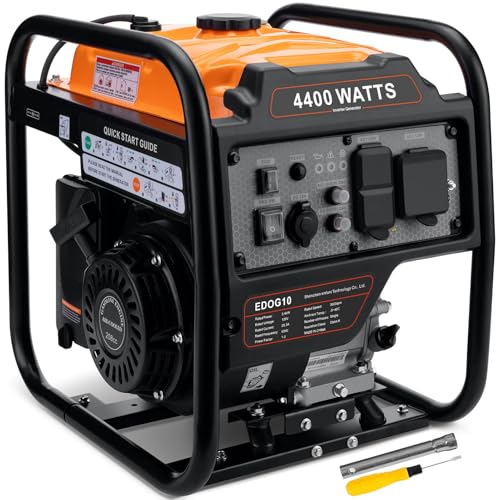
The Oxseryn 4400-Watts Inverter Generator offers a strong balance of portability and power. It provides 4400 peak watts and 3400 running watts, with multiple outlets including 2×120V, 1×30A RV, and a 12V DC port. It is designed for emergency home backup and RV use, with ECO mode for fuel efficiency and cold-start technology for easier starts in cooler conditions. This model is best for buyers who want RV readiness and a quiet operation profile during outages.
Best for: Home backup users who also need RV compatibility and a compact footprint. Why selected: It combines inverter reliability with practical outputs and a 30A RV port for trailers. Caution: Check fuel capacity and oil levels for extended outages.
Oxseryn Power Equipment 4400 Watts Inverter Generator

This model emphasizes long runtime and practical monitoring with a fuel gauge, running up to 14 hours at 25% load thanks to its 2-gallon tank. It includes 2×120V outlets, 1×12V DC, and an RV port, making it a versatile option for campers and homeowners alike. The ECO mode helps maximize fuel efficiency during lighter loads. Best for: Campers and light-home backup where runtime visibility matters. Caution: Lower tank capacity means more frequent refueling on heavy loads.
Aceup Energy 4000 Watt Portable Inverter Generator

The Aceup Energy 4000 Watt inverter generator is powered by a 149cc 4-stroke OHV engine, delivering 4000 peak watts and 3200 running watts. It features an intelligent gauge for voltage and runtime, low-oil indicator, and ECO mode for efficiency. It includes 2×120V outlets, an RV receptacle, and a 12V DC charger. Parallel capability (kit sold separately) makes it a scalable option. Best for: Road trips and temporary backup where monitorable runtime matters. Caution: Lower tank capacity may limit runtime under heavy loads.
Westinghouse 4000 Peak Watt Dual Fuel

This Westinghouse generator runs on gas or propane, offering 4000 peak watts and 3300 running watts with a CO sensor for safety. It features remote start with a key fob, multiple outlets including RV-ready options, and a digital display showing essential run-time and output data. Best for: Users who want fuel flexibility and convenient startup for camping or home use. Caution: Dual-fuel performance can vary based on fuel quality and altitude.
Champion Power Equipment 4000-Watt RV Ready

The Champion 4000-Watt inverter is designed for portability and quiet operation, weighing under 49 pounds with a 64 dBA rating at 23 feet. It provides 4000 starting watts and 3000 running watts, suitable for camping, tailgating, or essential home backup. Optional parallel kit expands output when paired with another Champion inverter. Best for: Lightweight portability and quiet camping adventures. Caution: Does not provide as high running wattage as some dual-fuel options in continuous use.
Evernexta 4000 Watts Inverter Generator

The Evernexta 4000 Watts inverter offers a 208cc gas engine with less than 3% THD, delivering stable power for home backup and RV trips. It features 1×30A RV outlet, 2×120V outlets, and a 1×12V DC port. Up to 9 hours runtime at 25% load with a 2-gallon tank and a quiet operation profile around 72 dBA at 23 feet. Best for: Quiet, daytime use in camping or small-home outages. Caution: Lower fuel capacity may require more frequent fuel stops on longer outages.
Buying Guide
What should you consider when choosing a 4000-watt gas generator?
- Fuel type and efficiency: Inverter models with ECO or economy modes conserve fuel for longer runtimes.
- Power outputs: Peak watts indicate surge capability; running watts reflect steady demand. Choose models with sufficient running watts for your essential devices.
- Outlets and RV readiness: Ensure the unit includes 120V outlets and an RV port if you plan to power a trailer or motorhome.
- Portability and weight: Lighter inverters are easier to move but may offer fewer features; consider a balance with wheels or handles.
- Starting mechanism: Recoil and remote/electric start options improve convenience, especially in cold weather.
- Fuel capacity and runtime: Larger tanks yield longer runtimes but add weight; consider your typical outage length.
- Safety features: CO sensors and low-oil shutdown protect both equipment and users.
- Parallel capability: If you anticipate higher loads, look for units that can pair with another unit to increase output.
FAQ
- What is the difference between peak watts and running watts?
Peak watts are the surge power a generator can deliver briefly; running watts are the continuous power output. - Do these generators run on propane or gasoline?
Most are gasoline-powered; some Westinghouse models offer dual-fuel (gas or propane) options for flexibility. - Is inverter technology important for RV use?
Yes. Inverter generators produce stable power with clean sine waves, protecting sensitive appliances on RVs. - Can you parallel two generators?
Several models (including some Champion and Aceup units) support parallel operation with an additional kit. - What safety features should I look for?
CO shutdown, low-oil shutdown, and automatic safety shutoffs are essential for safe operation. - What should I consider for long outages?
Look for higher runtime, larger fuel capacity, and fuel gauge, plus the option for parallel expansion if needed.
Add a Comment