When working in enclosed spaces or potentially hazardous environments, a reliable four-gas monitor with an integrated pump can be a lifesaver. This guide reviews five top options, highlighting sensor accuracy, pump performance, data logging and calibration reliability. Each product below incorporates oxygen (O2), carbon monoxide (CO), hydrogen sulfide (H2S) and a combustible gas (LEL) sensor, with features tailored for confined spaces, industrial sites, and rescue scenarios. Use this overview to compare performance, ease of use, and data capabilities before making a purchase.
style=”display:none”>Summary Table: Selected Products
| Product | Brand | Key Features |
|---|---|---|
| 4 Gas Monitor by Forensics | FORENSICS DETECTORS FD | Built-in pump, 4 sensors (O2, CO, H2S, LEL), color display, data logging, USA NIST calibration |
| 4 Gas Monitor + Pump by Forensics Detectors | FORENSICS DETECTORS FD | USA NIST calibration certificate, high-quality UK sensors, adjustable alarms |
| Gas Detector with Pump, 4 Gas Monitor | Forsensal | Rechargeable, large LCD, calibration kit included, pump/ diffusion switchable |
| USA NIST Calibrated 4 Gas Monitor | FORENSICS DETECTORS FD | USB recharge, NIST traceable calibration, fast response, adjustable alarms |
| BW Technologies XT-XWHM-Y-NA 4-Gas Detector with Pump | BW Technologies | Pump-enabled, combustible, O2, H2S, CO, multiple alarm types |
1) 4 Gas Monitor by Forensics FD
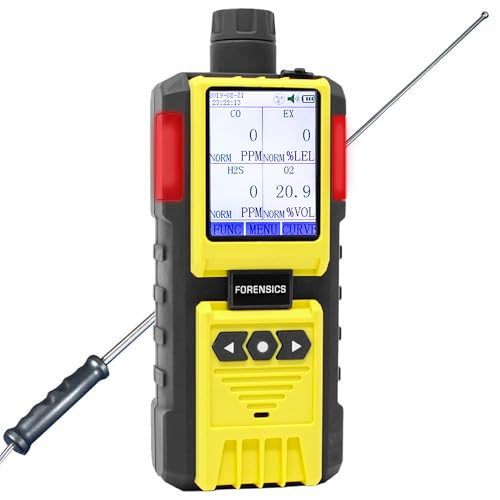
The 4 Gas Monitor by Forensics FD combines a built-in pump with four electrochemical sensors for O2, CO, H2S and LEL. It emphasizes USA NIST traceable calibration and data logging, with a color display that presents gas levels in real time and visual graphs. A key advantage is the integrated pump delivering sample air to the sensors quickly, which is crucial for rapid detection in confined spaces. The device logs up to 1,200 alarm records, supporting post-incident analysis and compliance documentation. The unit is designed for field technicians who need reliable, testable results in demanding environments.
Strengths include robust data handling, clear color visualization, and a calibration framework anchored in US standards. Potential considerations are sensor drift over time and the need for regular calibration checks to maintain NIST traceability. The included 1200-alarm-log capability supports incident review and trend analysis, which can be essential in regulated settings such as industrial plants or emergency response scenarios.
2) 4 Gas Monitor + Pump by Forensics Detectors

This model emphasizes a USA NIST calibration certificate and a 1-year limited warranty, providing assurance for long-term field use. The monitor includes high-quality sensors from the UK and supports USB data transfer. Alarms are configurable using audio, visual, and vibration alerts, with a digital timestamp and log records. The combination of accurate sensing and a formal QA certificate helps organizations meet safety program requirements while offering practical operation in busy work sites or confined spaces.
Operational considerations include calibration management, ease of sensor maintenance, and the availability of QA documentation for audits. The USB recharge capability also helps keep teams operational in remote locations without constant power access. The device aims to balance reliability with user-friendly controls for quick setup on-site.
3) Gas Detector with Pump by Forsensal

This Forsensal model offers a 3000 mAh rechargeable battery, a large LCD, and a pump-enabled configuration suitable for long shifts in variable atmospheres. The device supports calibration and data review, enabling users to view records and gas-type curves. A notable feature is the ability to switch between pump suction and natural diffusion, providing flexibility in environments where pump use is limited or needs to be quiet.
Key considerations include battery life and the calibration process. The kit typically includes a calibration cap, hose, and USB-C charger, facilitating field maintenance. The embedded data-logging and curve viewing help safety officers track exposure trends and verify compliance with occupational exposure limits.
4) USA NIST Calibrated 4 Gas Monitor

This device highlights USA NIST traceable calibration and quick detection with a response time under 30 seconds. It supports turn-on-and-go operation with adjustable alarms and both audio and visual indicators. The unit is designed for reliable field performance, with a focus on stable readings and straightforward calibration options. The combination of fast response and ease of maintenance makes it a solid choice for professionals who need rapid, verifiable gas readings in dynamic work sites.
Calibration is a critical factor for compliance and accuracy. The product’s emphasis on traceable calibration helps meet regulatory expectations and provides confidence for safety officers reviewing gas exposure histories and alarm events. Battery performance and ruggedness are additional considerations for field deployments.
5) BW Technologies XT-XWHM-Y-NA 4-Gas Detector with Pump
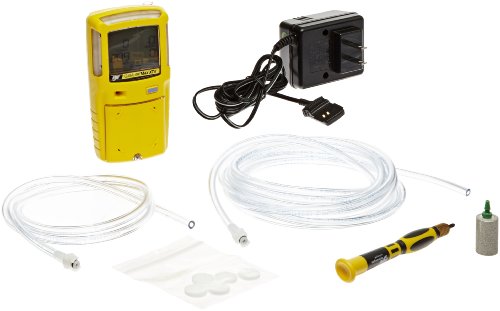
The XT-XWHM-Y-NA from BW Technologies features a four-gas detector with pump, covering H2S, O2, CO, and combustibles (LEL). The device uses a mix of electrochemical and catalytic sensors to measure gas concentrations, with alarm systems that can be configured for low, high, TWA, or STEL levels. The pump capability helps deliver representative gas samples from the environment to sensors, enabling accurate readings in pockets of gas concentration that might be missed by diffusion-only devices.
Considerations for this model include sensor cross-sensitivity in mixed environments and the need for robust maintenance to prevent clogging of the pump and seal integrity. The audible, visual, and vibration alarms provide multi-modal alerts, which can improve response times in noisy or remote sites. For organizations prioritizing a long-standing pump-based solution, this option is a proven performer with strong safety features.
Buying Guide: Key Purchase Considerations
- Sensors and accuracy: Look for four electrochemical sensors (O2, CO, H2S, LEL) with fast response times and low drift. USA NIST traceable calibration adds reliability for audits and compliance.
- Pump performance: A reliable integrated pump improves sampling from confined spaces and dead zones. Check flow rate, suction duration, and the ability to switch to diffusion mode when needed.
- Alarm systems: Configurable audio, visual, and vibration alarms are essential. Consider timestamped logs for event tracking and post-incident analysis.
- Data logging and connectivity: USB or Bluetooth data transfer, together with memory capacity for alarm records, supports reporting and training records. Ensure supported software or formats align with your reporting needs.
- Calibration and maintenance: Regular calibration is critical. Choose devices with easy access to calibration kits, clear QA documentation, and warranty coverage for peace of mind.
- Battery life and durability: Rechargeable batteries with long run times are important for extended field work. Look for rugged housings suitable for industrial environments.
- Warranty and support: A manufacturer-backed warranty and easy access to replacement parts or calibration services help minimize downtime.
- Cost of ownership: Consider not just the purchase price, but calibration costs, spare parts, and the availability of replacement sensors over the device’s life.
Users should balance the need for rapid response and precise readings with the practicality of field use. For some teams, data logging and QA documentation may be worth a higher upfront investment, while others may prioritize battery life and ease of calibration. Evaluating in real-world scenarios—such as confined-space entries and outdoor monitoring—can clarify which model best fits safety programs and compliance frameworks.
Add a Comment