Finding the right double diaphragm pump for industrial transfer, chemical handling, or waste oil requires matching flow rates, materials, and pressure capabilities to your specific fluids. This guide highlights five strong options, explaining who each is best for and where to avoid drawbacks. Perfect for buyers comparing air-operated diaphragms, these picks balance durability, compatibility, and performance for tough environments.
| Product | Best For | Key Benefit |
|---|---|---|
| PEAYLI QBK-15 | Heavy-duty chemical and waste transfer | High max PSI and robust materials |
| VEVOR 1/2 in | Petroleum, diesel, and low-viscosity fluids | Sturdy cast-iron body with reliable seals |
| TNEHOD 15 GPM | High-flow, moderate pressure tasks | 3/4 in inlet/outlet, strong flow |
| emagene 2 inch | Heavy fluids and demanding environments | 2-inch ports, high head, robust construction |
| VEVOR 1/2 in (PP body) | Corrosive or viscous fluids | PTFE diaphragm, corrosion-resistant body |
PEAYLI QBK-15 1/2″ Air Diaphragm Pump

Inlet and outlet ports measure 1/2 inch with a 1/4 inch air inlet, delivering up to 12 GPM at 115 PSI. Made for chemical, waste oil, and dual-diaphragm operation, this model emphasizes abrasion resistance and chemical stability through PTFE and nitrile diaphragms. It’s best for users needing a compact yet sturdy unit for steady transfer of challenging fluids.
Best for: Plants or shops needing a reliable, high-PSI transfer pump for chemicals or waste oil with robust material options including cast iron, aluminum, and stainless steel.
Why selected: High PSI capability and a design that emphasizes no-stall operation support long, uninterrupted transfers.
Caution: Check for compatibility with highly aggressive solvents not specified in the listing; ensure correct gland and seal maintenance to prevent leaks.
VEVOR Air-Operated Double Diaphragm Pump, 1/2 in

With a cast-iron body and 8.8 GPM flow at up to 115 PSI, this pump is designed for dependable service with petroleum, diesel, and low-viscosity fluids. It uses nitrile diaphragms for durability and corrosion resistance, and features a 1/2 inch inlet/outlet with a 1/4 inch air inlet. Its strength lies in a sturdy, leak-proof build that tolerates long operation in tough environments.
Best for: Environments where a compact 1/2″ pump must handle standard fuels and similar liquids with consistent performance.
Why selected: Strong all-around performance and a durable cast-iron housing that resists corrosion in harsh settings.
Caution: For highly corrosive chemicals beyond nitrile compatibility, verify material compatibility beyond the listing.
TNEHOD 15 GPM Air Diaphragm Pump, 3/4″

This model emphasizes a solid, leak-proof design with a 3/4 inch inlet/outlet, good for 100 PSI and up to 15 GPM. It offers a choice of diaphragms (Nitrile by default, PTFE customizable) and a full-bolt structure for strong sealing. It’s well suited for high-flow needs involving chemical transfer, waste oil, or other challenging fluids.
Best for: Applications requiring higher flow while maintaining reliable sealing in harsh environments.
Why selected: Excellent balance of flow, pressure, and durability with flexible diaphragm material options.
Caution: The listing notes a specific assembly step before use; follow procedures to avoid leaks.
FVMOTO Double Diaphragm Pump, 1-1/2″ Inlet
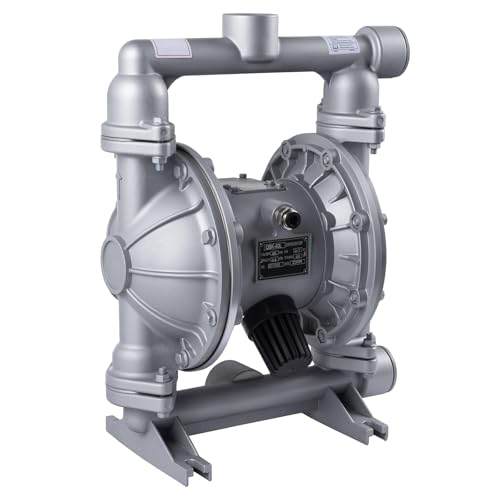
This 1-1/2 inch inlet/outlet pump handles larger piping and higher capacity with a 50 GPM class flow and 100 PSI. The design includes a reinforced full-bolt assembly and a diaphragm set designed to resist oil and chemical attack. It’s appropriate for heavy-duty waste oil and chemical transfer in industrial settings.
Best for: Operators needing higher flow with robust sealing and a larger port size for ambitious transfer tasks.
Why selected: Combines substantial flow with strong mechanical construction for demanding jobs.
Caution: Ensure proper mounting and bolt-tightening to maintain leak-free operation; verify compatibility with any exotic chemical mixtures.
VEVOR 1/2 in PTFE Diaphragm Pump

This model uses PTFE diaphragms for enhanced chemical resistance and a polypropylene body for corrosion resistance and leak-proof performance. It supports up to 8.8 GPM at 100 PSI, with 1/2 inch ports and a 1/4 inch air inlet. It’s a practical option when handling mildly aggressive chemicals and low-viscosity fluids in a compact form factor.
Best for: Environments needing strong chemical resistance in a compact, budget-friendly pump.
Why selected: PTFE diaphragms extend chemical compatibility and long service life in corrosive settings.
Caution: For high-viscosity fluids or solids-laden slurries, consider a larger port size or different design.
Buying Guide: Key Considerations And Comparisons
- Diaphragm material (PTFE vs nitrile) determines chemical resistance. PTFE excels with aggressive solvents; nitrile serves general oils and fuels.
- Larger ports (1.5″ or 2″) increase GPM but require appropriate piping and space. Smaller ports suit compact setups with lower flow requirements.
- Cast iron offers durability; stainless steel handles aggressive chemicals; polypropylene and aluminum provide corrosion resistance in lighter applications.
- Choose a model that meets or exceeds the required PSI and head to reach your discharge point without stall or cavitation.
- Inlet air size and fittings affect performance. Ensure compatible airline pressure and connectors to avoid underperforming pumps.
- Look for models with robust seals and easy diaphragm replacement to minimize downtime.
Frequently Asked Questions
- What is a double diaphragm pump used for? It transfers viscous fluids and slurries, including waste oil and chemicals, using two diaphragms that alternate to move fluid.
- What materials are best for chemical compatibility? PTFE diaphragms and polypropylene or stainless-steel bodies offer strong chemical resistance; nitrile diaphragms perform well with oils and fuels but are less resistant to aggressive solvents.
- What should I consider about flow rate? Match the desired GPM to your application; higher GPM requires larger ports and adequate air supply.
- Do these pumps handle dry running? Many designs include anti-stall air valves, but dry running can still cause wear; follow the manufacturer’s guidelines.
- Are these pumps suitable for high-viscosity fluids? Some models are; check the max viscosity rating and consider a larger diaphragm or different pump type for very thick liquids.
- What maintenance is required? Regular diaphragm inspection, bolt tightening, and seal checking help prevent leaks and ensure consistent performance.
Add a Comment