The best 3hp cyclone dust collectors deliver strong suction, efficient dust separation, and flexible ducting for medium to larger workshops. This guide highlights five top models, focusing on who they are best for, and why they’re solid picks for American woodshops. Whether you need portable power, easy bag management, or integrated filtration, these options cover common workshop setups and budgets. Below, a quick snapshot helps you compare at a glance.
| Product | Best For | Key Benefit |
|---|---|---|
| Laguna D|Flux III Cyclone Dust Collector – 3HP 220V | Pro garage or small shop with 220V supply | Magnetic quick-connect hose and air-strut lid for fast emptying |
| VEVOR Dust Collector, 1550 CFM, 3.0HP | High-throughput, portable setup | Dual 42-gallon bags for long runs |
| Laguna Tools C|Flux:3 Dust Collector | Retrofits to multiple machines | Manual dual paddle cleaning; large 46-gallon bin |
| Powermatic PM2200HK | Integrated filtration and versatility | 1-micron HEPA-like filtration, multiple ports |
| JET JCDC-3 Cyclone Dust Collector | All-around performance with timer features | 2-micron filtration; RF remote and timed shutoff |
Laguna D|Flux III Cyclone Dust Collector – 3HP 220V
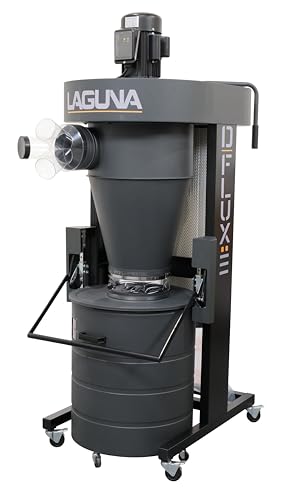
Best for professionals with a 220V supply who require convenient bag retention and quick-access operation. This model uses a negative pressure bag retention system and a magnetic quick-connect hose for fast setup. It includes a quick-release drum lid with air-strut assistance to minimize effort when emptying. The magnetic starter with thermal overload protection adds reliability in longer sessions. Choose this if you value fast hose changes and simple debris disposal but avoid this if your shop lacks 220V or you need a more portable solution.
VEVOR Dust Collector, 1550 CFM 3.0HP

Best for capacity-focused workshops needing longer continuous runs. It delivers strong airflow (1550 CFM) and uses dual 42-gallon bags for substantial dust storage, reducing frequent bag changes. Filtration at 2.5 microns helps capture fine dust, supporting a cleaner air environment. This is a strong choice when you run multiple machines at once, but it may be heavier to move than lighter-duty models.
Laguna Tools C|Flux:3 Dust Collector

Best for retrofits and flexible workshop layouts. It offers a 3HP 220V 1Ph motor with manual dual paddle cleaning and a large 46-gallon dust bin. The model is designed to retrofit 1HP to 3HP single-stage dust collectors and supports 4″ or 5″ inlet plus 4″ or 6″ outlet configurations. Choose this if you have an older setup or anticipate future upgrades; this may be less ideal if you need a compact footprint.
Powermatic Cyclone Dust Collector PM2200HK

Best for filtration-critical shops needing clean air with robust ports. This 3HP system includes a 1-micron HEPA-style filter that captures 99.97% of particles as small as 0.3 micron. It also offers integrated vacuum lines in the drum to reduce separate bag frames and provides multiple hose mounting options (three 4″ ports or one 8″ port). Opt for this if air quality matters and you want fewer external accessories; avoid if you require a lighter, more mobile unit.
JET JCDC-3 Cyclone Dust Collector

Best for balanced performance with remote features. It uses a 2-micron filtration system and captures a high percentage of particles. The remote timer lets the system run in 2, 4, 6, or 8-hour intervals before automatic shutoff, and RF remote control works from up to 50 feet. This makes it suitable for long sessions with minimal interruptions. A potential limitation is that the remote feature relies on unobstructed line-of-sight and battery life for consistent use.
Buying Guide
What to consider when choosing a 3hp cyclone dust collector
- Airflow and filtration: Higher CFM and finer micron filtration improve dust capture and air quality, but may demand more power and larger space.
- Voltage and installation: 220V vs 230V operation affects compatibility with shop wiring and breaker capacity. Ensure your circuit can support peak loads.
- Portability vs. fixed setup: Portable units are easier to relocate; stationary units often offer better dust separation and stability for heavy tasks.
- Dust storage and disposal: Large dust bags or drums reduce frequency of bag changes but require more space and effort to manage.
- Cabinets, hoses, and accessories: Look for models with easy drum lids, quick-connect hoses, and integrated cleaning features to minimize downtime.
- Maintenance and accessibility: Easy access to the filter and bags shortens maintenance time and keeps performance consistent.
How to match a model to your workshop
- Small to medium shops with multiple machines: Prioritize high CFM, 2–3HP motors, and efficient bag/dust management.
- Pro or high-output environments: Favor models with stronger filtration (1 micron or better) and features that ease long-running sessions.
- Budget-conscious setups: Consider mid-range units with flexible ports and retrofit options, ensuring future upgrades are feasible.
Installation and safety tips
- Plan dust routing to minimize long duct runs and avoid sharp bends, which reduce suction.
- Ensure dedicated circuitry for the dust collector to prevent tripping breakers during peak operation.
- Keep the collection area clean and empty bags regularly to maintain peak performance.
FAQ
- What does “3HP” indicate in a cyclone dust collector?
It refers to the motor power rating, which correlates with potential airflow and suction capacity. - Is a 2-micron filter better than 1-micron?
Lower micron rating captures finer dust, but the system may require more powerful filtration and airflow management. - Can I retrofit any collector to 3HP?
Retrofitting depends on the model and compatible motor configurations; check manufacturer guidelines. - Do I need a HEPA filter?
HEPA-like filters improve air quality by capturing sub-micron particles, beneficial in dust-heavy tasks. - How important is bag design?
Bag retention and quick-release lids reduce downtime and maintenance effort during long projects. - What safety features matter most?
Thermal overload protection, remote controls, and proper grounding help prevent accidents and equipment damage.
Add a Comment