When selecting a 36-inch hydraulic cylinder, builders look for reliability, durability, and consistent performance under demanding conditions. This guide highlights five top options with robust construction, high operating pressure, and solid load capacities. Each model is evaluated on bore size, stroke length, port type, and overall build quality to help industrial buyers, hobbyists, and contractors choose the right fit for lifting, pushing, and precision actuation in tough environments.
| Product | Bore | Stroke | Port Type | Rated Pressure | Load Capacity |
|---|---|---|---|---|---|
| AMRAP HYDRAULICS 2×36 | 2 in | 36 in | SAE 6 | 3500 PSI | 4120 lbs |
| WEN TR2036 | 2 in | 36 in | 3/8 in NPT | 2500 PSI | — |
| WEN TR3536 | 3.5 in | 36 in | 1/2 in NPT | 2500 PSI | — |
| Magister Hydraulics 2×36 | 2 in | 36 in | SAE 6 | 3500 PSI | 4100 lbs |
| Magister Hydraulics 2.5×36 | 2.5 in | 36 in | SAE 8 | 3500 PSI | 7200 lbs |
| CWA Hydraulics CW 3×36 | 3 in | 36 in | SAE 8 | 3000 PSI | — |
AMRAP HYDRAULICS 2×36 Hydraulic Cylinder

The AMRAP HYDRAULICS model is a welded double-acting cylinder with a 2-inch bore and a full 36-inch stroke. Its SAE 6 port system supports O-ring boss connections, and its rated pressure reaches 3500 PSI. The cylinder features a robust all-welded steel construction and a 4,120-pound column load capacity, making it suitable for demanding tasks where linear force and durability are paramount. The compact seals are designed to minimize leakage and resist rust in outdoor environments. Use cases include heavy lifting, press operations, and automated tooling where long stroke is required without frequent maintenance.
WEN TR2036 2-Inch Bore Hydraulic Cylinder
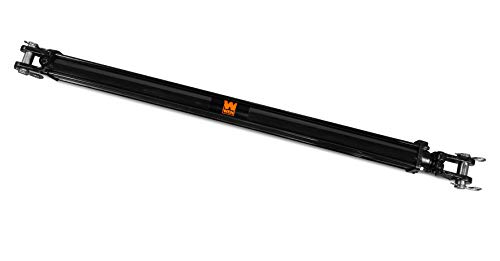
The WEN TR2036 is a tie-rod hydraulic cylinder offering a 2-inch bore and a 36-inch stroke, designed for double-acting operation. Built with a welded steel frame, it delivers up to 2500 PSI and connects via a 3/8-inch NPT port to standard hydraulic hoses. This model is well-suited for builders and mechanics seeking a balance of performance and affordability, with straightforward installation and reliable actuation for extended pushes in fabrication, jigging, and clamping applications.
WEN TR3536 3.5-Inch Bore Hydraulic Cylinder

The TR3536 expands options with a 3.5-inch bore and a 36-inch stroke, delivering a robust 2500 PSI capability and a 1.5-inch rod diameter. This tie-rod design makes it easier to mount in fixed frames or interchangeable setups, while the larger bore translates to greater force in retraction and extension cycles. It’s a practical choice for heavier clamping, lifting, and press operations where space is limited but power remains essential.
Magister Hydraulics 2×36 Cross Tube Cylinder

Magister Hydraulics presents a factory-direct, cross-tube design with a 2-inch bore and 36-inch stroke. The unit features a 2.38-inch outer diameter and a 1.25-inch rod, retracting to 44 inches and extending to 80 inches. Rated at 3500 PSI, this cylinder supports a substantial load (approximately 4,100 pounds) and uses SAE 6 ports. It emphasizes reliability, with a welded construction that favors high-strength performance in industrial and rugged outdoor settings. This option is well-suited for applications requiring strong push force and long reach in a compact form factor.
Magister Hydraulics 2.5×36 Cross Tube Cylinder
This Magister model offers a 2.5-inch bore and 36-inch stroke, with a 1.5-inch rod diameter. It’s a welded cross-tube cylinder rated at 3500 PSI and features SAE 8 ports. With a claimed 7,200-pound load capacity, it’s designed for higher-force tasks and heavy-duty cycles in manufacturing or large-scale lifting systems, providing ample leverage for demanding projects that require more substantial side and vertical loads.
CWA Hydraulics CW Weld Clevis Cylinder 3×36

The CWA CW Weld Clevis Cylinder features a 3-inch bore and a 36-inch stroke with a retracted length of 46.25 inches. Designed for robust performance, it provides a reliable 3000 PSI operating capability with clevis mounting for flexible installations, making it a solid option for precision alignment tasks, crafting machines, or lifting frames where a clean, space-efficient footprint is essential.
Buying Guide: Key Purchase Considerations
- Mounting style and end fittings: Determine whether you need tie-rod, cross-tube, or clevis connections. End fittings affect how the cylinder attaches to existing frames and actuators.
- Bore size and stroke: Larger bores deliver more force; longer strokes increase reach for deep slots or extended work envelopes. Match with your required travel and force calculations.
- Operating pressure and load rating: Ensure the unit supports your system’s hydraulic pressure and the expected load. Over-specifying can add weight and cost; under-specifying risks failure.
- Port configuration: SAE vs. NPT ports impact hose compatibility and ease of maintenance. Consider port sizes and leak resistance for your hydraulic circuit.
- Material and construction: Welded cylinders offer durability and rigid alignment, while tie-rod designs can be easier to service and replace seals. Outdoor exposure and corrosion resistance may influence material choices.
- Maintenance requirements: Check seal quality, rod coatings, and corrosion resistance. A cylinder with superior seals reduces leakage and downtime.
- Compatibility with existing equipment: Validate stroke ends, mounting geometry, and system pressure with your hydraulic power unit to prevent misfits and stress on components.
- Environmental conditions: Extreme temperatures, dust, and moisture can affect seal life and performance. Look for seals and coatings designed for harsh conditions if your environment is challenging.
- Long-term cost of ownership: Consider warranty, availability of replacement parts, and the manufacturer’s support network when evaluating total cost of ownership.
These points help buyers balance performance, reliability, and budget. When selecting among 36-inch cylinders, prioritize the combination of bore size, stroke length, and operating pressure that best lines up with the intended task, duty cycle, and installation constraints. For projects that demand sustained force and long reach, welded, cross-tube designs with higher PSI ratings typically deliver the most dependable long-term performance. For simpler tasks or tighter budgets, tie-rod variants can provide adequate power with straightforward maintenance.
Add a Comment