Finding the right 30 inch stroke hydraulic cylinder relies on matching bore size, port type, and load capacity to your application. This guide highlights five robust 30″ stroke cylinders ideal for industrial presses, material handling, and heavy machinery. Each product section explains who it’s best for, why it was chosen, and any practical caveats. The buying table below helps compare core specs at a glance.
| Product | Bore | Stroke | Ports | Max Pressure | Best For |
|---|---|---|---|---|---|
| AMRAP HYDRAULICS 2×30 | 2″ | 30″ | 3/8″ NPT | 2500 PSI | Budget-friendly double-acting tasks |
| WEN TR-2530 | 2.5″ | 30″ | 3/8″ NPT | 2500 PSI | Standard-duty applications |
| AMRAP HYDRAULICS 3×30 Welded | 3″ | 30″ | SAE#8 | 3500 PSI | Harsh environments and high-load needs |
| AMRAP HYDRAULICS 3×30 Tie Rod | 3″ | 30″ | 1/2″ NPT | 2500 PSI | Versatile, heavy-duty tie-rod choice |
| WEN WT-4030 | 4″ | 30″ | SAE-8 | 3000 PSI | High-force, longer-life scenarios |
2×30 Hydraulic Cylinder — 2″ Bore, 30″ Stroke
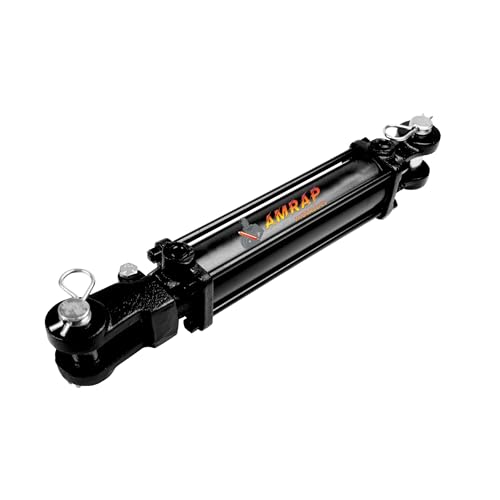
AMRAP HYDRAULICS offers a compact double-acting cylinder with a 2″ bore, 30″ stroke, and a 2500 PSI rating. The rod diameter is 1.125″, with a retracted length of 40.25″ and an extended length of 70.25″. Ports are 3/8″ NPT female, and the tie-rod construction supports significant column load capacity of 3570 lbs. This unit is best for shops or fabrication environments needing a space-efficient option for hydraulic presses or machine tools where moderate force and reliability are required.
- Best for: light to medium hydraulic actuation tasks in budget-conscious projects
- Why selected: balanced size, standard NPT ports, and robust tie-rod design
- Caution: ensure a compatible 3/8″ NPT hydraulic hose and fittings are used to avoid leaks
Wen 2500 PSI Tie Rod Cylinder — 2.5″ Bore, 30″ Stroke

This Wen model delivers a 2.5″ bore and 30″ stroke with a double-acting steel-welded design rated to 2500 PSI. It uses a 1.25″ rod diameter and 3/8″ NPT port connections, suitable for general-purpose hydraulic actuation in equipment like presses or material handling systems. The steel-welded construction emphasizes durability in daily industrial use.
- Best for: standard industrial tasks requiring reliable performance at a moderate price
- Why selected: widely compatible port size and a proven Wen build
- Caution: ensure hose routing avoids sharp bends to maintain port integrity
AMRAP HYDRAULICS 3×30 Welded — 3″ Bore, 30″ Stroke

This heavy-duty unit features a 3″ bore with a 30″ stroke, an SAE#8 port, and a high 3500 PSI rating. It boasts a 12250 lb. column load capacity and an all-welded, heavy-duty steel construction that accommodates tougher applications and outdoor environments. High-strength seals help minimize leakage and rust particles.
- Best for: high-load or outdoor industrial applications
- Why selected: superior sealing and corrosion resistance in harsh conditions
- Caution: heavier and larger than smaller models; require greater mounting support
AMRAP HYDRAULICS 3×30 Tie Rod — 3″ Bore, 30″ Stroke
This tie-rod design uses a 3″ bore, 30″ stroke, and 1/2″ NPT ports, rated at 2500 PSI with a 11,240 lb. column load capacity. The 1″ pin holes aid mounting flexibility for various industrial rigs. This model is best for projects needing robust, modular alignment and simple maintenance across multiple axes.
- Best for: versatile, heavy-duty setups needing easier mounting adjustments
- Why selected: strong load capacity with standard 1″ pin holes
- Caution: ensure compatible tie-rod end fittings and adequate clearance for reach
Wen Cross Tube Cylinder — 4″ Bore, 30″ Stroke

The Wen WT-4030 cross-tube cylinder features a 4″ bore and a 30″ stroke with a 2″ rod diameter, rated up to 3000 PSI. It uses SAE-8 port connections (3/4″ – 16 UNF). Its welded steel construction emphasizes stability for applications requiring higher force and longer service life in demanding environments.
- Best for: higher-force needs in manufacturing or metalworking
- Why selected: larger bore delivers more thrust per cycle
- Caution: larger size may require stronger mounting and space planning
AMRAP HYDRAULICS 2.5×30 Welded Tang — 2.5 Bore, 30″ Stroke

This 2.5″ bore, 30″ stroke tang universal cylinder uses a welded, all-steel construction, rated at 2500 PSI. The rod is 1.5″ in diameter, with a retracted length of 39″ and an extended length of 69″. SAE 8 ports provide straightforward hose connections for various hydraulic setups.
- Best for: setups requiring a longer reach with a strong welded frame
- Why selected: robust all-welded design and larger rod for added stiffness
- Caution: ensure the tang configuration matches your mounting requirements
AMRAP HYDRAULICS 5×30 Log Splitter Cylinder

This heavy-duty log splitter cylinder features a 5″ bore, 30″ stroke, and a 2″ rod. It has 1-1/8″ and 9/16″ pin holes, a welded double-acting design, and 1/2″ NPT ports. Rated at 3500 PSI with a remarkably high 58,900 lb. column load capacity, it is designed for biomass processing and other high-force operations in rough outdoor environments.
- Best for: wood splitting tasks and other high-resistance applications
- Why selected: exceptional load capacity and rugged construction
- Caution: extremely heavy; requires substantial mounting support and safety clearances
Buying Guide: Key Considerations for 30 Inch Stroke Cylinders
When choosing a 30″ stroke hydraulic cylinder, consider bore size, port type, mounting style, and load capacity. Higher bore means more thrust; welded designs typically offer rigidity for continuous use, while tie-rod configurations allow for easier maintenance and alignment in modular systems. For outdoor or harsh environments, prioritize corrosion resistance and sealed seals. Ensure port threads match your hydraulic hoses and adapters, and verify mounting geometry aligns with your machine frame.
Practical Questions to Guide Your Purchase
- What load will the cylinder primarily lift or push, and is a tie-rod or welded design better for my setup?
- Do I need SAE or NPT ports, and are the offered port sizes compatible with my hoses?
- Is space a major constraint requiring a compact 2″ or 2.5″ bore, or can I use a larger 3″ or 4″ bore for more force?
- Will the operating environment involve outdoor weather, debris, or corrosive elements?
- How will mounting and alignment be achieved to prevent side loads and premature wear?
- What maintenance plan is feasible to minimize leaks and seal wear over time?
Frequently Asked Questions
- Q: Which 30″ stroke cylinder offers the best value? A: For balanced value and performance, consider the 2″ or 2.5″ bore options with 2500 PSI ratings, depending on needed force.
- Q: What mounting should I choose for high-load tasks? A: Welded cross-tube or tang-based designs provide rigidity; tie-rod cylinders offer easier field maintenance.
- Q: Are larger bores always better? A: Larger bores deliver more thrust but require more mounting space and may be heavier to install.
- Q: Do these cylinders support continuous operation? A: Many are rated for industrial use up to their specified PSI; confirm duty cycle with your system design.
- Q: How do I prevent leaks at the ports? A: Use compatible fittings, correct NPT or SAE adapters, and ensure proper sealing compounds and torque.
- Q: Can I mix these cylinders with standard hydraulic hoses? A: Yes, if port sizes match and pressure ratings align; always verify hose compatibility.
Add a Comment