Finding the right 30-gallon pressure tank can ensure steady water pressure and long pump life. This guide focuses on durable, code-compliant tanks commonly used with residential well systems. Each selection below features solid construction, reliable diaphragms or bladders, and NSF-related certifications where applicable. Use this overview to compare models that balance capacity, longevity, and compatibility with standard well pumps.
| Product | Brand | Capacity | Connection | Key Feature |
|---|---|---|---|---|
| WaterWorker HT-30B Vertical Pressure Well Tank | Water Worker | 30 gallons | 1 inch | NSF listed; butyl diaphragm; seamless construction |
| Red Lion RL34A 34-Gallon Vertical Tank | Red Lion | 34 gallons | 1 inch FNPT | Pre-charged; leak-safe design; NSF/ANSI certified |
| Red Lion RL20A 20-Gallon Vertical Tank | Red Lion | 20 gallons | 1 inch FNPT | Pre-charged; robust diaphragm; NSF/ANSI certified |
| Amtrol WX-205 Well-X-Trol | Amtrol | 34 gallons | — | Long warranty; high-strength steel; composite base |
| Amtrol WX-202D 20-Gallon Tank | Amtrol | 20 gallons | — | Durable; space-saving; easy installation |
WaterWorker HT-30B Vertical Pressure Tank

The Water Worker HT-30B is a vertical 30-gallon well tank designed to meet NSF/ANSI standards. It features a seamless butyl diaphragm intended to flex rather than crease, reducing wear over time. The polypropylene liner for the water reservoir minimizes flaking and does not impart taste or odor to the water. This tank is suitable for residential water systems and aims to provide consistent pressurized water with a durable, long-lasting diaphragm system.
Red Lion RL34A 34-Gallon Vertical Tank

The RL34A is a 34-gallon vertical, pre-charged pressure tank designed to work with well pump systems and maintain water pressure when the pump is off. It is NSF/ANSI/CAN 61 and 372 approved for drinking water and uses a heavy-duty steel tank with a 304 stainless water connection and a high-performance butyl rubber diaphragm. The tank is shipped pre-charged and requires topping off with air to the appropriate switch setting for proper operation.
Red Lion RL20A 20-Gallon Vertical Tank

The RL20A 20-gallon model suits smaller installations while offering similar build quality to larger Red Lion counterparts. It features a robust steel tank, a 304 stainless water connection, and a butyl rubber diaphragm designed for reliable pressure maintenance. Like other pre-charged models, it arrives pre-charged and should be adjusted to the system’s cut-in settings.
Red Lion RL6AH 6-Gallon Horizontal Tank

The RL6AH is a compact horizontal tank suitable for tight spaces or auxiliary systems. It includes a 3/4-inch MNPT connection and a durable 20-gauge steel construction with a diaphragm design intended to support stable pressure with smaller pumps. It is NSF/ANSI approved for safe drinking water use and is pre-charged for shipping, requiring a final setup before operation.
Amtrol WX-205 Well-X-Trol

The WX-205 is a large 34-gallon Well-X-Trol tank offering an extended warranty and high-strength steel construction with a composite base. It is designed for durability and consistent water pressure in residential settings. The model is built to handle higher working pressures while remaining compatible with standard well pump systems.
Amtrol WX-202D 20-Gallon Tank
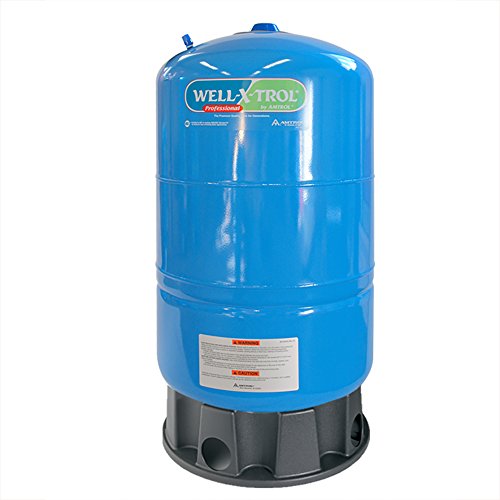
The WX-202D 20-gallon model emphasizes durable construction with a blue appliance-like finish and a space-saving footprint. It is designed for easy installation and reliable performance in smaller home water systems, featuring a high-strength steel shell and a durable diaphragm assembly.
Buying Guide
When selecting a 30-gallon (or nearby size) pressure tank, consider these factors to align with your well system and home needs:
- Capacity versus system demand: A 30-gallon tank provides certain buffering for typical household usage. For higher draw or multi-user homes, consider 34-gallon equivalents to maintain pressure consistency.
- Diaphragm vs bladder: Diaphragm tanks (common in many models) separate water and air with a flexible membrane, while bladder tanks use a bladder to separate. Both protect water quality, but diaphragms are often easier to service.
- Pre-charge pressure: Tanks ship with a pre-charge close to the switch differential. Final charge should match the pump’s cut-in/cut-out settings to prevent short cycling and ensure proper pressure cycles.
- Materials and corrosion resistance: Look for steel shells with stainless steel connections and corrosion-resistant liners to extend life, especially in areas with mineral-rich water.
- Certifications and safety: NSF/ANSI 61 and related approvals indicate suitability for drinking water. This is a key consideration for domestic use.
- Maintenance and warranty: Tanks with longer warranties and easy-access diaphragms reduce long-term maintenance costs and downtime.
- Installation constraints: Consider mounting options (vertical vs horizontal), space availability, and base stability to ensure secure operation.
- Compatibility with existing pumps: Confirm that the tank’s connection size and pre-charge settings align with your current well pump and pressure switch.
- Noise and vibration: Some tanks are designed to minimize pulsation and vibration, contributing to quieter operation in living spaces.
In evaluating options, prioritize models with NSF/ANSI certifications, robust diaphragms, and reliable bases. For households that require higher buffering or have larger water demands, tanks near 34 gallons can offer additional resilience without drastically changing system parameters.
Add a Comment