When selecting a 3-inch flanged check valve, buyers seek dependable backflow prevention, easy maintenance, and compatibility with common piping standards. This guide highlights five solid options, each suited to different needs—from corrosion resistance and bubble-tight seals to quiet operation and low maintenance. The selections target industrial, commercial, and residential systems where a robust, 3″ flanged valve is appropriate.
Buyer notes:
– Best for corrosion resistance and bubble-tight operation: Strataflo 3″ Flanged Check Valve.
– Best for iron piping systems with robust seating: NIBCO Fig No F-918-B.
– Best for stainless steel applications: CF8M Stainless Steel 316 Flanged Swing Check Valve.
– Best for lead-free, quiet operation: NIBCO Fig No F-910-B-LF.
– Best for PVC pipelines and high-flow applications: American Valve P440F 3″ PVC Flanged Swing Check Valve.
Summary Table
| Product | Best For | Notable Benefit | Material |
|---|---|---|---|
| Strataflo 3″ Flanged Check Valve | Corrosion-resistant systems | Bubble-tight Buna-S poppet | Aluminum A356 |
| NIBCO F-918-B 3″ Cast Iron Check Valve | Industrial water and rugged piping | Metal seated, bolted bonnet | Cast Iron |
| CF8M Stainless Steel 316 Flanged Swing Check Valve | Corrosion-prone or sanitary systems | 316 stainless, ASME B16.5 | Stainless Steel 316 |
| NIBCO F-910-B-LF 3″ Cast Iron Check Valve LF | Lead-free potable water projects | Lead-free seating, quiet operation | Cast Iron |
| American Valve P440F 3″ PVC Flanged Swing Check Valve | PVC piping and high-flow | Schedule 80, low flow resistance | PVC |
Strataflo 3″ Flanged Check Valve Aluminum
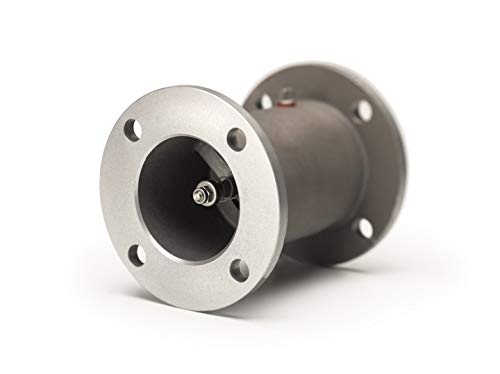
Product: Strataflo 3″ Flanged Check Valve Aluminum, 1 psi Cracking Pressure, 400 psi, Spring-Loaded, Inline Check Valve, NSF 372 Certified, 5300-300-F-FLG
Key features: Anodized A356 marine-grade aluminum provides corrosion resistance. Fully-molded Buna-S rubber poppet offers a bubble-tight seal. Cracking pressure is 1 psi with a maximum working pressure of 400 psi.
Best for: Applications requiring corrosion resistance and a light, inline aluminum body. This valve suits environments with exposed or marine-grade piping and where a low cracking pressure improves system responsiveness. It is ideal for backflow protection in clean-water or non-corrosive fluid lines.
Limitations: Aluminum bodies can be sensitive to certain high-alkaline or highly corrosive chemicals; ensure compatibility with the conveyed fluid.
NIBCO Fig No F-918-B 3″ Cast Iron Check Valve
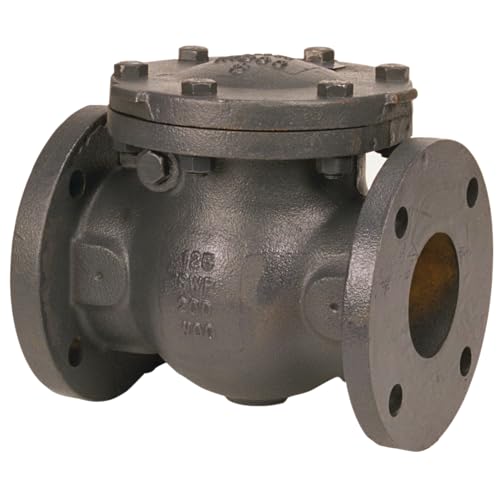
Product: NIBCO Fig No F-918-B, 3 in. Cast Iron Check Valve, Cast Iron, Swing, Flanged
Key features: Horizontal swing check with a bolted bonnet and metal seated construction.
Best for: Industrial or commercial piping where a robust metal seat is preferred and flanged connections are standard. This valve is well-suited for systems needing durable seating and straightforward maintenance.
Caution: Cast-iron components require compatible surroundings to avoid premature corrosion in harsh chemical environments.
CF8M Stainless Steel 316 Flanged Swing Check Valve

Product: CF8M Stainless Steel 316 Flanged Swing Check Valve, ANSI Class 150, Flanged End (3″)
Key features: Investment casting stainless steel 316; raised-face flange end; bolted cap and flange alignment per ASME B16.5.
Best for: Systems requiring high corrosion resistance, sanitary or chemical service, and ASME-compliant flange connections. Stainless steel 316 offers excellent durability in challenging environments.
Limitation: Higher material cost compared to iron or PVC options; ensure this aligns with project budget and fluid compatibility.
NIBCO Fig No F-910-B-LF 3″ Cast Iron Check Valve LF

Product: NIBCO Fig No F-910-B-LF, 3 in. Cast Iron Check Valve LF, Flanged
Key features: Lead-free, spring-actuated sliding disc with renewable bronze seating; wafer-style flanged body for standard flanges; designed for potable water with lead-free wetted materials.
Best for: Potable water systems requiring lead-free compliance and quiet operation. Flanged wafer design facilitates installation between standard flanges.
Limitation: Cast iron valves may be heavier and more brittle in very cold environments; consider mounting and support requirements accordingly.
American Valve P440F 3″ PVC Flanged Swing Check Valve

Product: American Valve P440F 3 3 in. PVC Flanged Swing Check Valve – Schedule 80
Key features: PVC flanged swing check with Schedule 80 compatibility; low flow resistance and vertical or horizontal installation support.
Best for: PVC piping systems that require straightforward installation and high-flow efficiency. Great for water treatment, irrigation, and lightweight industrial applications.
Limitation: PVC valves are less suitable for high-temperature fluids or chemical exposure outside PVC compatibility; verify operating temperature and chemical compatibility.
Buying Guide
What should you consider when choosing a 3-inch flanged check valve?
- Material compatibility: Choose aluminum for corrosion resistance in non-corrosive fluids, cast iron for rugged service, stainless steel for aggressive environments, or PVC for lightweight, cost-effective piping.
- Cracking pressure and flow: Low cracking pressure improves responsiveness; higher flow valves suit large pipelines. Ensure the rating matches your system pressure.
- Connection type and standards: Flanged ends are common in industrial systems. Confirm flange class and ASME/ASTM alignment for your piping.
- Seating design: Metal seats can be durable in high-heat or high-pressure conditions; rubber seats provide bubble-tight seals in clean-water systems.
- Maintenance and accessibility: Bolted bonnets and true-union designs ease maintenance and internal inspection without full shutdowns.
Material-specific guidance
- Aluminum valves: Light, corrosion-resistant, suitable for non-aggressive fluids; avoid highly caustic chemicals.
- Cast iron valves: Robust and cost-effective; best for water and non-corrosive fluids but may require protective coatings for aggressive environments.
- Stainless steel valves: Excellent corrosion resistance; ideal for chemical and sanitary applications; higher cost but longer service life.
- PVC valves: Lightweight and economical; suitable for cold water, irrigation, and some chemical utilities; not for high-temperature or certain solvents.
Installation and maintenance tips
- Ensure proper alignment of flanges and gaskets to avoid leaks.
- Follow manufacturer torque specs for bolts to prevent warping of flanged ends.
- Inspect poppets and seats during maintenance; replace worn seals to maintain bubble-tight seals.
- Consider space for future maintenance when selecting valve length and piping arrangement.
FAQ
- Q: What is the typical use case for a 3″ flanged check valve? A: They are used to prevent backflow in medium-to-large piping systems, commonly in water treatment, industrial processing, and HVAC applications.
- Q: How do I pick between metal and plastic bodies? A: Choose metal for higher-pressure or corrosive-service environments; choose PVC for cold-water, non-corrosive, cost-conscious projects.
- Q: What does “LF” mean on NIBCO valves? A: Lead-free; designed for potable water with reduced lead content.
- Q: Can these valves be installed in horizontal and vertical orientations? A: Many flanged swing check valves support both orientations; verify with the product data sheet and installation guidance.
- Q: Do these require special tools for maintenance? A: Some designs allow tool-free disassembly (true-union); others may require standard wrenches for flange bolts or bonnet nuts.
- Q: Is a bubble-tight seal always achievable? A: It depends on the seating material and valve design; ensure the poppet and seat materials match the conveyed fluid and cleanliness of the system.
Add a Comment