Answering the buyer’s search for 24V DC gear motors with high torque, this guide highlights five solid options and clarifies who each product is best for. These motors are suited to robotics, automation, gates, and mobility aids where strong torque at modest RPM is needed. The following picks balance durability, torque, and ease of use for American hobbyists and small-batch builders.
| Product | Best For | Notable Feature |
|---|---|---|
| Greartisan 24V 200RPM | Compact, high-torque gear motor for robotics | All-metal gears, pure copper rotor |
| DC 24V 200RPM JSX32-31ZY | Small, self-locking option for reversible tasks | Self-locking worm gear |
| uxcell JCF63R | Banking, safes, and small machinery | 4N.m torque, right-angle design |
| Bemonoc 24V 50-350W series | Gate, door, and rolling mechanisms | Reversible, high torque |
| FTVOGUE 24V 10-500 RPM | DIY robotics and rotating tables | Wide speed range |
Greartisan 24V 200RPM High Torque Geared Motor
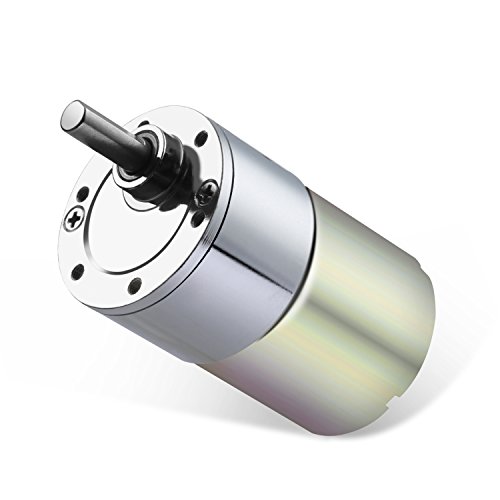
The Greartisan 24V 200RPM gear motor is built with all-metal gears and a pure copper wire core rotor. It delivers robust load capacity and improved power delivery, making it a practical choice for compact robotics and small automation tasks. The D-shaped output shaft enhances bearing life and durability for long-duration runs. Best for hobbyists and small-builders seeking a reliable, high-torque option in a compact form.
Who it’s best for: users who need a compact, durable motor with strong torque for robotic arms, conveyor-like feeders, or small opening mechanisms. Choose this if you value metal gears and a high-tidelity rotor for efficiency and longevity. Caution: ensure shaft dimensions and mounting compatibility match your chassis to avoid misalignment.
Luca Motor 24V 200RPM Self-Locking Gear Motor

The Luca Motor JSX32-31ZY is a 24V gear motor with self-locking behavior, an 8mm output shaft, and all-metal gears. Its self-locking feature means the output remains stationary when power is removed, ideal for vertical lifting tasks or column holds. The motor supports reversible operation by switching wiring polarity, offering flexible installation for compact automation projects. Best for projects where a secure locked state is essential when power is off.
Best for: small actuators and lock mechanisms where no-load hold is required. Better for: installations needing simple polarity-based direction control. Caution: verify shaft diameter and mounting holes before integration to avoid misfit.
BEMONOC 24V High Torque Reversible Gear Motor

The BEMONOC 24V motor offers a 50 RPM no-load speed and a rated torque of 6 N·m, with a reversible operation option. Its compact dimensions and M6 mounting holes support straightforward installation in rolling doors, gates, or small window actuations. This model suits applications demanding robust torque at low speeds. Best for: gate actuators and small garage door solutions where reliable torque is crucial. Caution: confirm the exact mounting pattern and sprocket compatibility for your drive system.
Topyond 250W 24V Wheelchair/ Ebike Motor
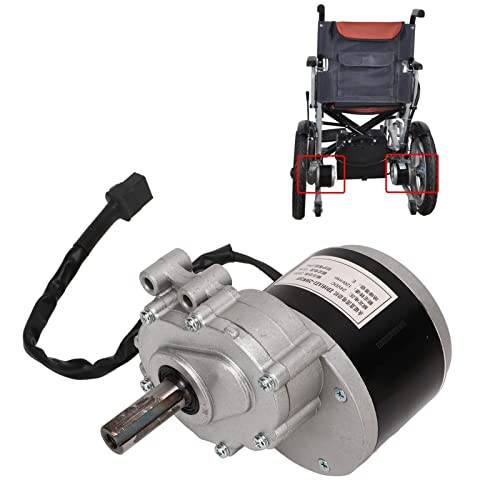
The Topyond 250W 24V DC brushed motor is designed for high torque output suitable for electric wheelchairs and mobility devices. It offers a 120 RPM speed and a robust torque profile within a compact motor frame. This model is best for heavy-duty low-speed propulsion needs where dependable torque is more critical than top speed. Choose this if you require a proven, high-torque motor for mobility-related applications. Limitation: brushed motors can require more maintenance over time compared to brushless designs.
FTVOGUE 24V Gear Motor, Wide RPM Range

The FTVOGUE motor line provides a broad speed range from 10 to 500 RPM, with a focus on low-noise operation and reliable thermal performance. Its compact copper-tube design and ball bearing construction enhance wear resistance and durability, making it suitable for rotating tables, robotic platforms, and door-lock systems. Best for: experiments and custom assemblies where you need predictable, low-friction performance. Limitation: the wide RPM range requires careful control to avoid over-torque conditions in tight mechanical fits.
Buying Guide: Key Purchase Considerations
- Torque and speed requirements: Match the motor’s RPM and torque to your load and desired acceleration. Higher torque at lower RPM is typical for lifting or opening mechanisms.
- Gearbox and shaft design: All-metal gears improve durability under load. D-shaped or splined shafts provide stronger engagement with couplers and sprockets.
- Mounting and dimensions: Confirm diameter, length, and mounting hole spacing (M6 or other) to fit your chassis or frame.
- Electrical considerations: Ensure voltage (24V), current draw, and wire gauge align with your power supply and control electronics.
- Direction control: Reversible motors and self-locking variants offer flexible installation. Verify wiring changes required to change rotation direction.
- Heat and efficiency: Motors with high-quality windings and copper cores minimize energy loss and heat during extended runs.
- Maintenance: Brushed motors may require more maintenance than brushless designs; plan for wear and replacement parts if applicable.
- Environment and duty cycle: Consider operating temperature range and noise levels for your application environment.
FAQ
- What torque is typical for 24V gear motors of this type?
– Torque ranges from about 4 N·m to 6 N·m in these options, with higher torque models available in larger frames. - Can I reverse motor direction easily?
– Yes, several models offer reversible operation by wiring changes or accessory control signals. - Are these motors suitable for long-running duty?
– They are designed for continuous operation within their rated load; check manufacturer specs for duty cycle limits. - Do these motors require special mounting brackets?
– Many provide standard mounting patterns (M6 holes) but verify exact dimensions for your project. - Is self-locking important for my project?
– Self-locking helps hold position when power is removed, which is valuable for gates, clamps, and safety interlocks. - What maintenance should I expect with brushed gears?
– Brushed motors may require periodic brush and bearing inspection; consider lubrication intervals per usage.
Add a Comment