When shopping for a 20hp vertical shaft engine, you want reliability, ease of installation, and long-term durability. This guide highlights five vertical shaft options that are well-suited for consumer riding mowers, Z-turns, and similar equipment. Each entry notes who it’s best for, why it was selected, and potential limits to consider. Whether you’re replacing an old engine or upgrading, these choices provide solid, engine-life-friendly options for common outdoor-power equipment.
| Product | Best For | Key Reason |
|---|---|---|
| Briggs & Stratton 40N777-0027 | 21–22 HP mower or Z-turn replacement | 20hp Intek V-Twin with various crankshaft options; common replacement choice |
| Briggs & Stratton 44S977-0032-G1 | Durable, higher-power needs | OHV design, cast-iron cylinder sleeve, robust charging system |
| Briggs & Stratton 49T877-0049-Z1 | Heavy-duty debris-prone environments | 27 HP commercial series with debris-management system |
| Briggs & Stratton 44S977-0033-G1 | Reliable 25 HP vertical applications | OHV, dual-stage debris protection, electric start |
| Briggs & Stratton 33S877-0043 | 19–20 HP replacement with smooth operation | Cast-iron sleeve, smooth balancing, electric start option |
Briggs & Stratton 40N777-0027 — 20hp Intek V-Twin

Best for: Buyers replacing a consumer riding mower engine with a common 1 x 3-5/32 shaft setup. The 20hp Intek V-Twin delivers straightforward power for standard residential mowers and Z-turns. This engine is often chosen when compatibility with existing cranks is a priority, as Briggs offers several crankshaft dimensions.
Why selected: It’s designed to fit typical consumer mowers and Z-turns with a 1 x 3-5/32 crankshaft family. The model is widely used as a direct replacement, reducing custom-fit effort.
Caution: Verify your current crankshaft measurement (1 x 3-5/32, 1-1/8 x 3-5/32, 1-1/8 x 3.94, 1-1/8 x 4-5/16) before purchasing to avoid fit issues.
Briggs & Stratton 44S977-0032-G1 — 25 GHP Vertical Shaft
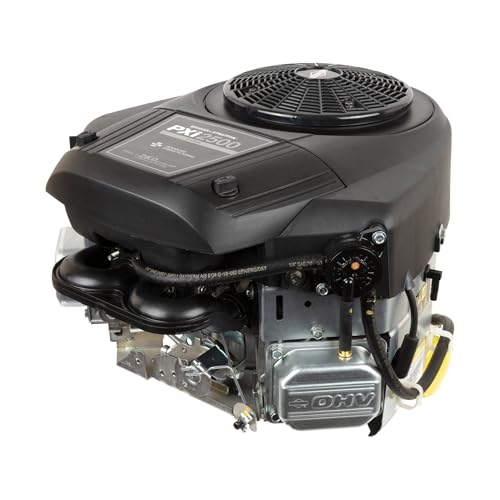
Best for: Mowers and outdoor equipment needing robust overhead-valve power with extended-life components. The 25 GHP vertical shaft engine suits longer operation cycles and higher tasks in residential to light-commercial settings.
Why selected: Features include a dura-bore cast-iron cylinder sleeve for durability, OHV design for cooler operation, and a full-pressure lubrication system with an integrated charging system—beneficial for frequent use.
Caution: While powerful, this model can be heavier than smaller equivalents, so ensure your mounting area supports the weight and mounting pattern.
Briggs & Stratton 49T877-0049-Z1 — 27 HP Commercial

Best for: Heavy-duty debris-prone environments or commercial-use equipment that needs extra durability and power. The 27 HP commercial engine is a strong option for demanding outdoor tasks.
Why selected: It features a patented 5-Step Debris Management System and a cyclonic air filter for debris protection that lasts longer than typical air-cleaner setups. This reduces clogging in dirty operating conditions.
Caution: The higher power output comes with increased weight and size; verify frame clearance and mounting compatibility before purchase.
Briggs & Stratton 44S977-0033-G1 — 25 GHP Vertical Shaft

Best for: Residential and light-commercial use where reliable electric start is desired alongside strong debris protection. The 25 HP model balances power and user-friendly starting.
Why selected: Electric start with a 16-amp alternator, OHV technology, and a dura-bore sleeve contribute to smoother operation and longer life in typical outdoor tasks.
Caution: Electric-start models require a properly wired system and may need regular battery maintenance for best performance.
Briggs & Stratton 33S877-0043 — 19–20 HP Vertical

Best for: Applications needing near-20 HP with smooth operation, particularly where a lighter engine helps with mounting constraints. This engine is a common choice for replacement in mid-sized equipment.
Why selected: Cast-iron sleeve and dual-stage air filtration extend engine life; the linear balancing system reduces vibration for smoother performance. Includes electric start in some configurations.
Caution: This option may be on the lower end of power for some 20hp demands; confirm horsepower in your equipment’s specification sheet.
Buying Guide: Key Purchase Considerations
Intended use matters most. For residential mowers and light-duty Z-turns, focus on a 20–25 HP vertical shaft with a robust debris management system and reliable starting features. For heavy debris environments, prioritize models with cyclonic air filtration and a cast-iron cylinder sleeve that resists wear.
Engine features to compare:
- Power and displacement: Ensure the engine aligns with your equipment’s required horsepower and torque.
- Crankshaft and mounting: Check shaft diameter, length, and mounting pattern to match your equipment’s cradle and pulleys.
- Lubrication and cooling: Full-pressure lubrication and OHV design help longevity; verify oil capacity and service intervals.
- Air filtration: Dual-element or cyclonic filters reduce debris intrusion in dusty conditions.
- Starting method: Electric start offers convenience but requires battery maintenance; recoil starting is simpler but may require manual effort.
- Installation clearance: Verify overall engine length, height, and exhaust routing to avoid interference with frames and shields.
Maintenance considerations: Regular oil changes, filter replacements, and carburetor checks support longevity. If your machine operates in dirty or dusty environments, prioritizing debris-management features can extend life and reduce downtime.
Frequently Asked Questions
- What should I consider when choosing a 20hp vertical shaft engine?
– Look at crankshaft compatibility, mounting footprint, and debris-management features to fit your mower or equipment frame. - Is electric start always better for a 20hp engine?
– Electric start is convenient but requires battery upkeep; recoil start is reliable and simple but requires effort. - Are OHV designs worth it for residential mowers?
– Yes, OHV designs generally run cooler and deliver better valve longevity in typical mowing cycles. - Can I mix brands if I replace only part of the engine?
– Replacement parts should match mounting and crankshaft specifications; mismatches can cause fitment issues. - What maintenance intervals are typical for these engines?
– Follow manufacturer guidelines, but plan regular oil changes, filter checks, and carburetor inspections at least seasonally. - Which engine is best for heavy debris environments?
– Engines featuring cyclonic debris protection and debris-management systems are preferable for dusty, debris-laden tasks.
Add a Comment