Discover the top 2″ solenoid valves for reliable flow control in water, air, fuel, and other media. This guide reviews stainless steel, brass, and aluminum options with different voltages and configurations to help you choose the right valve for your system. Each pick balances durability, response speed, and compatibility to fit common HVAC, irrigation, and industrial needs.
Summary of chosen products:
| Product | Brand | Voltage | Material | Media Compatibility |
|---|---|---|---|---|
| U.S. Solid 2″ Solenoid Valve — 110V AC Stainless Steel | U.S. Solid | 110V AC | Stainless Steel | Gas, water, air, general fluids |
| BACOENG Brass Electric Solenoid Valve 2″ AC110V | BACOENG | 110V AC | Brass | General liquids and non-corrosive media |
| U.S. Solid 2″ Brass Electric Solenoid Valve 12VDC | U.S. Solid | 12V DC | Brass | Non-potable water, diesel |
| Baomain 2 inch AC 110V Brass Electric Solenoid Valve | 110V AC | Brass | Water, air | |
| UNOX 2 inch NPT Solenoid Valve 24V DC Brass | UNOX | 24V DC | Brass | Water, air, gas (not potable water) |
U.S. Solid 2″ Solenoid Valve — Stainless Steel

This valve features industrial-grade stainless steel construction, offering excellent corrosion resistance and suitability for welding. It supports higher temperatures and is compatible with fuels, air, and water-based media. A Viton seal provides robust resistance to heat and chemicals, enabling reliable operation in demanding environments. The valve responds quickly, opening or closing in under three seconds when energized or de-energized, and it is designed for long life with an expected lifecycle well over a million cycles under proper conditions.
BACOENG 2″ Brass Electric Solenoid Valve 2″ AC110V

This 2″ valve uses brass with NPT threads for straightforward installation in piping systems. It operates at 110V AC and is normally closed, offering enhanced security when power is off. Its operating temperature range is suitable for typical HVAC and water systems, though extreme conditions should be avoided to maintain seal integrity and longevity.
U.S. Solid 2″ Brass Electric Solenoid Valve 12VDC

Brass construction provides durability and good corrosion resistance, making it suitable for high-temperature applications and a range of fuels and gases. This 2″ valve uses a Viton seal for enhanced chemical resistance and fast actuation, typically opening and closing in under one second. It is intended for non-potable water and diesel environments and is engineered for a long service life with proper maintenance and operation.
Baomain 2 Inch AC 110V Brass Valve

Baomain’s 2″ AC 110V brass valve is designed with 2-inch female threads to fit standard piping. It is normally closed, and the valve is appropriate for general water and air applications. The brass body contributes to durability and heat resistance, making it a practical choice for commercial and residential systems requiring reliable actuation.
UNOX 2 Inch NPT Solenoid Valve — 24V DC
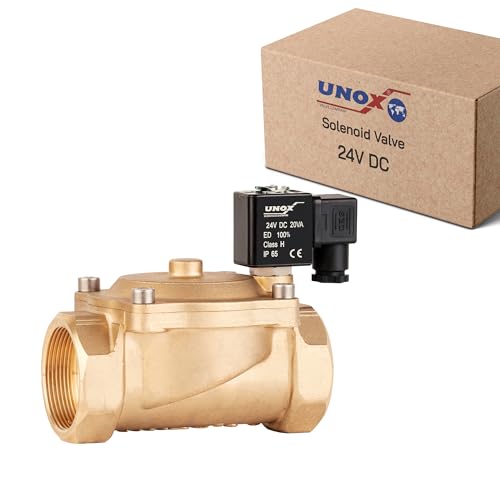
UNOX’s 2″ NPT brass valve is designed for reliability across water, air, and gas media within a pressure range of 0.5 to 16 bars. It uses NBR gaskets for sealing and is optimized for non-potable water and similar media. While offering solid corrosion resistance, it should not be used with gasoline or aggressive solvents, which could compromise seals and longevity. This makes it a versatile option for industrial control and processing systems.
Buying Guide
- Material selection: Stainless steel valves excel in corrosion resistance and long life in harsh environments, while brass valves are cost-effective and highly suitable for water, air, and general liquids. Consider the media, temperature, and any potential chemical exposure when choosing.
- Voltage and control type: Choose a valve with the appropriate coil voltage for your control system (12V DC, 24V DC, 110V AC). Normally closed configurations are common for safety and leak prevention when power is interrupted; normally open options are preferred when continuous flow is needed without power.
- Connection and sizing: Confirm 2″ pipe size and thread standards (NPT) to ensure a proper fit. Some models use compression or different thread types—maintain consistency with your existing piping.
- Media compatibility: Water and non-potable water require different materials and seals (Viton/NBR). Avoid brass valves for potable water if there are health and safety considerations.
- Operating temperature and pressure: Verify that the valve’s rated temperature and pressure align with your system. High-temperature media or high-pressure service may require stainless steel or special seals for durability.
- Seals and maintenance: Viton seals provide excellent chemical resistance but have limits with certain solvents. NBR gaskets are cost-effective for many fluids but may not be suitable for harsh chemicals.
- Lifecycle and reliability: Look for valves with long cycle life (often 1 million cycles or more) if your system operates frequently. Consider manufacturer support and availability of replacement parts.
- Installation considerations: Ensure adequate space for valve actuation, quick accessibility for maintenance, and proper orientation to support flow direction and gravity drainage where applicable.
Add a Comment