When you need precise, clean cuts in concrete or asphalt, a walk behind concrete saw is essential. This guide highlights 5 solid options, including 18-inch blades and 20-inch-capable saws, to help you choose the right tool for sidewalks, driveways, and flatwork. Best for contractors needing durable cutting depth, industrial-grade blades, or portable, transportable units for frequent jobsite changes.
| Product | Best For | Why It Stands Out |
|---|---|---|
| CORMAC CQ480 Walk Behind Floor Saw | Medium-to-large scale jobs | Sturdy box frame, low vibration, easy depth adjustment |
| Tomahawk 6″ Early Entry Concrete Saw | Fine, early-entry cuts | Compact, Honda engine option, includes specific saw blade |
| EDiamondTools 18″ Concrete/Asphalt Saw Blades | 18″ blade compatibility | High diamond concentration, designed for cured concrete and asphalt |
| EDCO 18-Inch Diamond Blade (DS-18 compatible) | Professional-grade 18″ cuts | Premium blade for cured concrete, with precise, durable performance |
| Stark USA 14″ Walk-Behind Cutter | Smaller-scale jobs with solid stability | Good weight distribution and straightforward water-tank setup |
CORMAC CQ480 Walk Behind Floor Saw

The CORMAC CQ480 is a heavy-duty walk-behind concrete saw designed for strength, durability, and performance. It features a 13 HP gasoline engine and a water tank for dust control, with a reinforced steel box frame to reduce vibrations. It accepts up to a 20″ blade and includes one 20″ concrete blade. This model is best for contractors needing reliable, straight cuts on concrete or asphalt with reduced vibration and consistent depth control.
Who this is best for: Professional contractors and rental-yard operators performing medium to large-scale concrete cutting projects who prioritize reduced vibration and blade stability. Why selected: Its sturdy frame and vibration-dampening design support longer blade life and cleaner cuts on hard materials. Caution: Heavier weight may require more effort to transport and maneuver on tight sites.
Tomahawk Power 6″ Early Entry Concrete Saw
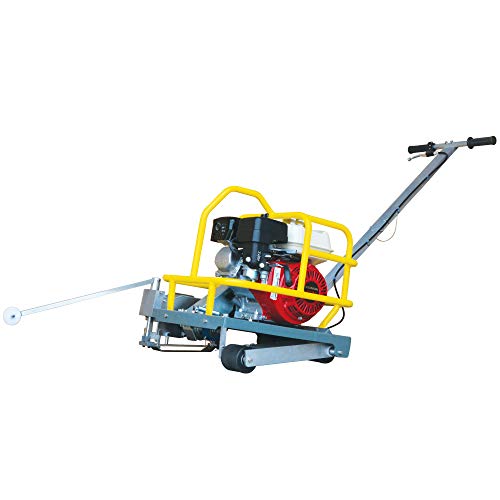
The Tomahawk Power 6″ Early Entry Concrete Saw is designed for precise, early-entry cuts with a compact form factor. It uses a 3.5 HP Honda GX120 engine and includes a 6″ soff-cut blade. This saw is best for small sites, light-to-medium duty work, and projects requiring tight corner work or narrow channels where a larger saw is impractical.
Who this is best for: DIYers or small crews performing quick, precise cuts in narrow spaces. Why selected: The compact size and Honda engine provide reliable starting and maneuverability. Caution: Limited cutting depth compared to larger 18″ or 20″ models.
Stark USA 14″ Walk-Behind Cutter
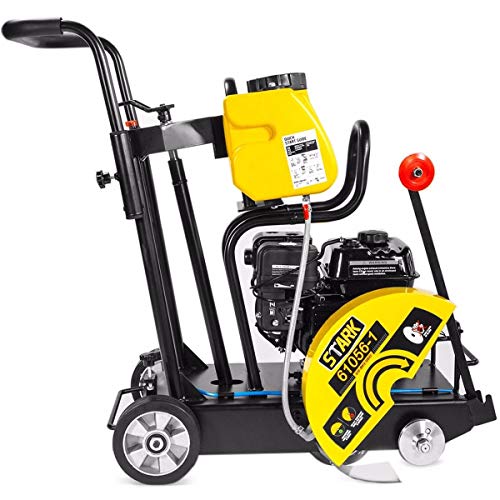
The Stark USA Walk-Behind Cutter focuses on smaller jobs with strong weight distribution and stability. It features an easy-removal water tank and a rotating handle for depth control, making it an approachable option for sidewalks and driveways where maneuverability matters more than blade size. This is a better pick when jobsite space is limited.
Who this is best for: Budget-conscious contractors and DIYers tackling smaller projects. Why selected: Simpler maintenance and handling offer quick setup and efficient execution. Caution: 14″ blade systems may require more passes on tougher concrete than larger 18″ models.
EDCO 18-Inch Diamond Blade

The EDCO 18-Inch Diamond Blade is designed for high-performance cuts in cured concrete. With dimensions of 18 X .125 X 1 inch and a standard 1-inch arbor, this blade fits 18-inch walk-behind saws and similar equipment. The blade is engineered for professionals who require consistent, precise cuts and blade longevity in demanding environments.
Who this is best for: Contractors needing a dependable 18-inch blade that fits standard DS-18-compatible saws. Why selected: Premium diamond composition supports clean cuts in cured concrete. Caution: Blade choice should match the exact arbor and depth settings of your saw to avoid efficiency losses.
EDiamondTools 18″ Concrete/Asphalt Saw Blades

These 18″ saw blades from EDiamondTools are multipurpose, designed to cut hard or reinforced concrete, asphalt, granite, terrazzo, or ductile iron piping. They feature a segment height of 10 mm and segment width of 0.145 inches, which supports durable performance in demanding materials. They are well-suited for broad-cut jobs where blade life and consistency matter.
Who this is best for: Pros needing versatile blades for mixed materials. Why selected: High diamond concentration and robust segment dimensions support longer life and reliable performance. Caution: Wet cutting is required; ensure your machine is configured for wet operation.
Buying Guide: 18-Inch Walk-Behind Concrete Saw Considerations
What size and power level do you need?
Consider blade diameter (18″ vs. 20″) and engine power (gasoline HP) to ensure you can cut the expected material depth and density. Larger blades require more power and can demand greater operator effort to move and control.
Torque, vibration, and frame design matter
Reinforced frames reduce vibrations that shorten blade life and degrade cut accuracy. Look for models with vibration-damping features, rigid housings, and balanced weight distribution for straighter cuts.
Dust and water management
Dust control improves health and blade life. Ensure the system includes a reliable water tank or dust management features. Wet cutting is common with asphalt and cured concrete, so confirm compatibility with your job site.
Depth adjustment and ease of use
Depth-control mechanisms should be easy to adjust and lock securely. A smooth depth mechanism enables precise kerf widths and reduces the chance of accidental blade drift during cuts.
Blade compatibility and availability
Check arbor size (commonly 1″), kerf width, and compatibility with standard 18″ or 20″ blades. Availability of replacement blades from trusted brands reduces downtime on busy projects.
Mobility and transportability
Folding handles, compact frames, and manageable weights improve site-to-site transport. If you work on multiple jobsites or need to fit into tight spaces, consider models with portable transport or quick assembly features.
Safety and maintenance
Always verify safety features such as blade guards and emergency stop options. Regular maintenance, including water system checks and blade inspection, extends tool life and ensures safer operation.
Which option should you choose?
- For heavy-duty, straight cuts on larger jobs, favor saws like the CORMAC CQ480 with a robust frame and deep-cut potential.
- For narrow corridors or early-entry cuts, consider compact options like the Tomahawk Power model.
- When cutting mixed materials or requiring blade longevity, select 18″ diamond blades from EDiamondTools or EDCO with proven performance.
- For smaller projects with limited space, Stark USA’s 14″ model can be a practical standby, recognizing its smaller capacity.
FAQ
Q: What is the typical best use of an 18″ walk-behind saw? A: They are ideal for straight, long cuts in concrete or asphalt on sidewalks, driveways, and flatwork where larger blades improve efficiency.
Q: Is water cooling always required for these blades? A: Wet cutting is common for 18″ blades to reduce dust and cool the blade; ensure your machine supports a water delivery system.
Q: Do I need a professional-grade saw for DIY projects? A: For most DIY tasks, a smaller 14″ to 18″ blade setup with adequate depth control is sufficient, but for heavy-duty or commercial work, a larger, powered unit is preferable.
Q: How do I choose between a 18″ blade and a 20″ blade? A: A 20″ blade can offer deeper cuts and longer life on heavy duty concrete; ensure your saw can safely handle the extra diameter and weight.
Q: What maintenance is essential for walk-behind saws? A: Regularly inspect the blade, verify depth settings, check the water system, and ensure the frame and wheels remain aligned for straight cuts.
Summary: This guide presents five solid options spanning 18″ blade compatibility and practical 14″- to 20″-class walk-behind saws. The selections balance power, durability, and ease of use to support different job sizes and site constraints. Use the Buying Guide to align your choice with material types, job scale, and transport needs.
Add a Comment