If you’re shopping for an 18,000 lb capacity winch, you need a model that combines rugged construction, reliable power, and durable weather sealing. These five options are well-suited for off-road recovery, trailers, and heavy hauling, with capacities at or around the 18k mark. The best pick depends on your vehicle type, preferred control method, and environment. This guide highlights who each winch is best for and why, with practical notes on limitations to consider before you buy.
Summary table of chosen products:
| Product | Capacity | Best For | |
|---|---|---|---|
| VEVOR Electric Winch | 18,000 lb | Off-road trucks and Jeeps needing strong, immediate pull | 13.7HP copper motor with 3-stage planetary gears |
| 20000LB Heavy Duty Electric Winch (Tekstap) | 20,000 lb | Vehicles frequently crossing wet or muddy terrain | IP68 submersion resistance; dual wireless remotes |
| XYCLE 18,500 LBS Winch | 18,500 lb | Sat in mild to extreme off-road recovery with wireless control | IP68; aviation aluminum design; two remote controls |
| GINDAOLULU 20,000 LBS Winch | 20,000 lb | Heavy-duty trailers and trucks in harsh environments | 7kW motor; IP68; sealed motor and contactors |
| RUGCEL WINCH 20,000 lb | 20,000 lb | Versatile vehicle recovery with rugged build | All-steel shell; 7.8HP motor; three-stage planetary gears |
VEVOR 18,000 Lb Electric Winch

The VEVOR winch is purpose-built for off-road recovery and heavy-duty pulling. It increases line pull to 18,000 lbs with a 12V DC 7/16 in steel cable and a 3-stage planetary gear system. The 312.4:1 gear ratio supports powerful pulls even in mud or wet conditions. The winch is designed for trucks, SUVs, trailers, and heavy loads such as timber, making it a versatile choice for those who regularly recover or haul heavy items. Best for off-roaders who need reliable, raw pulling power at the ready. A notable limitation is the heavy steel cable, which can be less easy to handle compared to synthetic rope in some situations.
Best for: Off-road enthusiasts, SUV and truck owners who frequently need high-torque pulls in challenging conditions. Choose this if you want a true 18,000 lb capacity with robust steel cable and powerful motor.
20000LB Heavy Duty Electric Winch (Tekstap)

The Tekstap winch delivers 20,000 lbs of single-line pull with IP68 submersion resistance, making it well-suited for vehicles facing mud, rain, or water obstacles. It uses a 7.9HP sealed motor and a 544:1 four-stage planetary gear system to provide steady torque and reliability in harsh conditions. Two wireless remotes and a wired controller offer flexible operation from multiple positions. Best for: users who want excellent water resistance and convenient remote operation. Limitation: performance may be impacted by extreme heat or dust if seals wear over time.
XYCLE 18,500 LBS Winch

The XYCLE winch features an IP68 waterproof rating, a corrosion-resistant aluminum alloy housing, and a 280:1 gear ratio with purple copper coils in the motor for strong performance. It provides two control options: wireless up to 100 feet and wired for closer operation. The included 9/17 inch synthetic rope offers safer handling than steel rope in many situations. Best for: those who want lightweight construction with strong power and easy, long-range wireless control. Limitation: synthetic rope can wear faster than steel in abrasive environments if not properly maintained.
GINDAOLULU 20,000 LBS Winch

This model uses a 7KW motor and a 365:1 three-stage planetary gearbox, delivering strong torque for heavy recovery tasks. It’s IP68 rated for waterproof performance and includes both wired and wireless remote options. The sealed motor and contactors resist corrosion and short circuits in challenging environments. Best for: heavy-duty trailer and vehicle recovery in wet or muddy conditions. Limitation: larger footprint may require more installation space and mounting hardware.
RUGCEL WINCH 20,000 Lb
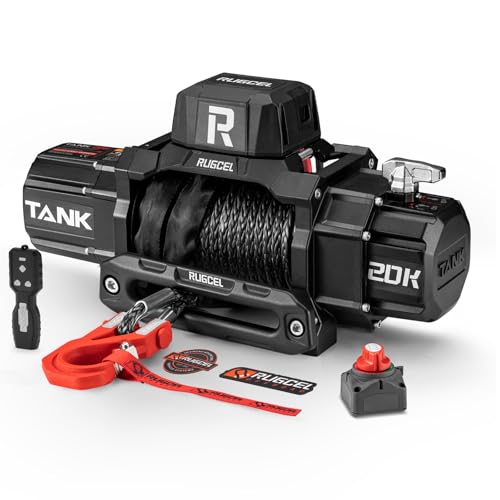
The RUGCEL 20,000 lb winch emphasizes versatility with a rugged all-steel shell and a 7.8HP motor driving a three-stage planetary gear system. The model uses a 69-foot rope length and includes 2-in-1 wireless remote control for flexible operation. Best for: users seeking a robust, multi-purpose winch suitable for trucks and trailers in demanding settings. Limitation: the rope length is shorter than some 85-foot options, which may affect reach in larger recovery scenarios.
Buying Guide: Key Purchase Considerations
- Capacity vs. actual need: 18,000–20,000 lb models are common; match capacity to vehicle weight and typical recovery loads. Consider potential snatch points and leverage requirements.
- Powertrain and gear: higher HP motors and multi-stage planetary gears provide smoother, more consistent pulls. A higher gear ratio increases line speed but may reduce line pull at low RPMs.
- Cable vs. synthetic rope: steel cable is durable and cost-effective but heavier; synthetic rope is safer and easier to handle but may require more care and maintenance.
- Water and dust resistance: IP68 is ideal for wet or muddy environments, especially for off-road and water crossings.
- Remote options: wireless remotes offer distance flexibility; wired remotes ensure control in tight spots. Check the length of wired options for reach.
- Protection and durability: sealed housings and corrosion-resistant components extend service life in harsh climates.
- Installation space: verify mounting footprint, bolt hole patterns, and bumper or frame clearance before purchase.
Frequently Asked Questions
- What is the typical recovery range for an 18,000–20,000 lb winch?
– Recovery range depends on cable length and drum design; most models in this range support 70–85 feet of rope and various control options. - Should I choose steel cable or synthetic rope?
– Steel cable is durable and affordable for frequent heavy pulls. Synthetic rope is lighter and safer to handle, ideal for casual trail recovery when used with proper protective measures. - Is IP68 waterproofing necessary for off-road use?
– IP68 provides submersion resistance and dust protection, which is beneficial for wet or muddy environments but not strictly required in all conditions. - Do wireless remotes improve safety?
– Yes. They let you operate the winch from a safe distance or obstructed locations, reducing risk during setup and recovery. - Can I install a winch on any vehicle?
– Installation depends on mounting space, bumper design, and electrical capacity. Professional mounting is advised if uncertain.
Add a Comment