Looking for a 17 CFM air compressor that can power air tools, paint sprayers, or inflate tires across a busy shop or mobile job site? This guide highlights five solid options that meet or closely approach 17 CFM, with practical notes on who they’re best for and what to watch out for. Each product is evaluated for portability, durability, ease of maintenance, and suitability for professional or DIY use. Use the buying guide and FAQ to compare capacity, power needs, and tank size before you buy.
Summary table of selected products:
| Product | Brand | CFM | Max PSI | Tank |
|---|---|---|---|---|
| HPDAVV 6.5HP Gas Powered Air Compressor | HPDAVV | 17 | 125 | 20 Gal |
| VEVOR Air Compressor Pump Head, 10HP | VEVOR | 17.5 | 185 | Not applicable (pump head) |
| EMAX Electric Air Compressor – 80 Gal | EMAX | 17 | 200 | 80 Gal |
| 5-7.5 HP Replacement Pump CS3080 | compressor-source | 16.94 | Max 1000 | 60-80 Gal (pump dependent) |
| MZB 13.2 Gal Ultra Quiet Air Compressor | MZB | 14.83 | 115 | 13.2 Gal |
HPDAVV 6.5HP Gas Powered 17CFM Compressor

Best for portable, worksite use where gasoline power is preferred. This unit offers a 20-gallon tank, 125 PSI max, and 17 CFM output, suitable for mid-sized tools and spray jobs. The one-stage design delivers direct compression, while a cast iron frame adds durability for rough-site work. The automatic start/stop switch helps with safe operation. The main caveat is fuel handling and maintenance for gas-powered equipment, which may be less convenient than electric options in some settings.
Best for: mobile mechanics, construction crews, and service fleets that require on-truck portability and off-grid capability.
Why it was selected: Combines high CFM output with a sizable tank and rugged construction, making it a practical all-around choice for sites without reliable electricity.
Caution: Gas engines require fuel management, periodic maintenance, and ventilation considerations on job sites.
VEVOR 10HP 17.5CFM Dual-Stage Pump Head

Best for upgrading or replacing pump head components on a larger system. This VEVOR 10HP, 3-cylinder oil-lubricated pump head delivers 17.5 CFM at 90 PSI with a 185 PSI max working pressure. It uses a proven belt-driven dual-stage design to reduce vibration and provide stable compression. It’s ideal for tire shops, spray booths, and woodworking setups that demand a steady air supply. Note that motor is not included, so pairing with an appropriate motor is required.
Best for: users upgrading existing air systems or building a high-demand shop compressor that demands strong, continuous airflow.
Limitation: Motor not included; requires a compatible power source and proper alignment to minimize vibration.
EMAX Electric 80 Gal 5HP 2-Stage
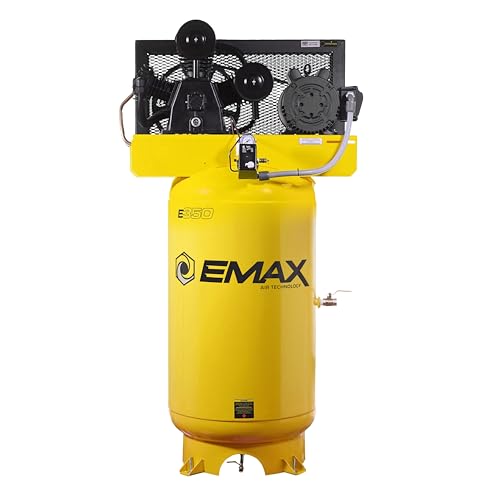
Best for serious continuous use in a fixed shop. The EMAX EHI05V080Y1 delivers 17 CFM at 100 PSI with a durable 5 HP motor and a two-stage pump, offering strong airflow for heavy-duty tools, spray painting, and production tasks. A manual tank drain helps with routine maintenance. The design emphasizes longevity and steady performance, but weight and installation complexity are considerations for garages with limited space.
Best for: professional shops requiring high CFM and reliability for long work sessions.
Limitation: Heavier installation and higher power draw may require dedicated electrical service and space planning.
Campbell Hausfeld 80 Gallon Vertical 5 HP
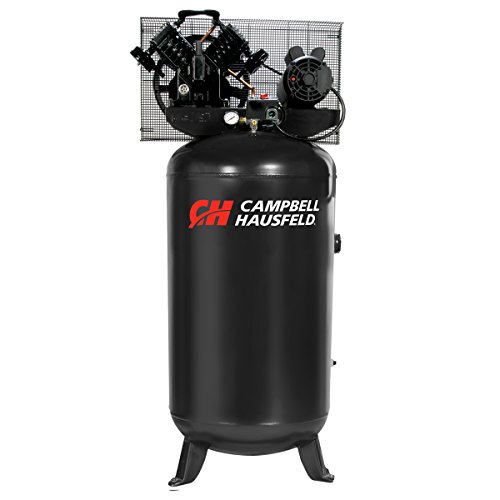
Best for capacity and versatile high-pressure output. This Campbell Hausfeld model features an 80-gallon vertical tank, up to 140 PSI max with 16 CFM at 90 PSI, and a robust 5 HP single-stage motor. Its large tank supports longer tool operation without frequent cycling, suitable for spray systems, nailing, and workshop shop air needs. The oil-free design makes maintenance easier in varying climates, but the slightly lower CFM compared to 17 CFM units might affect peak performance with certain tools.
Best for: home garages and small to medium commercial spaces needing substantial air storage and decent CFM.
Limitation: Slightly below 17 CFM in the tested range; verify tool air demands before purchase.
MZB 13.2 Gal Ultra Quiet 115 PSI

Best for indoor workshops or residential use where noise is a major concern. The MZB 13.2-gallon unit features an oil-free pump and a compact footprint with wheels for mobility. It delivers up to 115 PSI and about 14.83 CFM, which makes it suitable for light-to-mid-duty tasks and spray painting in quieter environments. It’s notably quieter (around 70 dB) than many other compressors, but its lower CFM means it won’t sustain high-demand tools for extended periods.
Best for: indoor garages or noise-sensitive environments needing steady airflow for small-to-mid tasks.
Limitation: Lower CFM relative to 17 target units; may require cooldown or staged use with demanding tools.
Buying Guide
What to check when shopping for a 17 CFM compressor
- Target CFM at operating PSI: Confirm the CFM rating is listed at a practical operating pressure (often 90–100 PSI). Higher PSI may come with lower CFM in some models.
- Tank size vs. duty cycle: Larger tanks provide longer run times between cycles. For spray painting or continuous tool use, plan for 30–80+ gallons depending on tools.
- Power source: Electric (single- or three-phase) vs. gas-powered. Electric models avoid fuel maintenance but require adequate electrical capacity. Gas units excel in remote sites but need fuel and ventilation.
- Oil-lubricated vs. oil-free: Oil-free pumps lower maintenance but can be louder and less durable in heavy use. Oil-lubed pumps typically last longer with proper maintenance but require oil checks.
- Portability and footprint: Consider wheels, handle design, and overall weight for moving around a shop or between job sites.
What type of user should choose which system
- Mobile owners and service fleets: Gas-powered units like the HPDAVV offer on-site portability without relying on electrical outlets.
- Professional shops with fixed locations: Large electric models with high tank volumes (like the EMAX or Campbell Hausfeld) provide sustained airflow for longer sessions.
- Home garages and quiet environments: Ultra-quiet units from MZB are ideal when noise is a concern but expect lower peak CFM.
- Upgrade projects: Pump-head replacements (VEVOR) suit those upgrading existing systems or designing custom setups with higher max pressure.
Maintenance and safety considerations
- Regularly inspect hoses, valves, and fittings for leaks and wear.
- Drain tanks as required to remove condensation and extend life.
- Follow local regulations for fuel handling with gas-powered units and ensure proper ventilation on job sites.
Quick comparison by use case
- Best overall for mobility: HPDAVV Gas-Powered (17 CFM, 20 Gal)
- Best for upgrading existing systems: VEVOR Pump Head (17.5 CFM, 185 PSI)
- Best for high-demand fixed shop: EMAX 80 Gal (17 CFM, 200 PSI)
- Best value with high storage: Campbell Hausfeld 80 Gal (16 CFM, 140 PSI)
- Best for quiet environments: MZB Ultra Quiet 13.2 Gal (14.83 CFM, 115 PSI)
Frequently asked questions
- What does 17 CFM mean for my tools?
– It indicates the compressor can deliver about 17 cubic feet of air per minute at the rated pressure, enough for many air tools and spray applications when used within its duty cycle. - Do I need a big tank for 17 CFM tools?
– A larger tank helps maintain steady pressure during bursts, reducing cycling. For continuous spray painting, consider 60–80 gallons or more. - Is a gas-powered compressor better than electric on a job site?
– Gas-powered units offer mobility and no reliance on electrical outlets, but require fuel, maintenance, and proper ventilation, especially indoors. - What maintenance tasks are essential?
– Regular oil checks (for oil-lubed models), drain the tank to remove moisture, inspect belts and valves, and follow manufacturer maintenance schedules. - Can I run all tools at once with these compressors?
– High-demand tools may require multiple units or a higher-CFM total system; always check the combined CFM requirements of your tools.
Add a Comment