Finding the right 16 ga aluminum sheet means balancing thickness, alloy, finish, and workability. This guide highlights five strong choices, suitable for DIYers, hobbyists, and light industrial tasks. Each product review notes who benefits most and a practical limitation to help you decide quickly.
Overview of selected products:
| Product | Alloy & Size | Best For | Notes |
|---|---|---|---|
| MorningRo Aluminum Sheet | 18″ x 24″ x 1/16″ | Medium-scale crafts, panels | Broad surface, good corrosion resistance |
| DAJAVE 2 Pack 12×12 | 12″ x 12″ x 1/16″ | Small, precise projects | Anti-rust 5052 alloy, burr-free finish |
| Sunkoo 2 Pack 6061 | 2″ x 4″ x 1/16″ | Brackets, tiny components | Excellent weldability and strength |
| Industrial Touch & Designs 24″ x 36″ | 24″ x 36″ x ~1/16″ | Panels, larger pieces | 3003 mill finish, good corrosion resistance |
| DAJAVE 6061 6×12 | 6″ x 12″ x 1/16″ | Tabletop pieces, crafts | High formability and finishing |
MorningRo 18″ x 24″ Aluminum Sheet

The MorningRo sheet is 18″ by 24″ with a 1/16 inch thickness, crafted from 5052 aluminum. This alloy provides good corrosion resistance and formability without heat-treat strengthening. It suits DIY projects, small fabrication, or crafts that require a sturdy but workable panel. The smooth brush-treated surface reduces burrs, aiding long-term durability. Best for hobbyists needing a larger single sheet to minimize seams. A potential limitation is that it may be bulkier for very small parts or precision-fit assemblies.
DAJAVE 2 Pack 12×12 Aluminum Sheet

This set uses 5052 aluminum, sized at 12″ x 12″ x 1/16″. 5052 is widely used for its anti-rust performance, high hardness, and strong corrosion resistance. The sheet arrives with a brushed finish and deburred edges, suitable for precision machining and crafting. Best for small components, petite panels, or projects requiring multiple identical pieces. Limitations include a smaller sheet area, which may require more seams for larger assemblies.
Sunkoo 6061 Aluminum Sheet 2″ x 4″
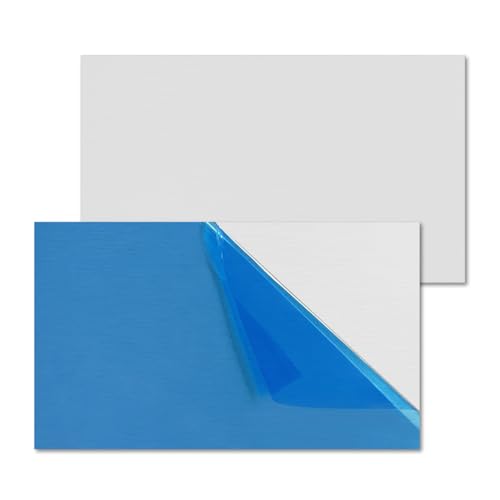
At 2″ by 4″ and 1/16″ thick, this 6061 alloy plate emphasizes strength, corrosion resistance, weldability, and machinability. It’s ideal for brackets, small structural parts, and components requiring robust performance. It’s best for tool builds or prototype frames. A caveat is its small size, which makes it less practical for larger panels or big-surface applications.
Industrial Touch & Designs 24″ x 36″ Aluminum Sheet

This is a 24″ x 36″ mill-finish sheet in 3003 aluminum, offering strong corrosion resistance with a natural matte appearance. The larger surface area is advantageous for panels, prototypes, and manufacturing-ready parts with fewer joints. The trade-off is the heavier weight and handling required for large sheets, and the finish is matte rather than polished.
DAJAVE 6061 6×12 Aluminum Sheet

This 6″ x 12″ x 1/16″ sheet uses 6061 aluminum, known for strong formability, good surface finishes, and robust corrosion resistance. It’s well-suited for crafting small components or decorative pieces that require smooth edges and reliable machining. The compact size makes it ideal for multiple small parts or as test panels. A limitation is the small dimensions for large-volume projects.
iteshuai 12 x 12 Aluminum Sheet

The 12″ x 12″ x 1/16″ sheet from 6061 offers a solid balance of strength and machinability. Ideal for crafts, small hardware components, and prototyping projects that require reliable tolerances and straightforward cutting. Use this when you need uniform thickness and compatibility with standard fabrication tools. One limitation is similar to other small sheets: it may require more joints for larger assemblies.
Buying Guide: Key Considerations For 16 Gauge Aluminum Sheets
- Alloy selection: 5052 is excellent for corrosion resistance and formability, while 6061 offers higher strength and weldability. Choose based on your project’s mechanical needs.
- Thickness tolerance: 1/16″ (1.5 mm) is typical for 16 ga; look for sheets with clean edges and a burr-free finish for easier machining.
- Sheet size: Larger sheets minimize seams but are heavier and harder to handle. Smaller sheets are easier for detailed parts but increase assembly time.
- Finish and surface: Brushed or mill finishes affect paint adhesion and aesthetics. Plan for deburring or polishing if a smooth finish is required.
- Machinability: If CNC, laser cutting, or welding is involved, verify the alloy’s compatibility with your process to avoid warping or strengthening issues.
- Protection: Protective film helps prevent scratches during handling, especially for finished or precision parts.
Frequently Asked Questions
- Which aluminum alloy is best for corrosion resistance in 16 gauge sheets? Answer: 5052 and 3003 offer excellent corrosion resistance; 6061 provides good corrosion resistance but focuses more on strength and machinability.
- Can I bend 16 ga aluminum without cracking? Answer: Yes, with appropriate tooling and bending radii suited to the alloy and thickness, but 6061 and 5052 respond differently to bending stresses.
- Is heat treatment needed for 16 ga aluminum? Answer: Most 16 ga aluminum uses non-heat-treatable alloys for hardness (like 5052) or heat-treatable alloys (like certain 6xxx series) that are strengthened by processing.
- What finishing steps improve durability for painted projects? Answer: Deburring, surface cleaning, and using a primer suitable for aluminum improve paint adhesion and longevity.
- Are larger sheets better for panels? Answer: Yes, larger sheets reduce seams but require more handling and support during fabrication.
- Which sheet is best for DIY crafts? Answer: For beginners, 5052 or 6061 sheets in 12″ x 12″ or 18″ x 24″ sizes balance ease of use with performance.
Add a Comment