Answering the question for buyers seeking a true 120-gallon ASME propane tank, this guide highlights durable, purpose-built options and practical buying tips. These tanks are best for homeowners with larger heating, grilling, or backup needs, contractors managing propane-fed equipment, and outdoor enthusiasts who require reliable gas storage. The selections emphasize ASME certification, rust resistance, gauge readiness, and ease of maintenance. See the quick-reference table below for a snapshot of the featured products, including capacity, tank type, and notable features.
| Product | Brand | Capacity | Tank Type | |
|---|---|---|---|---|
| Flame King YSN420ASME 420LB | Flame King | 120 Gallon | ASME Vertical Steel | Pre-installed propane float gauge |
| Flame King YSN420DOT | Flame King | 120 Gallon | DOT/ASME compatible | Remote-ready gauge option |
| Flame King YSN420ASME-TH-GALV | Flame King | 120 Gallon | ASME Vertical Galvanized Steel | Galvanized coating for corrosion resistance |
| Flame King YSN-301 | Flame King | 30 lb (not 120 gal) | Propane Tank Cylinder | OPD protected |
| Flame King YSN330 | Flame King | 30 lb | Propane Tank Cylinder | Built-in gauge |
Flame King YSN420ASME 420LB (120 Gallon) Vertical Tank

Best for: Homeowners who need a standard 120-gallon ASME vertical tank with solid valve components. This model ships empty and pre-purged, ready for filling, and includes high-quality valves for reliable operation. The pre-installed propane float gauge supports accurate gas readings, and there is an option to add a Remote Ready Dial for remote monitoring.
Why selected: It combines ASME compliance with straightforward setup and good default valve hardware. The vertical design helps fit tight spaces and maintain stable positioning on-site. Caution: Gauge readings depend on proper installation and calibration, and remote gauge availability is sold separately.
Flame King YSN420DOT 420LB DOT Tank With Multi-Valves

Best for: Users who value a compact, dual-valve configuration with multi-valves and a precise gas level gauge. The DOT-rated option is pre-purged and vacuum-sealed, ready for filling, with a remote-ready gauge capability in the design.
Why selected: The multi-valve setup provides flexible connection options for various appliances and systems. Caution: Ensure compatibility with your existing pigtail and regulator hardware before purchase.
Flame King YSN420ASME-TH-GALV 420LB Tank

Best for: Environments with moisture, chemicals, or salty air, such as coastal settings. The galvanized coating protects against rust, extending the tank’s lifespan. It ships empty, pre-purged, with a pre-installed gauge and quality valves.
Why selected: Galvanized tanks offer superior corrosion resistance for long-term outdoor use. Caution: Galvanized surface requires regular inspection for coating wear in harsh environments.
Flame King YSN-301 30 Pound Tank with OPD
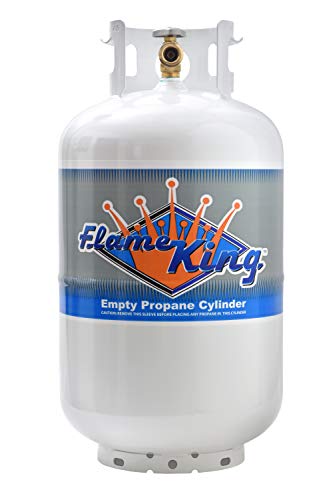
Best for: Smaller-scale propane needs or as a secondary tank for portable setups. It arrives empty and pre-purged, with an OPD valve to prevent overfilling, and it’s DOT and Transport Canada certified for safe transport.
Why selected: The OPD feature reduces fill-risk and meets regulatory requirements, making it a reliable option for mixed-use scenarios. Caution: Not a 120-gallon tank; relevant mainly for supplementing larger systems or mobile setups.
Flame King YSN330 30lb Tank With Gauge

Best for: Grills, patios, and small outdoor setups needing a visible gas gauge and safe operation. It ships empty, with an integrated gauge and OPD to manage fill levels and safety.
Why selected: The built-in gauge simplifies monitoring propane levels, and the OPD improves safety. Caution: This is not a 120-gallon tank; use it as a complementary unit if needed for portable tasks.
Flame King 100LB Empty Tank With Wheels

Best for: Mobile propane users who need both horizontal and vertical transport with a built-in gauge. The wheel-equipped design makes moving the tank easier for temporary setups, patios, and outdoor events.
Why selected: The dual-transport capability and integrated gauge provide practical flexibility for frequent repositioning. Caution: Capacity is 100 lb rather than 120 gallons; consider as a supplementary option for mobile uses.
Buying Guide: Key Considerations For 120 Gallon ASME Propane Tanks
What is ASME certification and why does it matter? ASME-certified tanks meet design and safety standards for pressure vessels, offering reliability for long-term propane storage.
Tank material and coating: Choose steel for strength, with galvanized coating if you expect moisture, salt air, or heavy exposure to elements. Galvanized steel lasts longer in harsh environments but may require more maintenance checks.
Gauge readiness: Pre-installed gauges simplify monitoring. Remote gauges are convenient but ensure compatibility with your system and where readings will be viewed from.
Valves and fittings: Look for high-quality fill, service, and relief valves. The 1.25-inch ACME valve is common for 120-gallon tanks and helps ensure a secure seal during filling and operation.
Space and installation: Vertical tanks save floor space and are easier to position against walls or fences. If space is limited, verify clearance around connections, regulators, and fills.
Shipping and setup: Tanks ship empty, pre-purged, and vacuum sealed in most cases. Confirm whether you need pre-installation support or on-site filling services in your region.
Environmental considerations: For coastal or moist environments, galvanized steel provides better corrosion resistance. In dry climates, standard steel may suffice with regular inspection.
Frequently Asked Questions
- What does ASME certification guarantee? It confirms the tank meets design and safety standards for high-pressure propane storage.
- Are 120-gallon tanks suitable for residential grilling? Yes, but ensure proper connection to regulators and compliance with local codes.
- Is a gauge necessary on a propane tank? A gauge helps monitor propane levels and avoid unexpected outages.
- What is the advantage of galvanized tanks? They resist rust and corrosion in humid or salty environments, extending lifespan.
- Can I transport these tanks myself? Tank transport depends on local laws; DOT-certified tanks require adherence to safety guidelines during travel.
- Should I buy a tank with a remote gauge? Remote gauges offer convenience for monitoring from a distance, especially in larger setups.
Add a Comment