Choosing a reliable 12-volt hydraulic solenoid valve is essential for controlling fluid flow in mobile, industrial, and construction equipment. The following selections offer wide flow ranges, robust materials, and compatibility with common NG6 or D03 manifolds. This guide compares performance, installation considerations, and compatibility to help you pick the right valve for your system.
| Product | Brand | Flow (GPM/LPM) | Voltage | Port/Connection |
|---|---|---|---|---|
| Hydraulic Valve Directional Control Electric Solenoid D03 (NG6) Size-6 3-Position 4-Port | Hanshang Hydraulic | ≤60 L/min (≈15.9 GPM) | DC12V | NG6/D03 |
| 13gpm Hydraulic Solenoid Selector/Diverter Valve | Synaiolma | 50 LPM (≈13.2 GPM) | DC12V | 6 Ports 7/8-14UNF |
| Summit Hydraulics Hydraulic Solenoid Selector/Diverter Valve, 13 GPM | Summit Hydraulics | 13 GPM | DC12V | 6 Ports #8 SAE ORB |
| INPANOLS Hydraulic Solenoid Diverter Valve, 18 GPM | INPANOLS | 18 GPM | DC12V | 6 Ports 7/8-14 UNF |
| Kaichenyt Hydraulic Solenoid Diverter Valve, 50LPM | Kaichenyt | 50 LPM (≈13.2 GPM) | DC12V | 6 Ports 7/8-14 UNF |
Hanshang Hydraulic D03 NG6 3-Position 4-Way Solenoid Valve

The Hanshang Hydraulic valve is built for mobile and industrial equipment, offering a 3-position, 4-way configuration with four ports and a Size-6 NG6 footprint. Operating at 12 V DC, it is designed to integrate with sub-plates or manifolds in NG6 or D03 families. With a maximum flow around 60 L/min, this valve supports demanding hydraulic circuits while maintaining compact dimensions. It is suitable for systems requiring precise directional control across multiple actuators, including construction and automation equipment.
Synaiolma 13 GPM 12V DC Solenoid Selector

The Synaiolma 13 GPM selector/diverter valve switches hydraulic circuits between different flow rates and pressures. With 6 ports and a 12-volt DC coil, it supports straightforward integration into existing systems, reducing the need for additional plumbing or electronics. This valve is useful when you need to direct hydraulic flow to multiple devices or to split a pump’s output efficiently, making it a practical upgrade for mid-size hydraulic assemblies.
Summit Hydraulics 13 GPM Solenoid Diverter Valve

This Summit Hydraulics model adds a new hydraulic circuit with a 13 GPM flow at up to 3625 PSI. Featuring six ports with #8 SAE (3/4”-16) ORB threading, it works with both double-acting and single-acting cylinders. The device is designed for reliable valve switching in industrial equipment, enabling versatile control without extensive retrofitting. It suits tasks such as auxiliary circuits for loaders, presses, or other hydraulic systems requiring additional paths for fluid.
INPANOLS 18 GPM DC 12V Diverter Valve

The INPANOLS 18 GPM solenoid diverter valve supports switching between oil circuits with different flow rates and pressures. Rated for 12 V DC and a maximum of 200 bar, it uses 6 ports with 7/8-14 UNF threads. It is suitable for both double-acting and single-acting configurations and is compatible with hydraulic joysticks and control valves. This model emphasizes flexibility and robust performance in demanding hydraulic networks.
Summit Hydraulics 24 GPM 12V DC Solenoid Valve
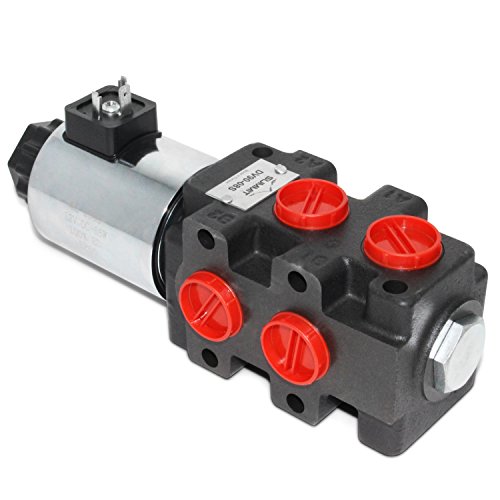
The Summit Hydraulics 24 GPM valve expands flow capacity for larger hydraulic circuits while maintaining compatibility with common cylinders. At 12 V DC, it supports heavier loads and higher throughput, ideal for equipment that requires additional circuiting without sacrificing control or reliability. Its six-port design with SAE or ORB threaded connections offers straightforward installation alongside existing systems.
Kaichenyt 12V DC Diverter Valve, 50 LPM
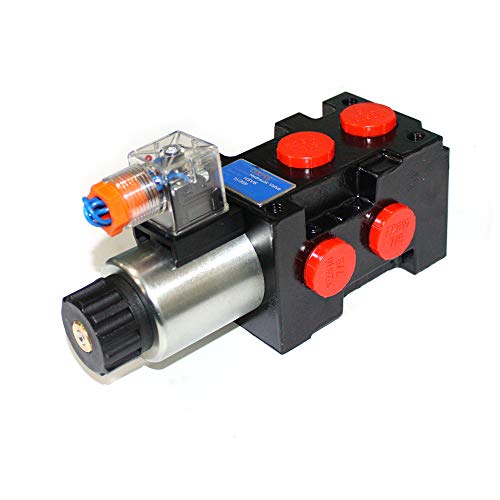
The Kaichenyt solenoid diverter valve provides 50 LPM (≈13.2 GPM) at 12V DC, with six ports using 7/8-14 UNF connections. Built from premium materials to withstand wear, corrosion, and impact, this valve supports flexible integration with multiple directional valves. It is designed to simplify the extension of hydraulic networks without adding extensive plumbing or electrical complexity, making it suitable for modernization projects or retrofits.
Buying Guide
- Flow requirements: Match the valve’s maximum flow to your system’s needs. Higher GPM/LPM supports faster actuator movement but may require stronger pumps and tighter seals.
- Valve topology: Common options are 3-position 4-way or 2-position diverter types. Ensure the selected valve can route flow to your actuators and return paths as needed.
- Port size and thread standards: Verify port connections (SAE, UNF, ORB, etc.) to ensure compatibility with hoses and manifolds.
- Electrical compatibility: Most units here run on 12V DC. Check coil resistance and power requirements to prevent wiring or fuse issues.
- Physical footprint and mounting: Confirm NG6 or D03 sub-plate compatibility, mounting dimensions, and space limitations within the equipment.
- Materials and durability: Look for stainless or carbon steel components for wear resistance, especially in harsh environments.
- Control reliability: Consider valves with robust sealing, validated factory testing, and proven long-term performance.
- System compatibility: Ensure the valve coordinates with your existing controls (joysticks, controllers, or limit-switches) and with the type of cylinders (double-acting or single-acting).
- Maintenance and parts availability: Favor models with readily available seals, coils, and replacement parts to minimize downtime.
- Installation considerations: Plan for a clean power supply, proper filtration, and proper bleed procedures to avoid air or particulate contamination.
When selecting a 12-volt hydraulic solenoid valve, evaluate your circuit’s complexity, desired control precision, and environmental conditions. The reviewed options cover a range of flow capacities, port configurations, and mounting styles to fit common industrial and mobile hydraulic systems. Always reference the manufacturer’s datasheet for exact electrical ratings and installation guidelines before integrating a valve into your hydraulic network.
Add a Comment