Looking for a reliable 110-volt pressure washer that delivers solid cleaning power for cars, driveways, decks, and patios? This guide highlights five top picks designed for American households. Each product is evaluated for portability, PSI and GPM, ease of use, and task suitability, helping you choose the right machine for your needs. The top picks here are best for homeowners who want strong cleaning without heavy, gas-powered equipment. A quick comparison table below summarizes key specs to aid quick decisions.
| Product | Max PSI | GPM | Best For |
|---|---|---|---|
| Westinghouse ePX3500 | 2500 | 1.76 | Vehicles, patios, fences |
| Westinghouse WPX3000e | 3000 | 1.76 | Decks, sidewalks, exterior walls |
| Westinghouse ePX3100v | 2100 | 1.76 | Compact cleaning tasks |
| Westinghouse ePX3050 | 2100 | 1.76 | Foam cleaning, versatile decks |
| CRAFTSMAN CMEPW1700 | 1700 | 1.2 | Light cleaning, daily maintenance |
Westinghouse ePX3500 Electric Pressure Washer
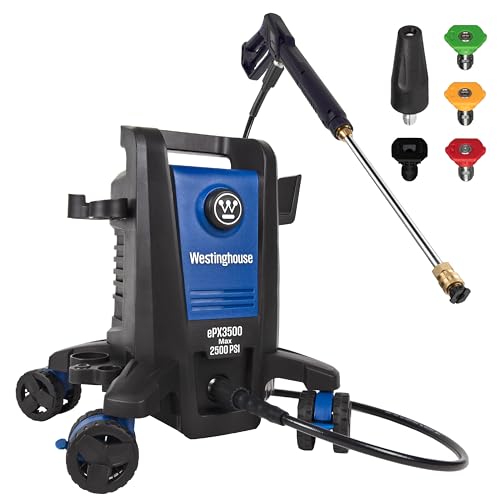
This unit delivers 2500 max PSI and 1.76 max GPM at the lowest pressure, with 2000 rated PSI and 1.2 GPM water flow. It features a pro-style steel wand with five quick-connect nozzles (0°, 15°, 25°, turbo, soap). Its compact design weighs 19 pounds and stands 16.5 inches tall, with four wheels for stability and easy movement. An onboard 20-ounce soap tank adds detergents for heavy-duty cleaning on decks, driveways, fences, and vehicles.
Who this is best for: Homeowners seeking strong, versatile cleaning for vehicles, patios, and siding without a gas engine. Why selected: Balanced high pressure with portability and anti-tipping wheels, plus onboard soap for convenient detergent use. Limitations: Higher power models exist for large commercial tasks; machine weight may be noticeable for very small storage spaces.
Westinghouse WPX3000e Electric Pressure Washer
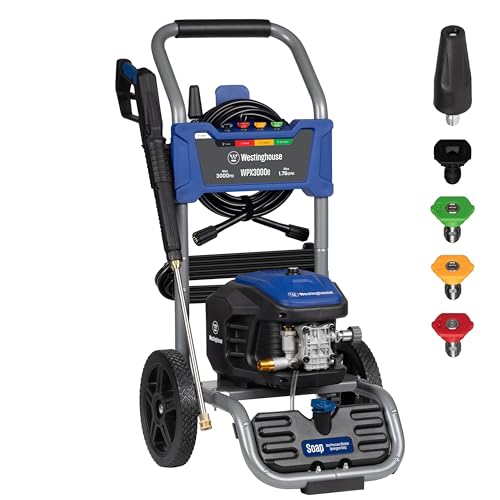
Providing 3000 max PSI and 1.76 max GPM (2600 PSI and 1.1 GPM rated), this model targets tougher jobs. It includes a 0°, 15°, 25°, and soap nozzle, plus a turbo option, with a 0.45 gallon soap tank. The hose is a 25-foot abrasion-resistant, super-flex model, and the wand is lightweight metal. It supports compatible accessories like surface cleaners, undercarriage cleaners, and foam cannons with M22 fittings. It uses a heavy-duty AC 120V motor and a durable axial pump for consistent performance.
Who this is best for: Homeowners tackling stubborn stains on concrete, siding, and large exterior surfaces. Why selected: Higher max PSI expands cleaning capabilities. Limitations: Higher PSI may require careful nozzle choice to avoid surface damage; balance between PSI and GPM matters for long sessions.
Westinghouse ePX3100v Electric Pressure Washer

This model delivers 2100 max PSI and 1.76 max GPM, with an 1800 rated PSI and 1.2 GPM flow. It is noticeably compact and weighs only 18 pounds, aided by a built-in carry handle. It includes a detachable foam cannon for detergent use, an onboard soap tank, and a 20-foot hose. The unit’s portability makes it a strong pick for small to medium cleaning tasks around homes and patios.
Who this is best for: Those who need a compact, easy-to-move machine for routine cleaning. Why selected: Excellent balance of light weight and useful foam cannon. Limitations: May not handle heavy soil as effectively as higher-PSI models.
Westinghouse ePX3050 Electric Pressure Washer
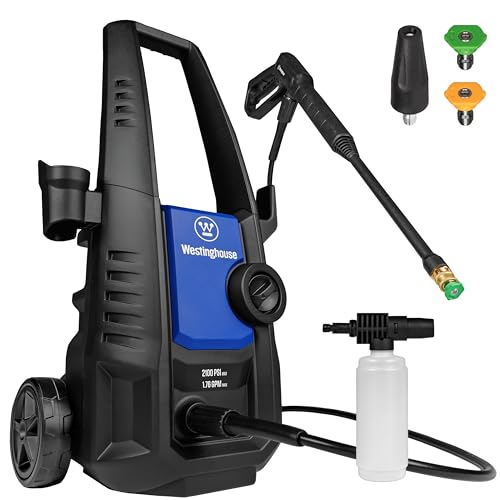
This unit runs at 2100 max PSI and 1.76 max GPM, with 1800 rated PSI and 1.2 GPM. It includes a foam cannon and a turbo nozzle, making it versatile for decks, fences, driveways, and vehicles. The 26-inch profile is relatively compact, and it uses a 35-foot GFCI cord for mobility. It’s a strong middle-ground pick when you want foam cleaning with solid power without going to the top-end models.
Who this is best for: Households needing foam-assisted cleaning for varied surfaces. Why selected: Foam cannon adds convenience for soap-based tasks. Limitations: Slightly heavier than the smallest models; ensure storage space accommodates the unit.
CRAFTSMAN Electric Pressure Washer CMEPW1700

The CMEPW1700 offers 1700 max PSI and 1.2 GPM, geared toward lighter cleaning tasks. It includes a soap applicator bottle for cleaning with soap and has onboard storage for nozzle, hose, cord, and wand to keep accessories organized. Its compact design is easy to store and operate, making it a practical option for routine maintenance and small projects.
Who this is best for: Gardeners and homeowners doing light maintenance and quick cleans. Why selected: Lightweight and easy to store; straightforward operation. Limitations: Lower PSI means it may struggle with heavy grime or large exterior surfaces.
Buying Guide: How To Pick The Right 110 Volt Pressure Washer
What cleaning tasks will you tackle?
Consider the typical surfaces you clean: vehicles, decks, driveways, fences, or siding. If you frequently work on concrete or large areas, aim for higher PSI with sufficient GPM to avoid long cleaning sessions.
Portability and storage
For apartments or small garages, a lighter unit with wheels and a compact footprint is ideal. For garages or sheds with space, a higher-capacity model can be stored comfortably but may be heavier to move.
Detergent needs and foam cannons
If you prefer soap-assisted cleaning, choose models with onboard soap tanks or detachable foam cannons. This feature helps with heavy dirt on fences, driveways, and siding without separate soap bottles.
Nozzle options and accessories
Five-nozzle sets provide flexibility for precision cleaning. Check compatibility with surface cleaners or foam cannons if you plan advanced cleaning tasks like patios or flat surfaces.
Safety and power considerations
All listed units run on standard 120V, suitable for most homes. When using high PSI on delicate surfaces, test in an inconspicuous area to avoid damage. Look for anti-tip designs and stable wheels to reduce tipping risk during operation.
Maintenance and warranty expectations
Opt for axial pumps and maintenance-free components when possible for easier upkeep. While warranties vary, prioritize models with easy access to parts and reasonable service options to minimize downtime.
Quick buying tips
- Choose higher PSI for tough stains but balance with GPM for efficient cleaning.
- Ensure the unit includes portability features (wheels, carry handle) for easy use around the home.
- Prefer models with onboard soap or compatible foam cannons for detergent-based tasks.
Frequently Asked Questions
- What is a good PSI for home use?
- Do I need a foam cannon?
- Are 110V washers powerful enough for concrete?
- Can these operate on gas-powered surfaces?
- What safety features should I look for?
- How do I maintain a pressure washer?
A range of 1800–3000 PSI covers most home cleaning tasks, with higher PSI for tougher stains and larger surfaces.
A foam cannon is helpful for soap-based cleaning on decks, fences, and vehicles, reducing manual scrubbing.
Yes, especially models at 2500–3000 PSI with adequate GPM; for heavy-duty concrete, higher PSI can improve efficiency.
These units are electric 110V models best suited for residential cleaning and light commercial tasks; gas-powered washers exist but are not the focus here.
Anti-tipping design, sturdy wheels, a GFCI cord, and automatic shutoff pumps improve safety during operation.
Flush with clean water after use, store with the nozzle closed, and inspect hoses regularly for wear or leaks.
In summary, for high-performance cleaning with portability, the Westinghouse WPX3000e and ePX3500 models offer strong PSI levels and useful accessories. For compact tasks, the ePX3100v balances weight and power, while the ePX3050 provides foam capabilities for flexible cleaning. The CMEPW1700 from CRAFTSMAN remains a solid choice for lighter, everyday maintenance around the home. Consider surface type, area size, and detergent needs to pick the best 110-volt option for your household.
Add a Comment