Looking for the best 10 gallon vacuum chamber for resin degassing, wood stabilization, or essential oil work? This guide highlights five reliable options, explains who each is best for, and helps you compare features like seals, lid design, and pump compatibility. The top picks cover aluminum and stainless steel constructions, tempered glass lids, and durable seals to suit different budgets and needs.
Summary of selected products:
| Product | Material | Best For | Seal / Lid | Notes |
|---|---|---|---|---|
| BVV Vacuum Chamber (10 Gallon) | Aluminum | General degassing and resin casting | Silicone gasket, reversible | Includes vacuum pad, gauge, HVAC hose |
| PB Motor Tech 9 Gallon Stainless | Stainless Steel | Volatile experiments, visibility | Tempered glass lid | Vibration-resistant glycerin gauge |
| P PBAUTOS 9 Gallon Tempered Glass | Stainless Steel | Wood stabilization, large volumes | Tempered glass lid, two seals | Low noise pump, oil window |
| P PBAUTOS 9 Gallon With Two Seals | Stainless Steel | Resin casting and silicones | Two rubber seals | Durable lid, visibility |
| BVV 10 Gallon Resin Trap | Aluminum | Resin degassing, trap focus | Oil/air seals (described) | Simple, compact option |
BVV Vacuum Chamber (10 Gallon)

Best for: Budget-conscious buyers seeking a sturdy, ready-to-use 10 gallon chamber. The aluminum body provides strength with long life, and the reversible silicone gasket helps maintain a tight seal for reliable vacuum levels.
Why selected: It combines durable construction with practical inclusions like a vacuum pad, gauge, HVAC hose, and air filter, making setup straightforward for first-time degassing or resin casting.
Caution: Ensure compatibility with your pump’s connections, as some setups may require adapters for optimal seal integrity.
PB Motor Tech 9 Gallon Stainless

Best for: Users needing high visibility and quiet operation during degassing experiments with volatile compounds.
Why selected: A stainless steel chamber with a tempered glass lid provides stability and easy observation, while the glycerin-filled gauge reduces vibration and protects vacuum accuracy at 0.5 inHg.
Caution: It is heavier than aluminum options; plan for a sturdy setup to handle the weight and keep the chamber level during operation.
P PBAUTOS 9 Gallon Tempered Glass
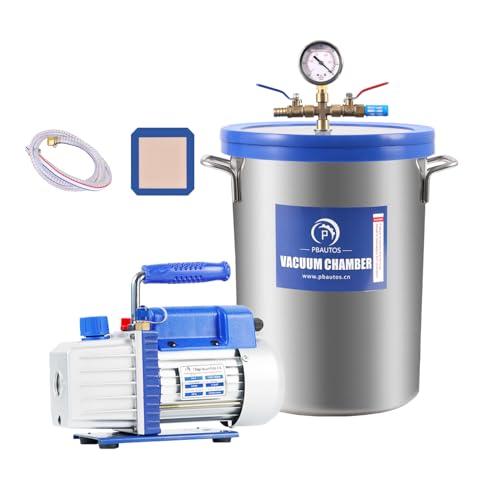
Best for: Stabilizing wood and testing volatile substances with clear lid visibility.
Why selected: This model emphasizes durability with a high-strength stainless steel body and a durable tempered glass lid, plus two seals for improved airtightness.
Caution: The two-seal design is a newer batch; if your unit lacks one of the seals, contact the seller for assistance to ensure proper sealing.
P PBAUTOS 9 Gallon With Two Seals
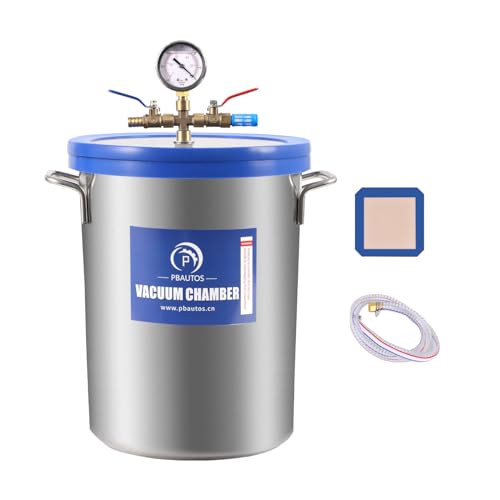
Best for: Degassing resins and silicones where a tight seal is critical for low boil-off and minimal air ingress.
Why selected: The two rubber seals (lid and chamber edge) drastically improve sealing during high-vacuum operations and are designed to reduce gas leakage during degassing.
Caution: If your package arrives without both seals, reach out to the seller for a replacement to ensure proper performance.
BVV 10 Gallon Resin Trap Vacuum Chamber

Best for: Resin trapping and degassing with a clear focus on simple, reliable operation for resin work.
Why selected: This 10-gallon model offers a straightforward setup with a focus on practical degassing features. It’s a good option for users who want a dedicated resin-trap approach in a 10-gallon size.
Caution: Oil changes recommended every 50-75 operating hours to maintain pump efficiency and vacuum stability.
Buying Guide
What should I consider when choosing a 10 gallon vacuum chamber?
Material matters: Aluminum chambers are lighter and typically cost less, while stainless steel models are heavier but more resistant to corrosion and wear. Choose based on the environments you work in and the volume you plan to degas.
How important is the lid and seal design?
Tempered glass lids offer visibility, which helps monitor processes. Silicone or rubber seals improve airtightness; two-seal designs reduce leaks during heavy degassing. Inspect seals for wear and age before use.
Which pump compatibility matters most?
Ensure your chamber works with your pump type and connections. Some kits include hoses, valves, or gauges; others require additional adapters. A glycerin-filled gauge adds precision and dampens vibration in some models.
What safety and maintenance considerations should I follow?
Regularly check seals, lids, and gauges for cracks or wear. Follow pump maintenance guidelines, including oil checks and filter replacements if included. Keep the chamber on a level, stable surface to prevent tipping or leaks during operation.
FAQ
- Q: Can I use these chambers for wood stabilization? A: Yes, several models are designed for wood stabilization, with robust seals and stable lids to handle volatile substances.
- Q: Do these come with pumps? A: Some listings include a pump; others are chamber-only. Check each product page for pump details and compatibility.
- Q: Is a 10 gallon chamber large enough for resin casting? A: It depends on batch size. A 10 gallon chamber works well for moderate volumes and smaller projects.
- Q: How often should seals be replaced? A: Replace worn seals to maintain airtight performance. Visual inspection and regular testing help determine replacement timing.
- Q: Are tempered glass lids prone to breakage? A: Tempered glass is designed to be durable, but handle with care and avoid impacts that could crack the lid.
Add a Comment