Answering the question “which 1 inch PEX pipe is best for underground use,” this guide highlights five reliable options. Each product is suited to long runs, direct burial, or frost-prone environments. The top picks are ideal for homeowners, contractors, and DIY enthusiasts planning underground water lines, radiant heating, or outdoor installations. The table below summarizes the five selected products to help you compare at a glance.
| Product | Type | Length | Material |
|---|---|---|---|
| SharkBite 1” x 300’ White PEX-B | White PEX-B | 300 ft | PEX-B |
| VEVOR 1” x 500’ White PEX-B | White PEX-B | 500 ft | PEX-B |
| SharkBite 1” x 100’ White PEX-A | White PEX-A | 100 ft | PEX-A |
| SharkBite 1” x 500’ Blue PEX-B | Blue PEX-B | 500 ft | PEX-B |
| SharkBite 1” x 300’ Blue PEX-B | Blue PEX-B | 300 ft | PEX-B |
SharkBite 1 Inch x 300 Feet White PEX-B, U880W300

Best for long, direct burial runs in potable water systems. This coil minimizes fittings and potential leak points, streamlining underground installations. The white PEX-B design works with expansion (F1960), push-to-connect (ASSE 1061), and crimp/barb fittings, offering versatile compatibility for underground applications.
Best use: large residential or light commercial underground water lines where longer continuous runs are preferred. Caution: ensure proper burial depth and insulation in freezing climates to avoid service disruptions.
VEVOR PEX Pipe, 1 Inch x 500 FT White, Non Oxygen Barrier
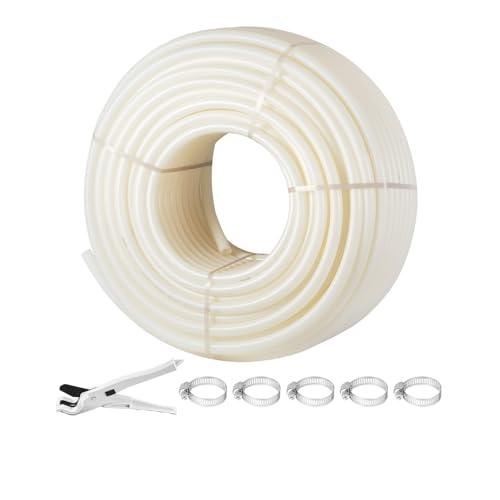
Better for large underground water projects with a need for a long coil and robust flexibility. The 1.125″ outer diameter and 0.875″ inner diameter contribute to durability, while the 7-inch minimum bend radius helps in tight underground layouts. Suitable for direct burial and outdoor use; the included pipe cutter facilitates quick, precise installations.
Best for: extended underground runs with space constraints. Limitation: standard non-oxygen barrier PEX requires careful handling to minimize contamination risks.
Happybuy Non-Barrier PEX Tubing 1 Inch X 300 Feet

Best for radiant heating or potable water in residential projects where non-barrier PEX is suitable. The white 1″ coil is designed to resist cracking and maintain flow integrity in various weather conditions. It ships with clamps and a cutter for straightforward installation and reliable connections.
Choose this if you want a budget-friendly option with solid sealing and ease of installation for medium-length underground runs.
Pex-A Tubing 1 Inch x 500 Ft Coil, SUPPLYGIANT Blue

Best for PEX-A systems with expansion and compatible fittings. The blue color helps distinguish supply lines in underground networks. It complies with multiple standards and supports flexible, leak-resistant connections. Useful in areas where a PEX-A option is preferred for easier reforming and fewer fittings.
Limitation: verify compatibility with your chosen crimp or expansion fittings to prevent installation delays.
SharkBite 1 Inch x 500 Feet Blue PEX-B, U880B500

Best for long underground runs with a blue PEX-B that aids color-coded installations. The coil length reduces the number of connections and potential leak points. It is compatible with PEX expansion (F1960), push-to-connect (ASSE 1061), and suitable for direct burial including under concrete. The tubing expands and contracts with temperature changes, helping prevent bursts in freeze-thaw cycles.
Choose this if you need a longer blue coil for visible underground distribution lines and straightforward connections. Caution: ensure correct fitting type (expansion, crimp, or push-to-connect) for your project.
Buying Guide
What to consider when choosing 1 inch PEX for underground use
- Material type: PEX-A, PEX-B, or non-barrier vs barrier. PEX-A is the most flexible, while PEX-B is widely compatible with standard fittings.
- Coil length and diameter: Longer coils reduce fittings but require more careful handling and burial planning.
- Temperature and pressure ratings: Verify that the tubing can handle cold winters and hot water, especially for underground radiant heating or freeze-prone areas.
- Direct burial suitability: Ensure the product explicitly supports burial under concrete or soil and check local code requirements.
Fitting compatibility and installation tips
- Know your fittings: expansion (F1960), push-to-connect (ASSE 1061), plastic barb (ASTM F2159), or brass barb (ASTM F1807).
- Plan bends: choose tubing with a practical bend radius to minimize kinking and leaks in underground trenches.
- Prep and protection: use proper trench depths and protective sleeves where needed to guard against damage and temperature fluctuations.
Reliability and maintenance considerations
- Color coding: blue coils for cold lines, white for general use, to reduce misconnection risks.
- Warranty and standards: confirm the product adheres to applicable ANSI/ASTM standards for potable water systems.
- Installation speed: longer coils can speed up installation but require precise planning to avoid waste.
Buyer intent quick checks
- Residential underground lines: prefer red or blue PEX-B for cost-effective, durable installations.
- Radiant heating: consider PEX-A for higher flexibility and easier routing.
- Cold climate areas: prioritize freeze-tolerant designs with appropriate insulation and burial depth.
FAQ
- What is the difference between PEX-A and PEX-B for underground usage? PEX-A is generally more flexible and easier to bend, while PEX-B is widely compatible with many fittings and often more cost-effective.
- Can 1 inch PEX be buried directly in soil? Yes, if the tubing is rated for direct burial and protected from severe physical damage per the manufacturer’s guidelines.
- Do I need any special tools for installing PEX in buried runs? Depending on fittings, you may need expansion tools, crimp tools, or push-to-connect fittings, plus a pipe cutter and clamps for non-barrier PEX.
- How long should a burial trench be for a 1 inch PEX line? Plan according to your house layout, with extra length for bends and future expansion, ensuring a clean, continuous run where possible.
- Is blue PEX different from white PEX for underground use? Color is mainly for identification; material specifications and compatibility with fittings determine performance.
- What maintenance is needed after installation? Verify connections for leaks, protect lines from sharp rocks, and ensure burial depth meets local codes and climate requirements.
Add a Comment