Looking for a reliable 1 HP vacuum pump to support automotive AC work, HVAC servicing, or refrigeration maintenance? This guide highlights five top options that balance performance, durability, and ease of use. Each pick is best for specific needs—small shop, professional HVAC tech, or DIY enthusiast handling A2L refrigerants. Read on to compare capabilities, oil management features, noise levels, and safety considerations so you can choose the right pump for your projects.
| Product | Best For | Key Benefit |
|---|---|---|
| VEVOR Vacuum Pump | General HVAC and automotive work | Durable aluminum build with viewable oil window |
| VIVOHOME 1 HP 9.6 CFM | Low-noise, versatile systems including A2L | Sparkless operation and oil mist filtration |
| SPECSTAR 110V 9.6 CFM 1 HP | Professional-grade evacuations | Backflow prevention and included oil bottles |
| Orion Motor Tech 1.5 HP | Faster evacuations for larger systems | Two-stage, deep vacuum to 1.5 microns |
| VIVOHOME 1 HP 9.6 CFM With Gauge | Systems needing precise pressure monitoring | Color-coded hoses and built-in sight glass |
VEVOR Vacuum Pump 12 CFM 1 HP

The VEVOR model is best for technicians who need robust, continuous use in automotive and HVAC tasks. Its aluminum alloy housing supports heat dissipation, while a composite rubber base enhances durability and reduces vibration. The oil fill port is accessible from multiple sides, and an oil viewing window helps prevent oil depletion during long jobs. This pump is well-suited for shop environments that require dependable, straightforward operation.
Who it’s best for: professional installers and DIYers seeking a durable, easy-to-monitor pump for routine evaculations. Limitation: it does not list a built-in spark protection for A2L refrigerants, so avoid exposed installations in highly flammable environments.
VIVOHOME 1 HP 9.6 CFM 2 Stage HVAC Vacuum Pump

This model emphasizes sparkless operation, making it safer for A2L refrigerants like R32 and R1234yf. With a 1 HP motor and a 9.6 CFM rating, it reaches 0.2 Pa (1.5 microns) quickly, making it ideal for automotive AC work and general HVAC tasks. A filter system minimizes oil mist, and the low-noise design keeps workspaces comfortable.
Who it’s best for: technicians handling A2L refrigerants or users prioritizing cleaner vacuuming with quieter operation. Caution: ensure compatible hoses and fittings for your system to avoid leaks at connections.
SPECSTAR 110V 9.6 CFM 1 HP Dual-Stage Vacuum Pump
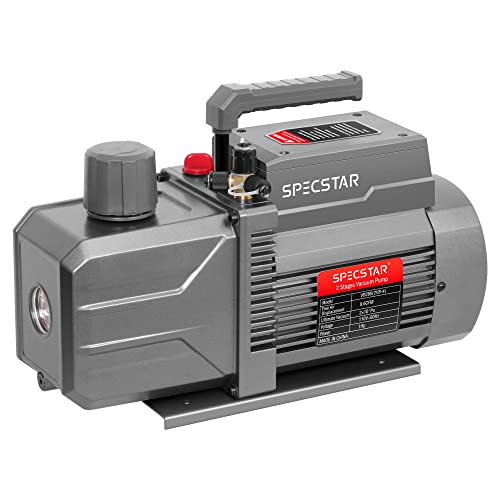
The SPECSTAR dual-stage design delivers high pumping speed and a deep vacuum, with a 9.6 CFM free air displacement and a 0.2 Pa vacuum target. Two bottles of 330 ml vacuum oil are included, and an anti-backflow inlet design protects the pump. Strong filtration reduces oil mist, improving cleanliness during evacuations.
Who it’s best for: pros needing a faster evacuation for larger or multiple systems, plus an included oil kit. Pick this if you value integrated filtration and heat management. Limitation: the included oil bottles require proper disposal and replacement as part of maintenance.
Orion Motor Tech 14.4 CFM 2 Stage Vacuum Pump
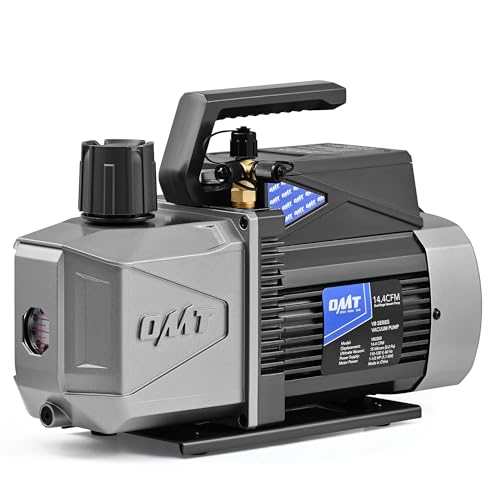
This 1.5 HP pump pushes evacuations quickly with 14.4 CFM and a 1.5 micron ultimate vacuum. The two-stage design improves airflow efficiency, making it suitable for faster servicing of larger R134a, R410A, and other refrigerant systems. Oil mist is minimized by a cap, and noise remains comparatively low for a quieter workshop.
Who it’s best for: users needing rapid evacuations on bigger systems or when time matters. Caution: higher horsepower can mean more heat, so ensure adequate cooling and ventilation in small spaces.
VIVOHOME 1 HP 9.6 CFM Dual Stage With Gauge

This VIVOHOME model combines a 1 HP dual-stage pump with a color-coded gauge setup for precise monitoring of high and low pressure. The built-in sight glass lets you verify oil level and flow in real time. Hoses are color-coded for quick identification, and an anti-backflow design aids safety. It provides solid performance for consistent maintenance tasks.
Who it’s best for: technicians who rely on visual pressure readouts and organized hoses for rapid, repeatable work. Limitation: ensure you have the correct gauge attachments for your refrigerant type to avoid misreadings.
Buying Guide: Key Considerations For 1 HP Vacuum Pumps
- Technology and vacuum depth: Two-stage rotary vane pumps reach deeper vacuums (often down to 0.2 Pa) and evacuate faster than single-stage models. Consider the system size and required vacuum depth when choosing.
- Refrigerant compatibility: If you work with A2L refrigerants (like R32 or R1234yf), select a sparkless or ignition-protected model to improve safety in flammable environments.
- Oil management: Look for an oil viewing window, anti-backflow design, and oil mist filtration. These features reduce maintenance and keep the work area cleaner.
- Cooling and noise: Models with heat fins, mesh vents, and cooling fans handle prolonged use better. Noise levels below 70 dB are preferable for a comfortable workspace.
- Durability and portability: Aluminum housings and shock-absorbing bases extend life and stability. Portability features like carrying handles help when moving between jobs.
- Accessory packages: Some pumps include oil bottles, gauge sets, or leak detectors. If your workflow requires these, note what’s included and what must be purchased separately.
- Maintenance and safety: Check for oil fill ports on multiple sides, viewing windows, and anti-backflow designs. Regular oil changes and proper disposal are part of long-term use.
FAQ
- What is a good vacuum level for HVAC systems?
Aiming for 0.2 Pa (about 1.5 microns) or better is common for effective evacuation, depending on refrigerant and system size.
- Are sparkless vacuum pumps necessary for 2L refrigerants?
Yes, for safety, especially when working with flammable or mildly flammable refrigerants such as R32 or R1234yf.
- Do I need a gauge set with my pump?
A gauge set helps monitor pressures and detect leaks. Some kits include a 4-way gauge set for convenience.
- What maintenance does a vacuum pump require?
Regular oil checks, oil changes, and ensuring backflow prevention are important for longevity and performance.
- Is a higher horsepower always better?
More horsepower can speed evacuations, but it increases heat and power consumption. Match horsepower to system size and use case.
Add a Comment