Choosing the right 1/4″ stainless steel tubing can impact reliability in automotive lines, fuel coils, and general fabrication. This guide highlights five top options, explaining who each is best for and why. Whether you’re a DIY hobbyist, a professional fabricator, or a marine mechanic, these choices balance strength, weldability, and ease of use. Use the table below to compare quickly, then read detailed product sections to see which coil fits your project needs.
| Product | Brand | Best For | Key Feature |
|---|---|---|---|
| 4LIFETIMELINES 1/4 (6.35 mm) x 25 ft 316L | 4LIFETIMELINES | Marine, corrosion-resistant lines | Molybdenum-enhanced for extra rust resistance |
| uxcell Stainless Steel Tubing Coil, 1/4″ OD x 10 ft | uxcell | Budget projects, flexible installations | 304 stainless steel, smooth inner wall for flow |
| MorningRo 1/4″ x 50 ft 304 Tubing Coil | MorningRo | Long runs, fuel coils, general purpose | Two coils of 25 ft each; corrosion resistance |
| FITOK 316/316L Seamless 1/4″ OD × 0.035″ Wall | FITOK | Harsh environments, critical applications | Seamless, higher pressure tolerance |
| Tynulox 1/4″ OD 304 Stainless Steel Tube, 12″ (5 Pcs) | Tynulox | Custom fabrication, small precise parts | Precise dimensions; 304 stainless |
4LIFETIMELINES 1/4″ 316L Coil — 25 ft

Best for marine and environments prone to rust and corrosion. This coil uses 316L stainless steel with molybdenum for enhanced corrosion resistance, making it suitable for brake lines and fuel lines in boats and watercraft. It is designed to resist kinking and retain shape during bending, which helps maintain consistent flow and pressure in tight installations.
Who it’s best for: marine technicians, outdoor equipment builders, and fabricators needing durable, corrosion-resistant tubing. Potential limitation: extended exposure to highly acidic environments may still require protective coatings or routing away from corrosive sources.
uxcell 1/4″ OD x 10 ft Stainless Steel Tube

Best for projects needing a balance of strength, cost, and flexibility. Made from 304 stainless steel, this tubing offers good weldability, wear and heat resistance, and durability. Its ability to be coiled makes it adaptable to varying installation spaces while maintaining a smooth inner wall to facilitate gas or liquid flow.
Who it’s best for: budget-conscious builders, hobbyists, and installations demanding flexibility. Caution: ensure proper handling when bending to avoid kinking and ensure alignment with your bend radius.
MorningRo 1/4″ x 50 ft 304 Tubing Coil
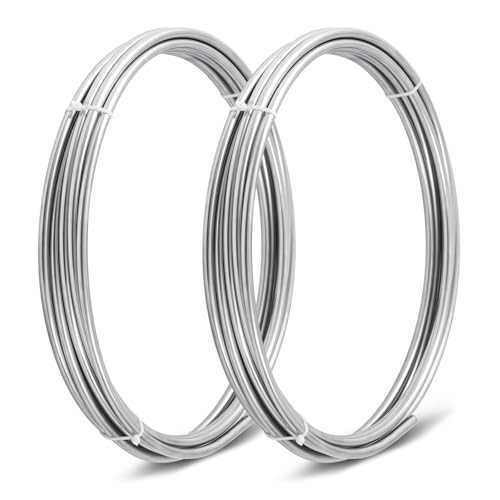
Best for long runs and flexible routing in automotive or industrial projects. Each package includes two coils of 25 ft each with 1/4″ outer diameter and 0.05 cm wall thickness, crafted from 304 stainless steel for corrosion resistance. The coils can be cut to length, allowing precise customization for complex layouts.
Who it’s best for: installers needing ready-to-cut coils with reliable corrosion resistance. Limitation: assembly tolerance may require precise measurement before cutting to fit tight spaces.
FITOK 316/316L Seamless 1/4″ Tubing

Best for critical applications in harsh environments where higher corrosion resistance and strength are required. This seamless 316/316L tubing offers better weldability and formability than welded alternatives, providing consistent performance under higher pressure. It is annealed and mechanically polished, improving surface finish for sensitive assemblies.
Who it’s best for: engineers and fabricators working with aggressive chemicals, saltwater, or high-temperature conditions. Caution: seamless tubing can be more challenging to flare than welded options in some setups.
Tynulox 1/4″ OD 304 Stainless Tube — 12″ (5 Pcs)

Best for precise fabrication and small-scale projects. The pack includes five 12-inch pieces of 1/4″ OD 304 stainless steel tubing with tight tolerances, suitable for custom-framed parts, mechanical assemblies, or decorative uses. The polished surface enhances durability and aesthetics in finished products.
Who it’s best for: builders matching exact piece dimensions for prototyping or modular designs. Limitation: shorter lengths may require more joints or connectors for long runs.
Buying Guide: Key Considerations for 1/4″ Stainless Steel Tubing
What type of stainless steel should I choose?
304 stainless steel offers good general corrosion resistance and weldability, making it a versatile choice for many applications. 316/316L stainless steel adds higher corrosion resistance, particularly in marine and chemical environments. For maximum strength and resistance to aggressive exposure, consider seamless 316/316L tubing like the FITOK option.
Should I pick welded or seamless tubing?
Welded tubing is often more economical and sufficient for many DIY projects. Seamless tubing tends to provide higher pressure tolerance and more uniform strength, which matters in critical or high-stress environments.
How does tubing length affect installation?
Longer coils reduce the need for joints but can be harder to handle and bend precisely. Shorter lengths or multiple pieces are easier to measure, cut, and fit into tight spaces, which is why many kits come as multiple pieces.
What about wall thickness and inner diameter?
A 0.035″ wall thickness and an inner diameter close to 0.180″ provide a balance of strength and flow capacity. Thicker walls offer higher strength but reduce internal bore size, affecting flow rates in fluid lines.
What are common use cases for 1/4″ tubing?
Common uses include automotive fuel and brake lines, instrument gas lines, water-cooling loops, and marine or outdoor equipment. Tubing that resists corrosion and maintains form under bending is especially valuable in constrained or external installations.
FAQ
- What is the most corrosion-resistant option among these? The 316/316L seamless option provides the best overall corrosion resistance for harsh or marine environments.
- Can I bend 1/4″ stainless tubing without special tools? Yes, but use proper bending radii and, if possible, a tubing bender to avoid kinking and maintain a smooth interior bore.
- Is 304 stainless steel suitable for automotive fuel lines? It is a common choice for many applications, but verify compatibility with fuels and pressure requirements for your project.
- Why choose a seamless tube over welded? Seamless tubes generally handle higher pressures and provide a uniform wall structure, which is beneficial in critical installations.
- How should I store stainless tubing? Keep it dry and protected from moisture to minimize surface rust on cut ends, and store in a clean area to avoid contamination.
- Are these coils easy to cut to length? Most are designed to be cut with standard tools; ensure clean, square cuts to preserve connector integrity and sealing surfaces.
Add a Comment