Looking for a 1/2-inch propane hose with regulator that delivers reliable pressure and safety for grills, fryers, or fire pits? This guide highlights five solid options and explains who they’re best for, plus practical buying tips. Each product is CSA or third-party certified where noted and designed to handle typical outdoor cooking tasks without leaks or fluctuations. Read on to compare suitability for different setups and avoid common pitfalls.
| Product | Best For | Key Benefit |
|---|---|---|
| Turkey fryers, fish fryers, and grills requiring adjustable 0–30 PSI | Sturdy stainless steel braid with gauge for precise pressure control | |
| RVs, generators, and high-demand outdoor cooking setups | Two-stage regulation for stable flow and reduced pressure fluctuations | |
| General grills and fire pits needing a gauge and clear gas level readout | Integrated tank gauge and durable brass + SS braided hose | |
| BBQs and portable grills needing ready-to-use, standard 5/8″ UNF fittings | Out-of-the-box usability with built-in regulator and hose | |
| Blackstone griddles and compact outdoor cookers | Universal fit with QCC1/T1 connection and protective hose design |
CALPOSE 15FT High Pressure Propane Regulator Hose with Gauge

Best for heavy-duty outdoor cooking where precise pressure control matters. The 0–30 PSI range supports a wide variety of appliances, from fryers to burners, while the stainless steel braid and brass components enhance durability and reduce wear. The CSA certification adds a layer of safety assurance. This option is ideal for buyers needing a long hose with a visible gauge to monitor pressure during operation. Caution: larger setups may require careful routing to avoid kinks from the stainless braid.
GasSaf 6 Feet Low Pressure Regulator with CSA Certified LPG Hose

Better for standard grill setups and many outdoor heaters that rely on low-pressure propane. This option lists compatibility with a wide range of grills and side burners, though it primarily targets built-in or kit-style grills. Choose this if you want broad compatibility with popular grill models and a robust 6-foot length for flexibility. Limitation: the listing emphasizes many model compatibilities, which can be confusing—verify your exact grill model before purchase.
DPB 6Ft Propane Regulator with Stainless Steel Braided Hose and Tank Gauge

Best for users who want a clear gas level readout and a sturdy stainless steel braid for long outdoor sessions. The included tank gauge helps monitor remaining gas while the 6-foot length offers reach around large grills and fire pits. Limitation: ensure the 3/8″ flare and 5/8″-18UNF connections match your equipment’s fittings before buying.
Gas One 2102 6 Ft Low Pressure Regulator Kit
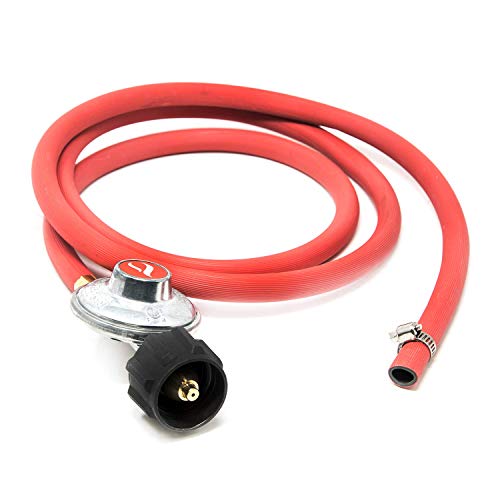
Best for immediate-use needs with a familiar 6-foot hose length and standard 5/8″ UNF output. The kit is ready to connect to most LP/LPG grills and heaters, offering straightforward setup for outdoor cooks who want a reliable, no-fuss regulator. Caution: verify the regulator’s pressure range aligns with your appliance’s requirements to avoid over- or under-pressurization.
Alloxity 4FT Propane Regulator with Hose

Best for compact outdoor setups like Blackstone griddles or small portable cookers. It uses a universal QCC1 connection and a 3/8” flare, giving compatibility with many low-pressure grills and fire pits. The 4-foot length keeps a neat arrangement in tighter spaces. Limitation: not all high-heat appliances require very low pressure, so confirm your device’s recommended PSI before use.
Buying Guide: Key Considerations for 1/2-Inch Propane Hoses With Regulator
- Pressure range: Decide whether you need low, medium, or adjustable high pressure. Fryers and fryers often benefit from a controlled range (0–30 PSI), while grills may need stable low-pressure output.
- Length and routing: Hose length affects placement and safety. Longer hoses offer flexibility but can introduce more potential for kinks or leaks if not properly secured.
- Connectors and fittings: Confirm the regulator’s inlet and outlet fittings match your propane tank and appliance (QCC1/Type1, flare, UNF 5/8″, etc.). Improper fitment can cause leaks.
- Safety features: Look for protective hose braiding, flame-retardant materials, and built-in gauges to monitor pressure and gas level safely.
- Certifications: CSA or equivalent certifications indicate adherence to safety and quality standards, which is important for outdoor cooking gear.
- Durability: Stainless steel braids and brass components offer greater resistance to abrasion, weathering, and animal gnawing in outdoor environments.
FAQ
- What is the typical PSI range needed for most outdoor grills? Answer: Most grills operate well within low to mid ranges, often around 11″ WC to 30 PSI depending on the appliance and gas flow needs.
- Do I need a gauge on my propane hose? Answer: A gauge helps monitor pressure and gas level, which can prevent unexpected shutdowns during cooking.
- Can I use any 1/2-inch hose with any grill? Answer: Not necessarily. Check that the fittings match your tank (QCC1/Type1 vs. other standards) and that the regulator’s PSI range suits your appliance.
- Is CSA certification essential? Answer: While not mandatory, CSA certification indicates adherence to established safety standards, which is beneficial for outdoor gear lifespans and safety.
- What should I do if the hose leaks? Answer: Discontinue use immediately, turn off the gas supply, and inspect connections. Do not use damaged hoses; replace them with compliant parts.
- How long should a hose last under normal outdoor use? Answer: With proper care, hoses with stainless braided construction and brass fittings can last several seasons, but inspect regularly for wear and tear.
Add a Comment