Find reliable second-hand industrial sewing machines that deliver professional results for thick fabrics and upholstery. This guide targets buyers seeking durable, high-quality equipment without paying brand-new prices. The top picks are suitable for pros and serious hobbyists who value power, stability, and long-term performance. Below, you’ll see who each machine is best for, why it stands out, and potential limitations to consider.
| Product | Brand | Best For |
|---|---|---|
| VEVOR Industrial Sewing Machine | VEVOR | Professional upholstery and heavy fabrics; long runs |
| SINGER Heavy Duty 4452 | SINGER | Thick fabrics and general home-to-light industrial use |
| JUKI DDL-8100 Lockstitch | JUKI | Lockstitch with table setup; reliable for industrial standard jobs |
| Consew Upholstery Walking Foot | CONSEW | Upholstery, leather, canvas and heavy-duty fabrics |
| SINGER Heavy Duty 4411 | SINGER | Budget-friendly power and versatility for DIY to semi-industrial use |
VEVOR Industrial Sewing Machine Review

Best for: professional upholstery projects and heavy fabric work. This machine features a 550W servo motor for strong feed and piercing power, capable of handling materials up to approximately 0.4 inches (9 mm) thick. It can reach 5000 stitches per minute with manageable vibration and noise. The metal body supports frequent use in workshop settings. The LCD clear display helps users adjust speed, direction, and needle position, supporting precise corner work and reinforced stitches. A smart start/stop function can save energy, with the needle staying down and the presser foot lifting automatically for easier fabric maneuvering.
Why selected: The combination of power, speed, and an intuitive control panel makes this model a compelling option for serious sewers who need reliable, high-volume performance. The inclusion of up/down needle positioning and slow-start features adds control for tricky corners and delicate fabrics when needed.
Caution: Data notes solid construction but the exact needle system and presser foot types vary by batch. Verify compatibility with your preferred presser feet before purchase.
SINGER Heavy Duty 4452 Review

Best for: sewers needing more power for multiple layers and thicker fabrics without switching to a dedicated industrial machine. It offers 32 built-in stitches and 110 stitch applications, plus a one-step buttonhole. The included accessory kit adds walking foot, non-stick foot, quilting guides, heavy-duty needles, and other essentials for smooth operation on a range of fabrics from basic cotton to denim.
Why selected: This model provides a strong motor and versatile stitch options at a more accessible price point. It is well-suited for home-based studios or small workshops that don’t require continuous industrial-grade duty but still need dependable performance on thick materials.
Caution: While robust, it is not designed to replace a true industrial machine for high-volume production or very thick leather over long sessions. Consider service needs if used heavily on tough fabrics.
Juki DDL-8100 Lockstitch Review
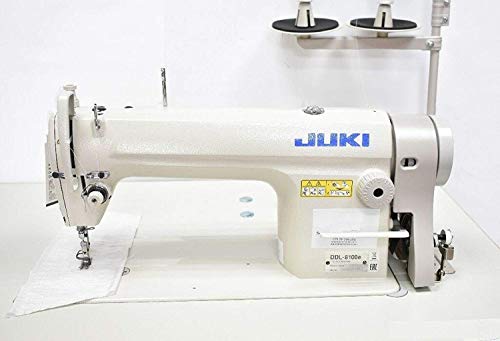
Best for: buyers seeking a dependable lockstitch machine with a table stand for a semi-industrial setup. This model includes a 550-watt energy-saving DC servo motor and comes with a table stand for a stable sewing workstation. It ships with necessary accessories for setup in a workshop environment, though assembly is required. It is not a walking foot machine, so users should consider their project type when selecting.
Why selected: Juki is renowned for reliable feed mechanisms and precision. This unit provides a cost-effective entry into a semi-industrial workflow with solid performance for standard upholstery or fabric projects that require consistent stitch quality.
Caution: Some assembly is required, and it is not a walking-foot configuration. If you frequently work with thick leather or multiple layers, you may prefer a walking-foot model for easier seam management.
Consew Upholstery Walking Foot Review
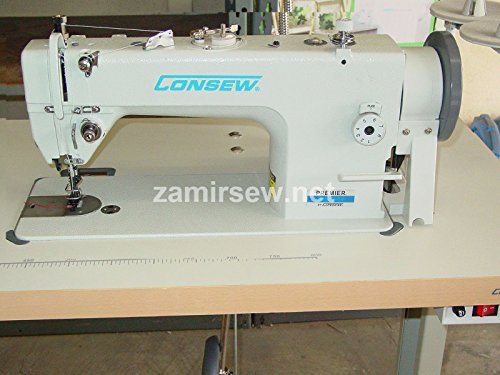
Best for: furniture upholstery, leather, and canvas work where a walking foot helps move heavy layers smoothly. This machine provides a drop feed with needle feed, walking foot, and lockstitch capabilities, supporting stitching on auto, boat, and furniture upholstery projects as well as tarpaulins, covers, sails, and tents. It is designed to handle light to heavy-weight materials with durable performance.
Why selected: The walking-foot design reduces fabric feed issues on bulky materials, offering better control and seam consistency for upholstery tasks. It’s a strong option for professionals who require a dedicated upholstery setup in a standalone or integrated table system.
Caution: This model emphasizes upholstery work; if you mainly sew lightweight fabrics or require decorative stitches, a lighter-duty machine may be more efficient.
SINGER Heavy Duty 4411 Review

Best for: creators seeking a high-powered, versatile sewing machine with a metal frame and a strong motor. It features 11 built-in stitches that cover 69 stitch applications, including essential, decorative, and stretch options. The model offers a 60% stronger motor for sewing thick fabrics like denim or leather with ease and includes a four-step buttonhole for quick project completion.
Why selected: The pink edition combines eye-catching design with robust performance. It is well suited for makers who prioritize both power and aesthetics in DIY projects, with practical stitch options and reliable operation on heavy fabrics.
Caution: As a special edition, availability may vary and some color-specific parts may differ by batch. For strictly professional industrial workloads, a dedicated heavy-duty machine may still be preferable.
Buying Guide: Key Considerations For Second-Hand Industrial Machines
- Intended projects: Match machine capabilities (lockstitch vs walking foot vs servo motor) to the fabrics and finishes you plan to work with most often.
- Motor and speed: Servo motors offer energy efficiency and smoother starts; higher speed benefits upholstery and leather but requires control for precision.
- Table and stand: A sturdy table or stand improves stability and reduces fatigue during long sewing sessions.
- Maintenance history: Inquire about service records, bolt-on parts, and previous use to gauge remaining life and potential repairs.
- Accessories and feet: Ensure the model includes essential feet (walking foot, zipper, buttons) or plan to purchase compatible options.
- Assembly and setup: Some machines ship unassembled; assess whether you can complete setup or require professional installation.
- Support and parts availability: Check whether replacement parts and service support are readily available in your region.
- Vendor reliability: Buy from reputable sellers with return policies that cover tooling and workmanship concerns.
Frequently Asked Questions
- What should I consider when buying a second-hand industrial sewing machine?
Answer: Focus on motor type, stitching capability, table stability, wear history, and included accessories to ensure the machine meets your project needs. - Are servo motors better than traditional motors for second-hand machines?
Answer: Servo motors offer smoother starts and energy efficiency, which helps during long sewing sessions, but verify the model’s power rating and speed range. - Is a walking-foot machine necessary for upholstery?
Answer: A walking-foot feature helps handle thick fabrics and slippery materials, improving feed consistency in heavy upholstery work. - Can second-hand machines be reliable for daily use?
Answer: Yes, if they have a solid maintenance history, functional needles and feet, and a stable table or stand, they can perform reliably for regular projects. - What risks come with buying second-hand industrial machines?
Answer: Potential issues include worn bearings, misaligned parts, inconsistent stitch quality, and missing parts. Prioritize machines with verifiable service history and a return option. - How do I determine if a machine is suitable for leather or heavy fabrics?
Answer: Look for a robust motor (servo preferred), higher stitch length capabilities, a durable frame, and a compatible presser foot set for leather or vinyl.
Add a Comment