Looking for a high precision fiber cleaver that delivers clean, repeatable cleaves for fusion splicing? This guide compares top options to help technicians, field crews, and lab staff choose the right tool. Each product is evaluated for cleave accuracy, blade life, fiber compatibility, and practical usability in the field. The top picks are best for FTTH deployments, field splicing, and maintenance work, with notes on where each excels or falls short.
| Product | Brand | Best For | Key Benefit |
|---|---|---|---|
| Zenithra Optical Fiber Cleaver | Zenithra | Field technicians & splicing vans | Precise <0.5° cleave angle; adjustable holder for 250µm/900µm fibers |
| Trileria S09 High Precision Cleaver | Trileria | Laboratories & FTTH projects | 16 cutting surfaces; up to 58,000 cleaves; CNC aviation aluminum |
| NovaGrowth Professional Fiber Cleaver | NovaGrowth | Telecom field maintenance | Auto-calibrated, <0.5° cleave angle; anti-slip clamping |
| QIIRUN TM27 Optical Fiber Cleaver | QIIRUN | All fiber types in FTTH | 3-in-1 holder; 48,000 cleaves; 16-position blade with scrap collector |
| QIIRUN 9C+ Optical Fiber Cleaver | QIIRUN | High-volume splicing | Auto-rotate blade; 24-position, 48,000 cleaves; one-hand operation |
Zenithra Optical Fiber Cleaver — High Precision, 16 Cleave Positions
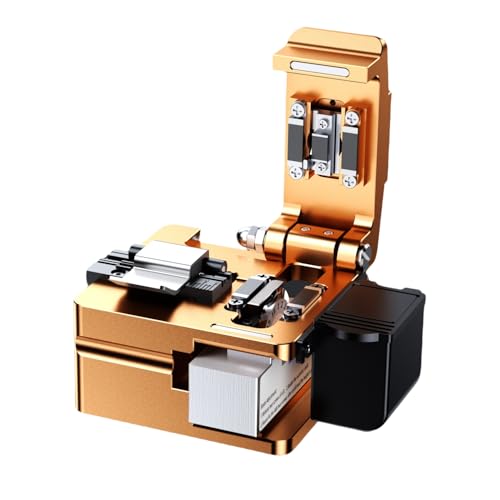
Best for: Field technicians who need reliable, portable cleaving with clear length references. The Zenithra cleaver supports 250µm and 900µm fibers, offers a <0.5° cleave angle for clean ends, and includes a scrap collector for tidy workspaces. It also features an adjustable fiber holder with a scale for precise 8–20 mm cleave lengths, making it suitable for FTTH and maintenance tasks where quick, repeatable cuts are essential. Caution: ensure compatibility with your exact fiber jacket size before daily use in a high-volume environment.
COMWAY CC-03 One-Step Fiber Cleaver

Best for: Daily hands-on use where a compact, automatic operation reduces fatigue. The COMWAY CC-03 emphasizes a one-step approach with back pressure integration, improving work efficiency and ergonomic comfort for technicians performing numerous cleaves in succession. Caution: data indicates automatic operation is beneficial, but effective performance depends on consistent fiber handling and blade maintenance.
Trileria S09 High Precision Fiber Cleaver

Best for: Environments demanding durability and high-volume cleaving. The S09 uses CNC aviation aluminum and a tungsten steel blade with 16 cutting surfaces, delivering up to 58,000 clean cleaves with a ≤0.5° end-face angle. It includes a factory pre-calibrated setup to minimize misalignment. Caution: initial setup guidance should be followed to maintain factory calibration; misadjustments may affect accuracy over time.
NovaGrowth Professional Fiber Cleaver
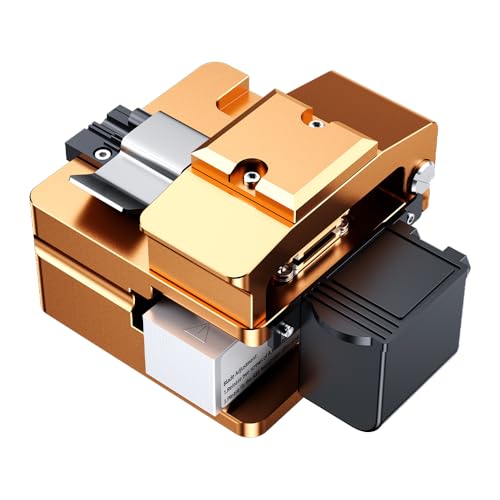
Best for: Field service teams and labs needing a robust, multi-application cutter. The NovaGrowth cleaver emphasizes an anti-slip clamping mechanism, a 0.5° cleave angle, and a dual-size V-groove that accommodates both 250µm bare fiber and 900µm coated fiber. It is well-suited for telecom infrastructure maintenance and FTTH deployments. Limitation: data indicates multiple compatible fiber sizes; operators should confirm compatibility with exact fiber types used in their projects.
Jonard Tools FC-500 Precision Fiber Cleaver

Best for: Operators needing a built-in fiber holder with a trash can for easy waste disposal and precise 0.5° or better cleaves. The FC-500 supports 250µm and 900µm fibers with a 5–20 mm cleave length range. It suits field splicing, labs, and splicing trucks. Caution: ensure your team is comfortable with manual blade positioning and proper waste management in tight work environments.
QIIRUN TM27 Optical Fiber Cleaver

Best for: FTTH installations requiring a universal 3-in-1 fiber holder (0.25mm, 0.9mm, 3.0mm) and scrap collection. The TM27 provides 48,000 cleaves with a 16-position tungsten blade and automatic blade return, ensuring consistent end faces with minimal manual intervention. It also emphasizes compact design for tool pouches. Caution: blade life depends on fiber type and cleaning; keep the blade clean to sustain performance.
QIIRUN 9C+ Optical Fiber Cleaver

Best for: High-volume field splicing with one-hand operation. The 9C+ automatically rotates the blade after each cleave across 24 positions, totaling 48,000 cleaves. The ergonomic, CNC-machined aluminum body ensures durability in rugged environments. It supports 0.25mm and 0.9mm fibers with cutting lengths from 7–16 mm. Caution: ensure left-handed or right-handed operability is suitable for your team.
Buying Guide
- What cleave angle do you need? Most top options target ≤0.5° for low-loss fusion splicing; choose the cleaver with the most consistent angle you can maintain in the field.
- Which fiber types are you using? If you work with 0.25mm bare fiber, 0.9mm tight-buffered fiber, or 3.0mm jacketed drop cables, pick a holder that supports your full range without swapping adapters.
- Do you want automatic blade rotation or manual indexing? Automatic rotation saves time for high-volume work, but may be less familiar to new technicians.
- Is scrap collection important? A built-in scrap collector helps keep benches clean and reduces waste management tasks in the field.
- Durability and weight matter for field use. CNC-machined bodies and tungsten blades offer longevity, but weigh considerations should match your tool pouch capacity.
Frequently Asked Questions
- What determines cleave quality? The cutting angle, blade sharpness, and stable fiber clamping determine the end-face quality after a cleave.
- How many cleaves can these tools typically perform? Most high-precision cleavers offer between 40,000 and 58,000 cleaves per blade, depending on blade material and use conditions.
- Can these cleavers handle different fiber types? Yes, many models feature 3-in-1 or dual-size holders suitable for 0.25mm, 0.9mm, and 3.0mm fibers.
- Is automatic blade rotation necessary? It reduces manual steps in high-volume environments but requires familiarity with the mechanism.
- What maintenance is recommended? Keep blades clean, periodically calibrate or verify blade height, and replace worn blades per manufacturer guidance.
- Which cleaver is best for FTTH field work? For field crews, models with 0.5° precision, reliable clamping, and easy blade access are ideal; TM27, TM27 variants, and S09 are common picks.
Add a Comment