The best large electric cement mixer for most American job sites is the one that balances powerful mixing, stability, and practical portability. This guide highlights top 4.9–5.3 cu ft and 4.0 cu ft models, focusing on durability, ease of use, and suitability for concrete, mortar, stucco, and agricultural batches. Ideal buyers include DIY homeowners tackling medium-to-large projects, contractors needing reliable daily performance, and farms or small construction outfits seeking efficient mixing. Below is a concise buying table followed by in-depth product sections and a practical guide to help you compare options quickly.
| Product | Mixing Capacity | Motor (W) | Best For |
|---|---|---|---|
| SPECRAFT Electric Cement Mixer, 4.9 Cu.Ft Portable | 4.9 cu ft | 375 | Light-commercial use, portable jobs |
| SPECRAFT Electric Cement Mixer, 4.9 Cu.Ft Stand and Wheels | 4.9 cu ft | 550 | Commercial-style operation with stand |
| LDHTHOPI 5.3 Cu.Ft Portable Concrete Mixer | 5.3 cu ft | 750 | Frequent heavy batches, durable frame |
| YARDMAX YM0115 4.0 Cu. Ft. Concrete Mixer | 4.0 cu ft | Unknown | Compact, easy setup, versatile |
| BILT HARD 4 Cu.Ft. Electric Cement Mixer | 4.0 cu ft | 500 | Budget-friendly, frequent home projects |
SPECRAFT Electric Cement Mixer, 4.9 Cu.Ft Portable

Best for light commercial use and farm tasks, this SPECRAFT mixer features a high-torque 375W motor and a 4.9 cu ft steel drum. The 29.5 RPM speed supports concrete, mortar, and stucco mixing with steady output. A wheelbarrow-style frame and portable design reduce operator strain when moving between sites. The 22.4″ drum opening helps handle heavy or dry materials without clogging. Use this when you need mobility and consistent performance for smaller batch jobs.
Who it’s best for: contractors and farmers needing a portable mixer for frequent, mid-size batches. Why selected: combination of portability, drum capacity, and a robust motor for steady mixing. Limitation: size may be less ideal for long, continuous production runs compared with higher-powered stand models.
SPECRAFT Electric Cement Mixer, 4.9 Cu.Ft Stand and Wheels
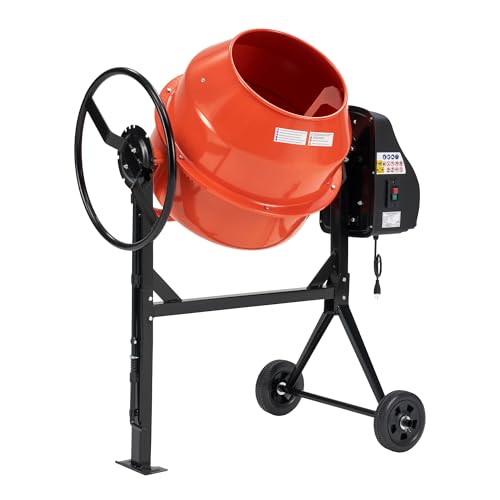
This version pairs a stand with wheels for easier tilting and controlled pouring. The 550W motor and 30 RPM deliver reliable performance for concrete, mortar, and stucco. A vertical mixer layout with a foot-pedal and drum lock enables smooth tilting and reduces spills. The 4.9 cu ft drum remains the same size for efficient batch processing. Best for: job sites requiring stability and a hands-free setup. Caution: foot pedal and drum lock require proper alignment to avoid drips during operation.
LDHTHOPI 5.3 Cu.Ft Portable Concrete Mixer

Best for frequent heavy batches, this mixer uses a powerful 750W copper motor operating at about 30 RPM. It supports 360° mixing and easy tilting with a spring-assisted wheel, promoting quick dumping and uniform mixing. Built with rugged steel and a powder-coated finish for rust resistance, it’s ideal for long-term use on construction sites or farms needing higher capacity. Caution: larger drum may require more space for storage and transport.
YARDMAX YM0115 4.0 Cu. Ft. Concrete Mixer

Best for quick setups and easy cleaning, this mixer features solid steel drums and an IP45 wash-down certified motor and gear box. The factory-assembled drive box aids straightforward installation. The unit supports one-person assembly in under 30 minutes and is suitable for smaller-to-medium projects that require reliable, mess-free operation. Consider this if you want a compact, simple workflow. Limitation: drum size is smaller than larger 4.9–5.3 cu ft models, impacting batch volume per mix.
BILT HARD 4 Cu.Ft. Electric Cement Mixer

Best for budget-conscious buyers needing a robust 4 cu ft drum, this mixer features a 500W motor with speeds up to 1680 RPM for a steady 24 RPM mixing rate. The large poly drum supports efficient mixing, and a powder-coated steel frame adds durability. Choose this if you want a cost-effective option that still handles stucco, mortar, and light concrete work. Caution: poly drum may show wear quicker under very heavy or abrasive mixes.
BILT HARD 4 Cu.Ft. Electric Cement Mixer

Another 4 cu ft option from BILT HARD emphasizes a poly drum, 500W motor, and a similar 24.0 RPM output for efficient mixing. It’s well-suited for home projects and small-scale commercial tasks where reliable performance and ease of cleaning are priorities. Limitation: as with other lower-cost poly-drum mixers, it may not be ideal for very large volumes or continuous heavy-duty use over extended periods.
TABU 3 Cu.Ft. Electric Cement Mixer
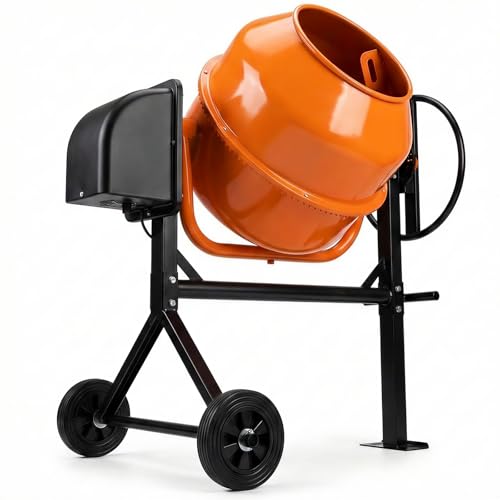
Best for smaller, more precise jobs, this 3 cu ft mixer uses a 250W motor with 3600 RPM for robust performance. The drum’s 15″ diameter and 360° mixing cover all angles, aiding consistency. It’s a good entry-level option when budget and size constrain the project. Caution: smaller capacity limits batch size and may require more cycles for large projects.
Buying Guide
What capacity do you need? For most medium-to-large projects, 4.0–5.3 cu ft drums maximize efficiency without overwhelming transport and setup. Consider whether you prefer a portable wheelbarrow-style frame or a stand-and-wheels model for easier tilting and pouring.
Which motor power is right? Higher wattage translates to faster mixing and better handling of heavy materials, but costs more and may be heavier. For frequent commercial use, lean toward 550–750W models; for DIY or sporadic use, 450–500W is often sufficient.
Ease of cleaning and maintenance matters. Drums with smooth interiors and good sealing reduce material buildup and leaks. Look for models with rust-resistant finishes and easy-drain tilting mechanisms. A foot-pedal or tilt-lock feature adds control during pouring.
Portability vs. stability. Wheel enhancements improve mobility on uneven sites, but stands add stability for consistent pours. If you move the mixer frequently, prioritize models with locking wheels and balanced weight distribution.
Durability and warranty considerations. Powder-coated frames and steel drums resist corrosion and wear. For long-term use on farms or construction sites, prioritize heavier-duty frames and robust drum designs. Check the ease of replacement parts for drums and motors when selecting a model.
FAQ
- What drum size should I choose for concrete projects? Choose 4.0–5.3 cu ft drums for typical home and light commercial projects. Larger drums reduce the number of batches but require more space and handling capability.
- Is a stand necessary for a cement mixer? A stand adds stability and easier tilting for pouring, especially in fixed work areas. If you need portability primarily, a wheelbarrow-style frame may suffice.
- Can I use a cement mixer for mortar or stucco? Yes. Most 4.0–5.3 cu ft mixers handle mortar and stucco blends well, provided the mix is not overly dense or dry.
- How important is motor power? More power improves mixing speed and handling of heavier materials, reducing batch time. It is a key factor for frequent or large-scale use.
- What maintenance is recommended? Clean the drum after each use, inspect seals, and lubricate moving parts as per manufacturer guidelines to extend life.
- Are poly drums as durable as steel? Poly drums are lighter and resistant to dents but may wear faster under heavy, abrasive loads. Steel drums are typically more durable for repetitive heavy use.
Add a Comment