Answering the common buyer need for reliable, gasoline-powered water transfer, this guide focuses on 4-stroke water pumps that deliver strong flow, good head, and durable construction. Each product is selected for different use cases—from homeowners draining pools to farmers irrigating fields. Read on to see which model best fits your situation, whether you need portability, higher head, or solid debris handling.
| Product | Best For | Key Benefit | Limitations |
|---|---|---|---|
| Gosangom 4-stroke Gasoline Water Transfer Pump | Irrigation & general water transfer | High pressure with up to 30m head | Self-suction ~8s, requires fuel |
| Honda WX10 4-Stroke | Homeowners, garden and pool drains | Honda GX engine reliability; 32 GPM | Limited to 13 lb weight |
| XtremepowerUS 79cc Gas Water Pump | Small farms & pools | 36 GPM flow; 1″ connections | Average durability under heavy debris |
| DC HOUSE 2″ Gas Semi-Trash Pump | Big water transfers with some solids | 158 GPM; 212cc engine | Higher fuel use; heavier |
| Qrooviiy 39CC Gas Pump | Lightweight jobs & gardens | 35 GPM; compact 39CC engine | Lower head vs larger models |
Gosangom 4-Stroke Gasoline Water Transfer Pump
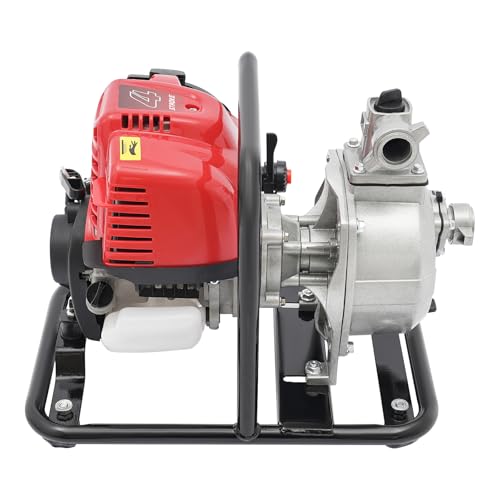
Best for high-pressure irrigation tasks where long water heads are needed. This model uses a four-stroke gasoline engine to deliver a maximum flow of 135 L/min (35.66 gal/min) and a total head of 30 m (98.43 ft). It also offers a suction head up to 8 m (26.25 ft) and self-suction capability in under 8 seconds for a quick setup. Built with carbon steel and aluminum alloy, it balances durability with lighter weight for a workable balance of performance and portability.
Who it’s best for: gardeners and small farms needing robust throughput and deeper lift without a complicated setup. Why selected: the high head and steady flow are well-suited for irrigation lines, raised beds, or transfer between tanks. Limitation: requires regular fueling and routine mechanical checks to maintain peak performance.
Honda WX10 52 PSI 4-Stroke Water Pump

This model emphasizes portability and reliability. It delivers about 32 gallons per minute, with a total head lift of 121 feet. Powered by a Honda GX series commercial-grade 4-stroke engine, it starts easily and provides solid power for tough drainage or transfer tasks. At about 13 pounds, it’s easy to carry between job sites and across a yard or farm plot.
Who it’s best for: homeowners and gardeners who value proven Honda reliability and a compact form factor. Why selected: the blend of portability and strong head makes it a versatile choice for pools, ponds, and light irrigation. Limitation: not ideal for heavy debris or mud without a trash-capable design.
XtremepowerUS Gas Water Pump, 79cc

Best for versatile field or garden use with multiple scenarios from irrigation to pool draining. It has a wide application footprint, capable of delivering up to 36 GPM with a 1″ inlet and outlet. Weighing under 28 pounds, it’s reasonably portable and includes a simple handle for moving between tasks. It’s a practical choice when you need a balance of flow and maneuverability for moderate outdoor projects.
Who it’s best for: gardeners and small farmers who need a straightforward pump for frequent, varied water transfer tasks. Why selected: the higher flow for a compact machine makes it a strong value for quick water movement. Limitation: not designed for heavy solids or sludge without additional filtration or debris management.
DC HOUSE 2″ Gas Semi-Trash Water Pump

Best for larger volume transfers with mild debris handling. This 6.5 HP, 212cc engine model can move up to 158 GPM and achieves a lift of 105 feet, with a suction head of about 26.2 feet. The design emphasizes fuel efficiency and reliability with an OHV-style engine and a simple control layout. It is suited for farm irrigation, flood water relief, or large pool or pond drainage.
Who it’s best for: users needing high flow and a robust, semi-trash capable pump for dirtier water. Why selected: high output makes quick work of large volumes. Limitation: heavier unit and more fuel consumption compared with smaller portable pumps.
Qrooviiy 39CC Gasoline Water Pump

Best for light, portable tasks with adequate performance. This 39cc, 1.9 HP engine powers a 1.5″ water inlet and outlet, delivering up to 35 GPM with a maximum lift of about 59 feet. The unit uses marine-grade aluminum components and includes safety features like an oil alarm. It is compact and easy to assemble for quick projects around the garden or small farms.
Who it’s best for: small property owners or hobby farmers needing a compact pump for daily watering tasks. Why selected: its lightweight design and 1.5″ ports make it compatible with common piping. Limitation: lower head compared to larger commercial units.
Buying Guide: 4-Stroke Water Pump Essentials
What matters most when choosing a 4-stroke water pump is matching flow rate and lift to your job, while considering portability and debris handling capability. The following questions help clarify key considerations.
What head and flow do I need?
Head is the maximum vertical distance water can be lifted; flow is how much water moves per minute. For irrigation on a small plot, aim for 20–35 GPM with a head around 50–100 feet. For pool draining or pond pumping, higher head and flow improve efficiency, especially with longer distances.
Is debris handling important?
Semi-trash and trash-capable models handle solids better. If your source water contains mud, leaves, or silt, choose a unit advertised as semi-trash or with appropriate impeller design and intake screen.
How portable should it be?
Weight and wheel or handle design influence transport across a yard or farm. Lighter units (under 15 pounds) are easier to move, while heavier models may require a vehicle or loose setup at the job site.
What about durability and maintenance?
Look for models with corrosion-resistant materials, robust frames, and accessible service components. Regular fuel and oil checks extend pump life, especially in extended projects.
Are there safety considerations?
Always operate outdoors with proper ventilation. Manage fuel safely and shut off fuel flow when storing to minimize engine flooding or leaks. Use protective gear during setup and maintenance.
Frequently Asked Questions
- What is the difference between a trash pump and a transfer pump?
Trash pumps handle solids, while transfer pumps focus on clean water movement. - Can I use these pumps for saltwater or chlorinated water?
Most pumps are designed for freshwater; check the manufacturer’s materials and suitability for saltwater or chlorinated water. - Do these pumps require priming?
Some models are self-priming; others require manual priming to start pumping. - How do I prevent clogs during pumping?
Use an inlet screen and avoid feeding large debris; periodically clean the intake and filter. - What maintenance is essential after use?
Drain fuel or run dry, clean the intake, and inspect seals and impellers for wear. - Are these pumps suitable for emergency flood cleanup?
Yes, several models offer high flow and elevated head, but check debris handling and portability for the specific situation.
Add a Comment