Answering the common buyer question: which marine salvage lift bags deliver reliable buoyancy and controlled lifts across varying underwater tasks? This guide compares top options for divers, boatyard crews, and salvage professionals. Each pick is explained with who it’s best for, why it stands out, and a potential limitation to consider before you buy.
To help you decide quickly, a quick summary table highlights the five featured products, their lift capacity, and best-use notes. This table is followed by detailed product sections and a practical buying guide.
| Product | Lift Capacity | Best For |
|---|---|---|
| JCS Subsalve USA Enclosed Flotation Bag | 550 lb | Immediate-use salvage operations; small to medium object recovery |
| Subsalve USA Enclosed Flotation Lift Bags (Enclosed Pillows) 200 lb | 200 lb | Controlled ascents/descents with reinforced visibility |
| Dawitrly Diving Lift Bags | 70 lb | Lightweight, visibility-driven tasks; beginner to intermediate salvage |
| Subsalve Vertical Salvage Pontoon 2000 Lift Bag | 2000 lb | Shallow-water salvage and lifting heavy objects |
| Subsalve Professional Lift Bags | 1,100 lb to 77,000 lb range | Wide-ranging professional salvage projects |
JCS Subsalve USA Enclosed Flotation Bag, 550 lb Lift Capacity
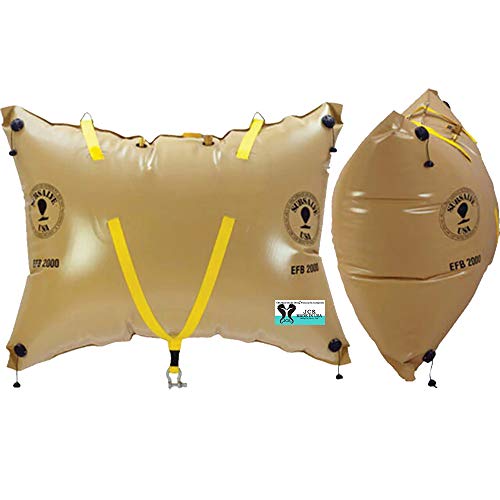
Best For: quick-response salvage crews and small-object recovery missions where immediate readiness matters. This bag arrives with hardware pre-installed, enabling faster deployment on the dive deck. The 550 lb lift makes it suitable for mid-sized salvage tasks and buoyancy control in tighter spaces.
Why chosen: The combination of heavy-duty urethane-coated nylon fabric and reinforced lift straps prioritizes durability in rugged marine environments. Its enclosed design helps reduce spillage and simplifies handling during operations with limited surface support.
Limitation: The stated capacity is modest compared with larger pontoon systems, so avoid this bag for very heavy recoveries that approach or exceed its lift rating.
Subsalve USA Enclosed Flotation Lift Bags (Enclosed Pillows) 200 lb

Best For: operations requiring precise buoyancy with clear underwater visibility. The tan color enhances visibility at depth, aiding location and management during salvage tasks.
Why chosen: Features multiple manual dump valves set for 2.5 psi above ambient pressure, supporting controlled ascent and descent. The RF-welded urethane-coated nylon fabric boosts abrasion resistance for harsh marine settings.
Limitation: Higher emphasis on visibility and control may come with a larger form factor, so verify storage space and deployment clearance on smaller vessels.
Dawitrly Diving Lift Bags, 70 lb

Best For: divers handling lighter loads, training scenarios, or tasks where high visibility plus buoyant control from an overpressure valve matter most. The bright orange/green coloration aids underwater traceability.
Why chosen: The 210D Nylon/TPU construction delivers water resistance and durability for repeated dives. An adjustable over-pressure valve supports quick balancing and steady movement of lighter loads.
Limitation: With a 70 lb maximum load, this model is not suitable for heavier salvage targets; plan accordingly for object size and weight.
Subsalve Vertical Salvage Pontoon 2000 Lift Bag

Best For: shallow-water salvage where reducing vessel draft or lifting heavy objects closer to the surface is needed. This cylindrical, totally enclosed bag is engineered to handle substantial loads with stable vertical lift.
Why chosen: 2200 lb uplift capacity (2000 lb nominal) and urethane-coated nylon construction emphasize resilience in demanding salvage environments. The vertical design minimizes drag and improves lift control near the surface.
Limitation: Large lifting capacity requires careful handling and training to avoid over-extension or accidental overloading in tight spaces.
Subsalve Professional Lift Bags

Best For: professional salvage teams needing scalable options across a wide load range. This line offers sizes from 1,100 lb up to 77,000 lb, enabling precise matching to job requirements.
Why chosen: The combination of ballistic-rated nylon fabric with urethane coating delivers robust durability for repeated, heavy-duty operations. A versatile range supports diverse project scopes without switching systems.
Limitation: For smaller projects, larger professional bags may be unnecessary; select the smallest appropriate size to optimize handling and storage.
AKONA Extra Large Lift Bag with 140 LBS of Lift
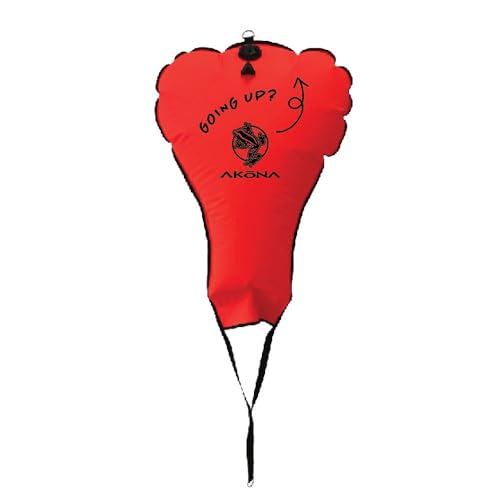
Best For: divers needing a mid-to-large lift capacity with straightforward deployment. The 140 lb lift supports a broad range of salvage tasks while remaining manageable for single divers.
Why chosen: The 210D laminated nylon/TPU material provides strength and water resistance, with stainless steel D-rings and a bottom lifting strap enabling easy attachment. A baffled opening reduces air spillage during inflation.
Limitation: While robust, it sits between light and heavy-duty options; assess whether you truly need more lift than 140 lb or if a higher-capacity option is required for future projects.
Buying Guide: Key Considerations For Marine Salvage Lift Bags
- Lift Capacity vs. Task Size
Match the bag’s lift rating to the weight of the object you intend to lift. Do not exceed the recommended capacity, and consider dynamic lifting needs in currents and depths. - Enclosed vs. Open Bottom
Enclosed bags help prevent spillage and improve stability when lifting irregular shapes. Open-bottom designs may be lighter and simpler for quick lifts but can spill more easily. - Material Construction
Look for urethane-coated nylon or ballistic-rated fabrics for durability, puncture resistance, and longevity in saltwater environments. Coatings influence abrasion resistance and air retention. - Valve System
Over-pressure valves and multiple dump valves help maintain controlled ascent and descent. Ensure valves are compatible with your regulator system and training level. - Visibility And Color
Bright colors, tan or high-visibility schemes, can aid underwater locating. Consider environmental conditions and water clarity when selecting color. - Hardware And Attachment
Stainless steel D-rings, lifting straps, and robust harnesses reduce failure risk during lifts. Ensure hardware is rated for the intended loads and compatible with your rigging. - Portability And Storage
Larger lift bags deliver higher capacity but require more space. Plan for transport, deployment, and drying after use to extend life. - Environment And Use Case
Shallow vs. deep water, calm vs. rough seas, and the nature of recovered objects influence the choice between compact 200–550 lb bags and heavier-duty models.
FAQ: Quick Answers For Buyers
What lift bag is best for beginners?
A lighter 70–200 lb bag is suitable for beginners learning buoyancy control and light salvage tasks.
Can lift bags be used in deep water?
Yes, but choose models designed for deeper use with reliable valves and robust fabrics; always follow training guidelines for depth operations.
How do I prevent air from leaking during inflation?
Use a bag with a baffled opening and ensure valves are sealed properly. Inspect seams for wear before use.
What should I consider when scaling up to heavy salvage?
Opt for a professional-grade bag with a higher lift rating and durable construction, and ensure your team has the necessary rigging and training.
Are enclosed bags safer than open-bottom options?
Enclosed bags reduce spillage and improve buoyancy control, making them safer for complex lifts in unpredictable conditions.
Do different colors affect buoyancy?
Color primarily aids visibility; buoyancy is determined by volume and internal pressure, not color.
Add a Comment