Off-grid welding relies on portable, battery- or generator-powered options when no power outlets are available. This guide highlights five practical welders that work well with diesel-powered sites or portable power setups, helping you choose the right tool for field repairs, outdoor projects, and remote jobs. Ideal buyers include DIY enthusiasts needing portability, contractors on job sites without reliable power, and hobbyists seeking lightweight, battery-assisted welding solutions.
| Product | Power Type | Best For | Key Benefit |
|---|---|---|---|
| Cordless Welder Battery Powered Welding Machine With 2 Batteries (Wuzizi) | Battery-Powered | Remote outdoor welding | Includes two 20V batteries for no-outlet use |
| Lincoln Electric Weld-Pak 225i (Dual Voltage) | 110V/230V AC | Home, shop, light/heavy projects | Wide amp range and portable design |
| Saker Portable Electric Welding Machine | 110V AC | DIY and small jobs | IGBT inverter for stable arc |
| YESWELDER 135A MIG Welder | 110V AC | Budget-friendly multi-purpose | 3-in-1: MIG/STICK/Lift TIG support |
| ARCCAPTAIN 165A MIG Welder | 110V/220V AC | Versatile multiprocess | LED display and 4-in-1 modes |
Cordless Welder Battery Powered Welding Machine With 2 Batteries
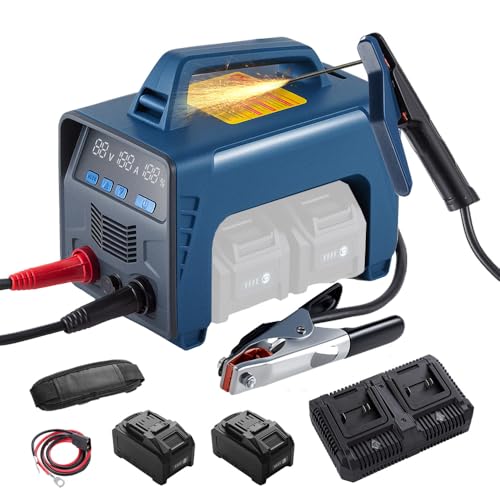
Best for: remote sites and elevated work areas where power is unavailable. This cordless welder runs on two 20V 8Ah batteries, enabling welding away from outlets. It supports electrode sizes up to 5/32″ and includes hot-start, arc-force, and anti-stick features for carbon steel and other metals. Limitation: heavier battery-pack load may reduce runtime on continuous welds.
- Portable at 8 lb (3.8 kg)
- Compact dimensions allow access to tight spaces
- Includes two batteries for extended run time
Lincoln Electric Weld-Pak 225i Stick Welder, Dual Voltage

Best for: versatile shop work requiring both 110V and 230V input. The Weld-Pak 225i offers a broad 10–225 amp range, making it suitable for light to heavy welding tasks. It includes a portable design with a built-in tool-storage area. Limitation: heavier and less suited for one-handed operation in tight spaces.
- Dual voltage for flexible power sources
- Solid arc performance on thin to mid-thickness materials
- Lightweight design for its class
Saker Portable Electric Welding Machine
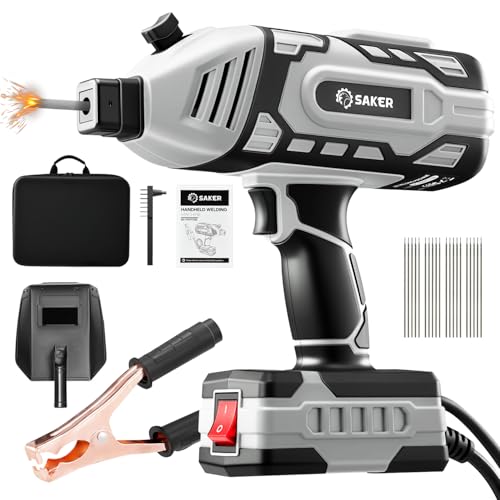
Best for: light DIY, automotive repairs, and portable use. This 110V welder features IGBT inverter technology, a 20-120 amp range, and five-speed current control. It is compact at 3.3 lb, great for one-handed operation or toolkits. Limitation: not ideal for heavy-duty thick metals or aluminum welding.
- IGBT inverter for smoother arc and stability
- Wide current range with precise control
- Very lightweight and portable
YESWELDER 135A MIG Welder
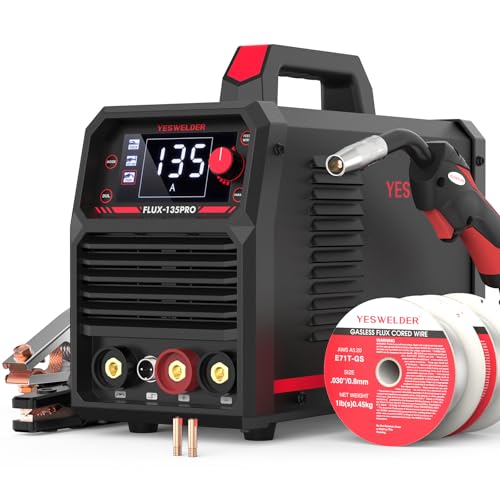
Best for: budget-conscious users needing a multi-process machine. The 135A welder handles Flux Core MIG, Stick, and Lift TIG (with separate torch). It supports a range of wire types and includes synergic wire-feed control. Limitation: TIG function requires an additional torch and is not a full TIG power unit by itself.
- 3-in-1 MIG/Stick/Lift TIG support
- Synergic control simplifies setup
- Compact and affordable for beginners
ARCCAPTAIN 165A MIG Welder

Best for: multi-process welding with a clear display and dual voltage. The 165A unit supports gas MIG, flux-core MIG, TIG lift (requires torch), and MMA. It features a large LED display and 2T/4T options for different operation styles. Limitation: ensure proper fan and screen settings when switching voltages to avoid confusion.
- 4-in-1 welding modes
- LED display for easy parameter monitoring
- Dual-voltage flexibility for shop or field use
Buying Guide: Key Considerations For Diesel-Powered or Off-Grid Welding
- Power source compatibility: For diesel-powered sites, assess whether you need AC power adaptors, generator compatibility, or battery-based portability. Battery welders reduce generator load but require battery management.
- Welding process options: MIG, TIG, MMA, and dual modes expand versatility. Choose a unit that supports the processes you perform most often.
- Portability vs. power: Lighter units improve mobility but may sacrifice amperage. Balance weight with required weld thickness and material types.
- Voltage flexibility: Dual-voltage machines offer versatility across different job sites and power setups, including generators or inverters.
- Arc stability and start features: Hot-start, anti-stick, and arc force features improve start-up and reduce material damage on carbon and low-alloy steels.
FAQ
- What size welding projects are these machines best for? They cover light to mid-thickness work, depending on amperage and process selected.
- Can these welders operate without mains power? Yes, several are battery-powered or designed for generator use, suitable for off-grid sites with diesel power.
- Is dual-voltage always better? Dual-voltage provides flexibility, especially when power options vary by job site.
- Do these machines support aluminum? Most listed models target steel and iron; aluminum welding typically requires different setups and consumables.
- What maintenance is needed? Regular inspection of cables, contact tips, and shielding gas setup (where applicable) helps maintain performance.
- Are these beginner-friendly? Several units include intuitive controls and preset modes; beginners should focus on devices with synergic or simple start options.
Add a Comment