Answering the common buyer question: what are the best automatic or semi-automatic sanding tools for wood, furniture, and small projects? This guide highlights five reliable electric sanders that cover detail work, orbital smoothing, tabletop setups, and brushless performance. Each product is described with who it’s best for, plus practical pros and cautions to help you compare at a glance. The top picks include compact detail sanders for tight spots, versatile orbital sanders for medium surfaces, and a compact tabletop sander for precise finishing.
| Product | Best For | Why It Stands Out |
|---|---|---|
| ThinkLearn Detail Sander | Small projects, tight corners | Lightweight, includes dust box, 15pcs of varying grits |
| Dong Cheng 5-Inch Random Orbital Sander | General woodworking, larger surfaces | Strong 380W motor, six speeds, solid dust handling |
| EKVILI Mini Tabletop Disc Sander | Tabletop, hobbyists | Small, steady, good disc variety for finishing |
| MAXXT 5mm Random Orbital Sander | Finished finishes, reduced fatigue | Brushless EC motor, two-speed modes, instant pad braking |
| DEKOPRO 5″ Orbital Sander | Versatile wood and metal prep | Six speeds, efficient dust box, wide sanding disc compatibility |
ThinkLearn Detail Sander — 13,000 RPM Precision for Small Projects

The ThinkLearn Detail Sander is a corded option designed for detail work and small-scale finishes. With a 1.2A motor delivering about 13,000 RPM, it excels at rapid burr removal and fine finishing on wood, furniture, and craft pieces. Best for hobbyists or professionals handling tight spots, spindling edges, and intricate contours where a larger sander won’t fit.
- Best for: tight corners, furniture touch-ups, crafts, and small projects
- Why chosen: lightweight, 6-hole dust collection system helps manage debris, and a vacuum adapter supports external dust control
- Limitation: smaller pad and lower material removal rate compared to larger orbital sanders
Dong Cheng 5-Inch Random Orbital Sander — All‑Purpose Woodworking
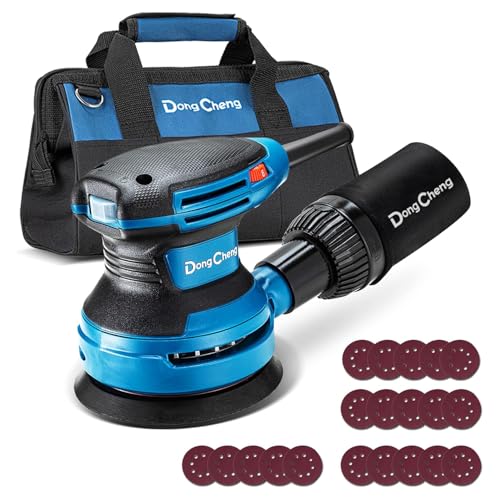
This orbital sander combines performance and versatility with a 380W motor delivering 8,000–12,800 OPm across six variable speeds. It suits larger sanding tasks and quick surface refinement on wood and metal. A hook-and-loop disc system makes quick paper changes, and a dust box plus vacuum option supports cleaner workspaces.
- Best for: mid-to-large surface sanding, smoothing furniture parts, and prep work
- Why chosen: robust motor, adjustable speeds, efficient dust handling
- Limitation: bulkier than compact detail sanders; not ideal for tight interior corners
EKVILI Mini Tabletop Disc Sander — Pocket-Sized Precision
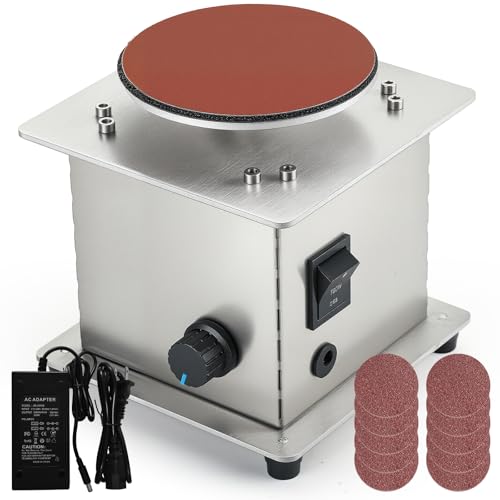
The EKVILI micro sander is designed for tabletop use and small blocks, making it ideal for precise shaping, tiny trim jobs, and hobby projects. It ships with 20 sanding discs of mixed grits to cover rough prep through fine finishing on wood, plastics, resin models, and small metal pieces.
- Best for: tabletop projects, hobbyists, small-cut trimming
- Why chosen: compact and controlled, helps achieve smooth edges on small parts
- Limitation: smaller pad leads to slower stock removal on large surfaces
MAXXT 5mm Random Orbital Sander — Brushless Power, Smooth Finishes

The MAXXT 5mm orbital sander emphasizes longer life and steadier operation with a brushless EC motor. It provides two-speed modes and six fixed-speed levels for precise control. A notable safety feature is nearly instant pad braking, aiding control during fast rotations. This makes it suitable for finishes and delicate stock where vibration reduction matters.
- Best for: finishing work, applications requiring stable operation and comfort
- Why chosen: brushless motor, two-speed and brake for safer sanding
- Limitation: may be pricier than brushed models; verify compatibility with your disc sizes
DEKOPRO 5″ Orbital Sander — High-Speed Versatility

The DEKOPRO 5″ orbital sander is a robust option with six speeds and a capable dust collection system. It uses a detuned but efficient dust bag, and the hook-and-loop paper system enables quick paper changes for various tasks, from rough stock removal to fine finishing on wood and metal. It represents a practical balance between performance and price for serious DIYers.
- Best for: versatile prep work across wood and metal
- Why chosen: wide speed range, good dust management
- Limitation: heavier than smaller, lighter-duty sanders
Buying Guide — Key Purchase Considerations
What should you look for when choosing an automatic or semi-automatic wood sander?
- Project size and reach: Detail sanders excel in corners and edges; orbital and sheet sanders cover larger surfaces more quickly.
- Power and speed range: A higher wattage or RPM range improves stock removal, but consider task-specific speeds for finishes.
- Dust management: A reliable dust collection box, dust bag, or vacuum adapter helps maintain a cleaner workspace and longer tool life.
- Disc/pad compatibility: Check disc size (4”/5”) and whether a hook-and-loop system meets your paper supply and task needs.
- Ergonomics and vibration: Brushless motors reduce fatigue, and handle design affects comfort during longer sessions.
- Safety features: Pad braking, electric safety interlocks, and dust isolation can reduce risk during high-speed sanding.
- Maintenance and accessories: Availability of extra discs and dust bags, plus replacement parts, affects long-term use.
Frequently Asked Questions
- What type of sander is best for furniture finishing? For furniture, orbital or random orbital sanders offer smooth finishes over larger surfaces, while detail sanders handle inlays and edges.
- Do I need a dust collection system? Yes. A built-in dust box or vacuum attachment helps reduce airborne dust and keeps the workspace cleaner.
- Is a brushless motor worth it? A brushless motor generally provides longer life and smoother operation with less vibration, especially on extended projects.
- Can I use regular shop vacs with sanders? Many sanders accept standard vacuum adapters; ensure the adapter size matches your tool’s port (commonly 32 mm / 1-1/4 inches).
- What disc size should I buy? 5-inch discs are versatile for larger surfaces; 4-inch discs are common for detail work and tight spots.
- Are there safety tips for sanding? Always wear eye protection and a dust mask, secure your workpiece, and avoid pressing too hard to prevent gouging or motor overload.
Add a Comment