When selecting a coil winding machine, look for precise wire placement, flexible throughput, and compatibility with your materials. This guide highlights five top options designed for electronics, textiles, and small-to-medium production. Best for compact workshops, hobbyists seeking repeatable accuracy, or small-scale manufacturers needing programmable winding. Each product section identifies who it’s best for and why it stands out.
Overview of selected products at a glance:
- Epidioxi Automatic Winding Machine 900RPM — Best for high-speed, automatic wire alignment in mass production environments.
- Yulveda 900RPM Automatic Coil Winder — Best for precise, programmable winding with infrared positioning.
- PakaLife Automatic Coil Winding — Best for electronics and textiles with broad wire compatibility.
- Epidioxi Automatic coil winding machine 500W — Best for heavier coils and motors up to mid-size power ratings.
- U.S. Solid Dual-Purpose Electric/Manual Coil Winding — Best for budget-conscious workflows needing both electric and manual options.
Epidioxi Automatic Winding Machine 900RPM

Best for: High-volume electronics fabrication and hobbyists needing consistent coil quality at speed.
Key features: automatic wire arrangement with pitch accuracy up to ±0.01 mm; 900 RPM winding speed; compatibility with 18-46 AWG wire, 18-46 AWG fishing line, and silk thread. The machine is designed to reduce coil loosening and rubbing, enabling repeatable results across lots. A potential limitation is that higher speeds can demand stable setups and vibration control in smaller benches.
Epidioxi Manual Coil Winding Machine 1/16″- 1/2″

Best for: Small-batch or custom coil work where hands-on control is preferred.
Core capabilities: 1.5-13 mm chuck, adaptable to multiple molds; count function 0-9999 with reset; sturdy iron gears and a 1:8 transmission ratio. Choose this if you need precise manual control and simple operation, but be aware manual winding typically demands more operator time per coil.
900RPM Automatic Coil Winding by Yulveda

Best for: Precision-focused winding with programmable control for varied applications.
Highlights: closed-loop motor with infrared positioning delivering 0.01 mm wire placement accuracy; adjustable speed 2–15 turns per second (120–900 RPM) with 2.3 Nm torque; includes an intelligent program for total turns, single-layer turns, winding direction, and starting point, plus an auto-stop per layer when insulation is needed. Best for users needing tight control over winding sequences, but caution: setup can require careful calibration for new wire gauges.
PakaLife Automatic Coil Winding
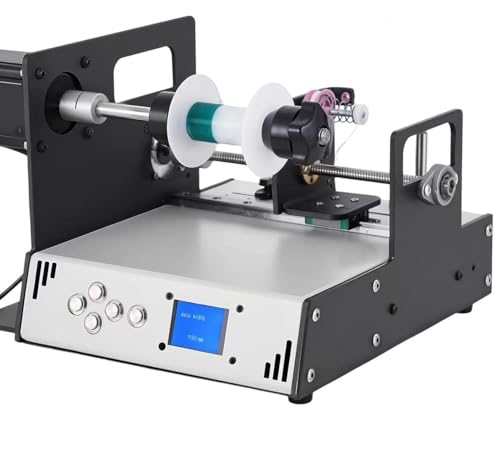
Best for: Electronics, textiles, and spindle-based work requiring broad wire compatibility.
Features include automatic wire alignment, 900 RPM, and broad compatibility with 18-46 AWG wire, fishing line, and silk. It claims high efficiency and is suited for mass production; best for shops needing a versatile machine that can handle different materials in one setup. A caveat: user experience may vary with non-metallic materials requiring different tension controls.
Epidioxi Automatic Coil Winding 500W
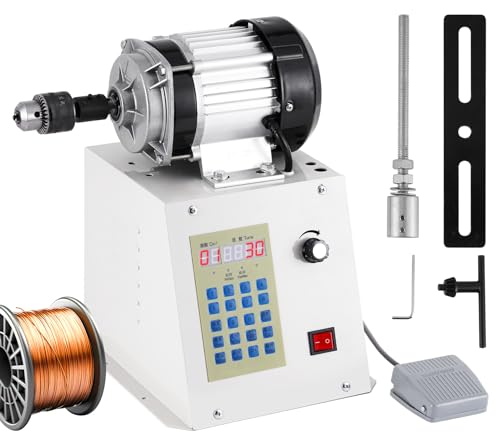
Best for: Heavier windings such as motor coils and guitar pickups, where more power and memory functions are beneficial.
Notable details: 0-9999 memory range, 10 mm spindle, 1.5-13 mm chuck, and a 50 KW coil context suitability. It’s designed for broader applications including motor coils and small transformers. Best for users who need repeated profiles stored for quick recalls. Limitation: larger footprint and higher power draw compared to lighter-duty models.
U.S. Solid Dual-Purpose Electric/Manual Coil Winding

Best for: Versatile workstations needing both electric and manual winding capabilities at an affordable entry point.
Key traits: counting dial with 99999 turns, speed ratio 1:1, and a manual reset capability. This option suits shops that value flexibility and lower initial cost. A potential drawback: dual-purpose machines may not match the speed or precision of single-purpose, high-end units in extreme production environments.
Buying Guide
What should you consider when choosing a coil winding machine?
- Throughput vs. precision: Higher RPMs can improve throughput but may require more rigid mounting and calibration for accuracy. Prioritize machines with 0.01 mm placement precision if coil tightness matters.
- Gauge compatibility: Ensure the device supports your target wire range (for example, 18-46 AWG) and other materials like filament or silk thread.
- Control features: Look for programmable winding, auto-stop per layer, memory settings, and counter functions to support repeatable production.
- Power and drive type: Consider whether you need a fully automatic, semi-automatic, or manual option. Heavier coils may require more torque and a stronger spindle.
- Footprint and ergonomics: For small workshops, compact designs with stable bases reduce vibration and improve consistency.
- Maintenance and durability: Machines with sturdy gears and robust build quality prevent misalignment and reduce downtime.
Practical comparison at a glance
| Product | Best For | Notable Strength | Potential Limitation |
|---|---|---|---|
| Epidioxi Automatic Winding Machine 900RPM | Mass production electronics | ±0.01 mm pitch, 900 RPM | Requires stable setup at max speed |
| Epidioxi Manual Coil Winding (NZ-5) | Custom, single coils | 1.5-13 mm chuck, simple operation | Manual operation slower for high volumes |
| Yulveda 900RPM Automatic Coil Winding | Programmable, precise winding | 0.01 mm accuracy, auto-stop per layer | Calibration may be needed for new materials |
| PakaLife Automatic Coil Winding | Electronics and textiles | Wide material compatibility, high efficiency | Non-metallic materials may require tension adjustments |
| Epidioxi Automatic coil winding machine 500W | Medium-heavy coils | Memory up to ten profiles, 0-9999 count | Bulkier footprint |
| U.S. Solid Dual-Purpose Electric/Manual | Flexible, budget-friendly | Electric/manual versatility, high counter range | Lower end in peak-speed vs. dedicated machines |
FAQ
- What coil winding machine should I choose for small-batch work?
- Which machines offer the highest precision?
- Is automatic winding faster than manual winding?
- Can these machines handle silk thread or fishing line?
- Do these machines require special maintenance?
Consider manual or semi-automatic units with easy setup and clear counting features, like the Epidioxi manual models, which offer straightforward operation for low-volume projects.
Models with closed-loop control and infrared positioning, such as the Yulveda and similar units, typically provide the tightest wire placement accuracy (around 0.01 mm).
Yes, automatic winding generally achieves higher throughput, especially at 900 RPM or higher, making them better for mass production settings.
Several models advertise compatibility with silk thread and fishing lines within their stated gauge ranges, but verify tension control and material compatibility for your specific application.
Yes, regular calibration, checking gear wear, and ensuring the chuck and spindle are clean helps maintain consistent winding quality.
Add a Comment