Short answer: these 1/3 HP, 1725 RPM motors are ideal for replacing common blower motors in HVAC systems, furnaces, and air handlers. They suit residential setups and light commercial use, especially when a belt-drive configuration is required. The best choice depends on compatibility with existing frames, shaft size, and electrical specs. Below, five solid options are explained with clear pros and limits to help you choose confidently.
| Product | Frame | Voltage | Rotation | Best For |
|---|---|---|---|---|
| GF2034 Blower Motor (Zynovate) | 48 Frame | 115 V | Reversible | Broad compatibility with many OEM models |
| CHIOWO GF2034 Blower Motor | 48 Frame | 115 V | Reversible | Direct replacement for AO Smith and similar brands |
| LEUNGOO GF2034 Blower Motor | 48 Frame | 115 V | Reversible | Wide compatibility with Century, Emerson, GE models |
| NBK Fan Motor SELF Cooled | 48 Frame | 115 V | Noted RPM: 2500/3000 in data, typical is 1725 in many listings | Self-cooled option for drafts and higher airflows |
| A.O. Smith RB2034 | 48 Frame | 115 V | ODP Ball Bearing | Solid belt-drive replacement with established OEM fit |
GF2034 Blower Motor, 1/3 HP, 115V, 1725RPM

This 1/3 HP blower motor runs at 1725 RPM on 115V with a 48 frame and 1/2″ shaft. It includes Class B insulation and thermal protection for safer operation. Best for homeowners replacing aging blowers in residential or light commercial HVAC where a belt-drive unit is a fit. The model lists broad compatibility with old AO Smith, Emerson, GE, and other common components, making it a flexible option. Caution: verify shaft diameter and rotation direction to ensure proper fit in your system.
CHIOWO GF2034 Blower Motor 115V, 1725 RPM

CHIOWO’s GF2034 is marketed as a direct replacement for AO Smith and similar systems. It provides 1/3 HP at 115V, with 1725 RPM and 60 Hz, and a 48-frame body. It emphasizes a quiet, efficient performance with a reversible rotation option. Best for those upgrading from older branded drives where return-to-stock ease matters. Limitation: ensure the replacement wiring and capacitor configuration align with your control board.
LEUNGOO GF2034 Blower Motor 1/3HP, 1725RPM

LEUNGOO offers a 1/3 HP blower motor with a 48-frame, 115V, and 1725 RPM. It lists compatibility across many brands including Packard, Emerson, GE, Baldor, and Carrier, with a reversible rotation and 1/2″ shaft. Best for multi-brand compatibility when replacing worn motors in mixed-brand HVAC setups. Caution: some listings note variable RPM groups (1075 or 1725) across speeds; confirm your system’s required speed before purchase.
A.O. Smith RB2034 1/3 HP, 1725 RPM

A.O. Smith’s RB2034 is a reputable 1/3 HP motor with 1725 RPM and 115V, designed as a belt-drive blower motor with a 48-frame size. It’s positioned for reliable replacement in systems that use ODP ball-bearing assemblies. Best for established A.O. Smith-based installations or where OEM-equivalent fit is prioritized. Limitation: verify the exact bearing type and mounting orientation in your unit to ensure a seamless swap.
Dayton 3K386 Motor, 1725/1140 RPM
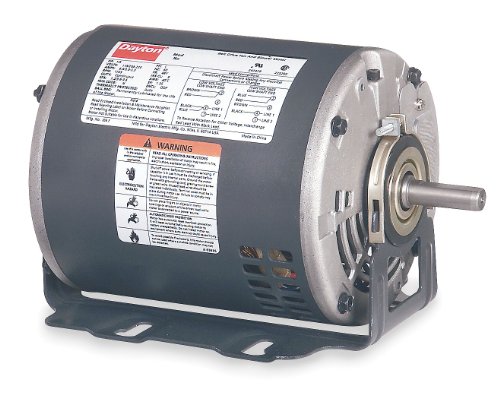
Dayton’s 3K386 provides a two-speed setup with 1725 or 1140 RPM at 115V, within a 48 frame. This makes it adaptable for different HVAC circuits that require a lower-speed option for quiet operation or higher airflow as needed. Best for users who want a two-speed capability without swapping motors mid-life. Limitation: the listed RPMs assume proper wiring and motor drive compatibility; check the system’s fan curve needs before selecting.
Buying Guide: Key Considerations For 1/3 HP 1725 RPM Motors
- Frame size and shaft diameter: The 48-frame and 1/2″ shaft are common; confirm existing mounting holes and shaft fit to avoid alignment issues.
- Voltage and frequency: Most options run at 115V, 60 Hz. Match to your electrical supply and control circuitry.
- Rotation direction: Reversible rotation is common; ensure the motor direction aligns with your blower wheel’s design.
- Insulation and protection: Class B insulation and thermal protection support safer operation in HVAC environments.
- Compatibility: Check model references (AO Smith, Emerson, GE, Carrier, Baldor, etc.) to ensure a direct or easy cross-reference replacement.
- Maintenance and bearings: Ball bearing versions tend to last longer in continuous-use HVAC applications; verify bearing type if available.
- Capacitor requirement: Some models include a start/run capacitor; verify capacitor data and any additional wiring components you may need.
- Noise and vibration: Belt-drive motors generally offer quieter operation; confirm pulley alignment and belt tension for best performance.
Frequently Asked Questions
- What is the typical RPM for a 1/3 HP blower motor?
Most 1/3 HP motors used in HVAC operate at 1725 RPM, standard for belt-driven designs. - Do these motors fit in existing 48-frame housings?
Yes, 48-frame is the common size for the listed models, with a 1/2″ shaft diameter in most cases. - Can I replace any brand with a GF2034 motor?
They’re designed for broad compatibility. Always verify shaft diameter, frame, and rotation, and confirm electrical wiring compatibility. - Is a two-speed option available in these motors?
Dayton’s listing shows a two-speed setup; most GF2034 options are single-speed at 1725 RPM. Check product specifics for speed options. - Do I need a new capacitor when replacing a motor?
Some listings include a capacitor; others do not. Verify your existing capacitor size and whether the replacement requires one. - What safety steps should I take during installation?
Power off at the breaker, discharge capacitors, and ensure proper grounding and belt tension. If unsure, consult a professional.
Add a Comment