In short, 12V peristaltic pumps are compact, reliable dosing pumps ideal for precise liquid transfer in labs, aquariums, and analytical setups. The top picks below are best for users needing low to high flow, easy maintenance, and modular configurations. The best-suited buyers include hobbyists, small labs, and educational facilities seeking simple tube changes and straightforward operation. A quick summary table follows to help compare core specs at a glance.
| Product | Best For | ||
|---|---|---|---|
| Kamoer NKP Low Flow | Low-volume dosing | ≥70 ml/min | Snap-in design for quick maintenance |
| KPHM600-SW3B17 | High-flow lab transfers | 600 ml/min | Fixed pump tube to prevent slippage |
| KPHM400-SW3B25 | Reliable high-flow dosing | 400 ml/min | Brushed motor with durable tubing |
| M1-NKP | Adjustable low-to-mid flow | 5-30 ml/min | Manual speed adjustment, compact design |
| Gikfun 12V Dosing Head | Arduino/DIY projects | 0-100 ml/min | Snap-in pump head for easy tube changes |
Kamoer NKP Low Flow Peristaltic Pump

The Kamoer NKP is a compact 12V DC dosing pump designed for low-flow applications. With a delivery rate of at least 70 ml/min and a 3mm ID x 5mm OD tubing size, it suits small-volume dosing in aquariums or analytical setups. The snap-in pump head simplifies tube replacement and cleaning, making maintenance straightforward. Best for hobbyists and small laboratories seeking easy serviceability and lightweight operation. A potential limitation is that extremely long continuous runs may require periodic rest periods to maintain performance.
Who it’s best for: students, hobbyists, and researchers needing a small, quiet pump for precise dosing with simple maintenance. Why selected: its simple design, replaceable tube, and low power draw support reliable, low-cost dosing in compact spaces.
Key considerations:
– Flow: ≥70 ml/min suits micro-dosing without overshoot.
– Tube standard: 3 mm ID x 5 mm OD is common for small workstreams.
– Maintenance: Snap-in design reduces downtime during cleaning.
Diitao 12V Dosing Pump (Blue, 2-Pack)

The Diitao dosing pump is a compact 12V DC unit offered as a set with a standard 3mm ID x 5mm OD tube. Its 5000 RPM motor and 0-100 ml/min adjustable flow make it adaptable for lab analyses, aquaculture dosing, and general liquid handling. The snap-in head design facilitates quick cleaning and replacement, while the compact form supports integration into small benches or shelf-mounted setups. A potential limitation is that the system relies on basic motors, which may have shorter lifespans under continuous heavy use.
Who it’s best for: technicians and researchers who need a budget-friendly, modular dosing pump with easy head replacement. Why selected: flexible flow range and simple maintenance fit a broad set of lab and aquarium tasks.
Key considerations:
– Flow range: 0-100 ml/min covers modest to moderate dosing.
– Ease of maintenance: snap-in head reduces downtime during tubing changes.
– Application breadth: suitable for experiments, water treatment, and biotech workflows.
INTLLAB 4-Pack 12V Dosing Pumps
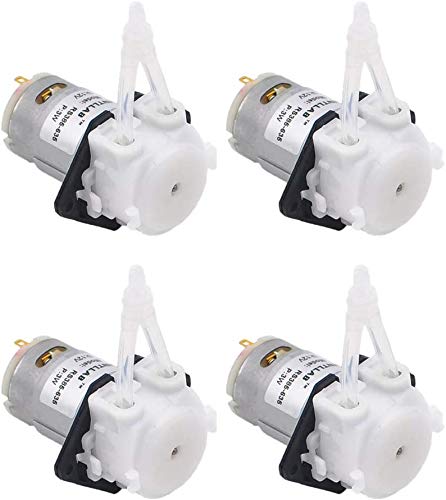
INTLLAB offers a four-pack of 12V DC DIY peristaltic dosing pumps designed for aquariums and analytical setups. The pumps feature straightforward disassembly for cleaning and maintenance. They also support changing flow direction by adjusting positive and negative connections. Best for users who need multiple dosing points or multi-channel experiments in a compact kit. Limitation: multiple units may require careful power management to avoid electrical interference on shared benches.
Who it’s best for: lab technicians and educators who need several identical dosing heads for parallel experiments. Why selected: multi-pack availability and easy disassembly support scalable workflows.
Kamoer KPHM600-SW3B17 600 ml/min High Flow

The KPHM600-SW3B17 delivers a high flow rate of 600 ml/min with a 12V DC brushed motor. The pump uses a Nylon pump head and PharMed BPT tubing (4 mm ID x 6 mm OD compatibility with medium viscosity fluids). It offers a robust design suitable for larger-volume transfers, chemical resistance, and stable operation at moderate temperatures. Best for labs or facilities needing rapid liquid transfer with a compact footprint. Limitation: brushed motors can wear over time with continuous high-load operation, potentially requiring maintenance or replacement of the motor assembly.
Who it’s best for: researchers and technicians needing reliable, higher-capacity dosing in a small package. Why selected: strong flow performance and chemical resistance make it a versatile workhorse for multiple liquids.
Kamoer KPHM400-SW3B25 400 ml/min High Flow

The KPHM400-SW3B25 is a high-flow peristaltic pump with 12V DC brushed motor. It uses a Nylon pump head and PharMed BPT tubing designed to resist acids and alkalis while delivering up to 400 ml/min. Operating at 0-40°C, it suits laboratory transfers and routine dosing tasks in chemical or biological workflows. Best for users needing a balance of flow and stability in a mid-range power profile. Caution: like other brushed motors, prolonged high-load use can increase wear and reduce lifespan without scheduled maintenance.
Who it’s best for: labs and teaching facilities that require dependable, mid-to-high flow with durable tubing. Why selected: good balance of flow, chemical tolerance, and price point make it versatile for many applications.
Kamoer M1-NKP Peristaltic Pump
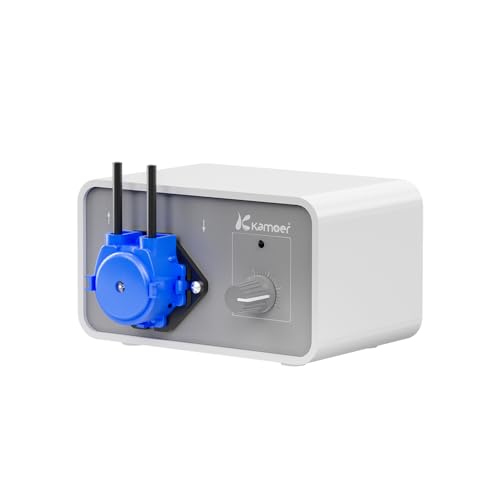
The M1-NKP model offers adjustable flow from 5 to 30 ml/min with a compact design and 12V operation. It features a user-friendly potentiometer knob for manual speed adjustments and a small tubing size of 2 mm ID x 4 mm OD. It’s ideal for small-scale liquid transfers and lab transfers where precision and space are critical. Best for: bench-top experiments, educational labs, and small-scale liquid transfer tasks. Limitation: brush motor has a finite lifespan under continuous overload, so avoid prolonged nonstop use without cooldowns.
Who it’s best for: researchers and students needing a compact, adjustable pump for precise dosing. Why selected: its small footprint and adjustable range suit delicate experiments and teaching demonstrations.
Buying Guide: 12V Peristaltic Pumps For Your Workbench
- Flow needs: Choose a pump with a flow range that matches your liquid dosing requirements. Low-flow models are ideal for precise dilutions; high-flow units move larger volumes quickly but may be less precise at the smallest increments.
- Tube compatibility: Most 12V units use standard tubing like 2–6 mm ID x 4–9 mm OD. Verify compatibility with your chemical compatibility and viscosity.
- Motor type: Brushed motors offer cost efficiency and strong initial performance but may wear with heavy use. Brushless designs last longer but can cost more.
- Maintenance: Snap-in or easy-disassembly pump heads save time on tube changes and cleaning. Look for units that allow quick head release without tools.
- Direction flexibility: Pumps with reversible flow connections simplify routing in multi-channel setups or experiments requiring alternate dosing paths.
- Chemical resistance: Tubing and pump heads vary in chemical resistance. For acids, bases, or solvents, check material compatibility (PharMed BPT, Nylon, etc.).
- Power and footprint: Ensure power supply compatibility and confirm that the footprint fits your bench space. A compact pump might be preferable for crowded labs or tanks.
- Reliability vs. cost: Higher-flow, more durable pumps often come with a higher price tag. Budget models are suitable for light use, while critical dosing setups may justify investing in robust units.
Frequently Asked Questions
What is a peristaltic pump and how does it work?
A peristaltic pump pushes liquid through a flexible tube by rotating rollers that compress the tube, creating a seal and moving liquid forward. The liquid only contacts the tubing, reducing contamination risk and simplifying cleaning.
Is 12V the only option for these pumps?
Many models use 12V DC for compatibility with common power supplies and small electronics. Some variants are available in 24V or brushed brushless configurations, but 12V is the most common for hobbyist and lab pumps.
What should I consider when choosing flow rate?
Consider the liquid’s viscosity, the required dosing accuracy, and the total volume. Low flow improves dosing precision; high flow is efficient for rapid transfers but may require inline controls for accuracy.
How easy is replacement tubing?
Look for snap-in pump heads or quick-release designs. They enable fast tube changes without tools, reducing downtime between experiments.
Are these pumps suitable for continuous operation?
Many are designed for intermittent use in teaching or small-scale deployments. For prolonged continuous operation, verify motor type, heat dissipation, and maintenance plans to prevent premature wear.
Can multiple pumps be used in parallel?
Yes, especially the four-pack INTLLAB models, which support multi-channel setups. Ensure power supply capacity and cable management to avoid interference.
Add a Comment