When choosing a metal tube bending machine, prioritize ease of use, die variety, material compatibility, and portability. This guide compares five top options that are well-suited for HVAC, automotive work, and home metalworking. The selections emphasize different power sources and bending ranges to help you pick the right tool for your needs. Best for: professionals needing durable manual models, or workshops requiring versatile dies for various tubes.
| Product | Best For | Key Benefit |
|---|---|---|
| VEVOR Manual Bending Machine with 14 Dies | Versatile manual bending | Wide range of dies includes 7 flat/bar and 7 pipe dies for multiple shapes |
| VEVOR Electric Tube Bending Machine, 750W | High-efficiency electric bending | Powerful motor with 3 dies and large max angle for smooth, precise bends |
| VEVOR Tube Roller Bender, 1-1/2″ Capacity | Rollover and forms for round, square, and flat bars | 360° bending capability with six dies for diverse tasks |
| VEVOR YP-9 Manual Bender | Heavy-duty manual bending | 7 dies and high-capacity bending for solid bars |
| NLZDDQ Metal Bending Machine (Manual Roller Operator) | Cost-effective manual bending | Supports circles up to 15 inches and 2″ wide flats |
VEVOR Manual Bending Machine With 14 Dies

The VEVOR Manual Bending Machine supports up to 2-inch wide flat steel or steel plates, 0.65-inch outer diameter hollow pipes, and 1-inch OD round tubes. It bends up to 200 degrees, meeting a wide range of fabrication needs. Includes 14 dies (7 for flat bars and 7 for round pipes) to accommodate different shapes and sizes. Best for shop floors needing a durable, all-around manual bender with broad die compatibility. Limitation: manual operation requires physical effort for long sessions.
VEVOR Electric Tube Bending Machine

This 750W electric tube bender uses a 6L hydraulic cylinder and 180° bending capability for 1″, 1-1/2″, and 1-3/4″ pipes. It offers smooth, precise bends with a focus on efficiency, aided by casters for mobility. Note: hydraulic oil is not included, so the user must supply it. Best for workshops needing faster, powered bending with consistent results. Limitation: requires hydraulic oil and more setup than manual units.
VEVOR Tube Roller Bender, 1-1/2″ Capacity

The Tube Roller Bender handles up to 1-1/2″ diameter pipes and features a 360° bend for square, round, and flat bars. It comes with six dies—three for square profiles and three for round profiles—crafted from carbon steel for durability. Best for HVAC and auto repair tasks requiring flexible bending of different pipe shapes. Limitation: manual rollers may require steady guidance for tight radii.
VEVOR YP-9 Manual Bender
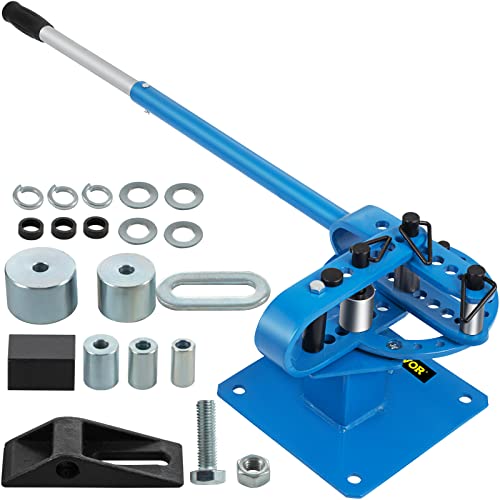
The YP-9 is a high-capacity manual bender with seven dies, designed for solid round and square bars. It provides efficient, precise bends and reliable durability for industrial and home metalworking. Best for users needing strong manual control over larger diameter bars. Limitation: heavier and less portable than some lighter manual models.
VEVOR Pipe Tube Bender, 3/8″–1″ OD

This manual pipe bender covers 3/8″ to 1″ OD tubes with 0–180° bending and seven dies for common diameters. It’s suitable for copper, aluminum, brass, stainless steel, and other tubing. Best for users who need a flexible, cost-effective tool for everyday bending. Limitation: fits smaller diameters; not ideal for large-diameter pipe work.
NLZDDQ Metal Bending Machine (Manual Roller)

This manual roller operator can bend solid flat metal strips up to 2 inches wide and 0.18 inches thick, plus round cylinders up to 0.48 inches in diameter. It even supports circles up to 15 inches in diameter. Best for small- to mid-size projects with limited workspace. Limitation: lower capacity for larger diameter or heavy-duty tubes.
Buying Guide: Key Considerations For Metal Tube Bending Machines
- Power vs. manual: Choose manual for portability and simple tasks; electric models are better for frequent, high-volume work and consistent results.
- Die variety: More dies enable bending a broader range of shapes and diameters. Check whether the dies cover your target pipe/tube sizes.
- Material compatibility: Verify whether the unit handles copper, aluminum, brass, steel, and other materials you use.
- Maximum diameter and wall thickness: Ensure the machine supports your typical tube size and wall thickness to avoid overloading the tool.
- Built quality and durability: Steel or carbon-steel frames improve longevity in workshop environments.
- Mobility: Casters or a compact footprint help in moving the unit around a shop with limited space.
- Maintenance: Some models require separate hydraulic oil or accessories; factor in ongoing upkeep.
- Installation and setup: Consider the need to mount devices to a bench or secure them in a vise, especially for heavy-duty tools.
FAQ
- What kind of projects is a metal tube bending machine best suited for?
They are ideal for HVAC refrigerant lines, automotive exhaust piping, plumbing, and custom metal frames where precise bends are required.
- Should I buy a manual or electric tube bender?
Manual benders are economical and portable, suitable for occasional work. Electric benders provide faster, repeatable results and are better for frequent or professional use.
- What is a typical bending radius I can expect?
Bending radii vary by model and die set; many units list radii around 50–113 mm (2–4.5 inches) for common dies.
- Do these machines require special fluids or lubricants?
Some electric models need hydraulic oil; manual models typically rely on mechanical force without fluids.
- Can I bend square and round tubes with the same machine?
Many units include dies for both square and round profiles, enabling versatile bending across shapes.
- Is there a risk of damaging pipes during bending?
Exceeding specified wall thickness or diameter limits can cause kinks or deformation. Always follow the manufacturer’s guidelines for the target material.
Add a Comment